
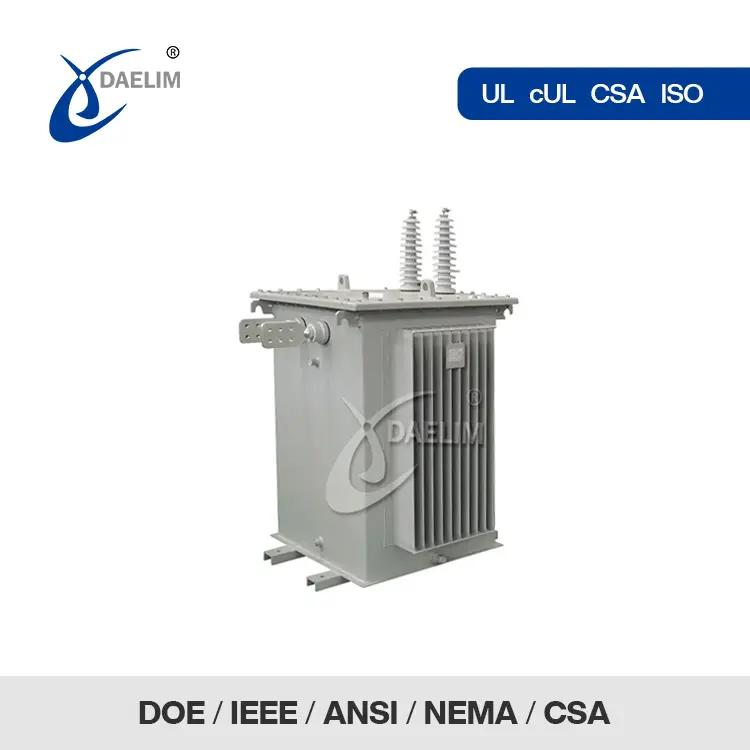
Flashover discharge of bushings can cause heating and aging, leading to short circuit accidents at transformer outlets, with low-voltage bushings being particularly vulnerable. The main causes and measures are as follows
Surface Contamination
- Cause: Dirt increases conductivity, especially in rainy and humid weather.
- Measure: Power off the transformer to clean the bushing and apply RTV long-lasting paint to enhance its anti-pollution flashover performance.
Installation, Maintenance, or Manufacturing Defects
- Cause: Insulation indicators such as dielectric loss angle exceed standards or porcelain parts are incomplete.
- Measure: Replace the defective bushing.
Inadequate Creepage Distance
- Cause: Small external creepage distance in design, particularly problematic in high-dirt areas.
- Measure: Replace with a bushing that has a larger creepage distance or silicone rubber outer insulation, or implement anti-pollution measures such as adding silicone rubber to the creepage skirt.
Internal and Atmospheric Overvoltage
- Cause: Overvoltage conditions within the system.
- Measure: Test and inspect the bushing and transformer, ensuring all components meet standards before operation.
Debris on Bushing Surface
- Cause: Debris can short-circuit parts of the porcelain skirt.
- Measure: Remove debris with an insulating rod while the transformer is live.
Weather Conditions (Rain, Snow, Ice)
- Cause: Ice formation on the transformer bushing during inclement weather.
- Measure: Cease operation until conditions improve.
By addressing these causes and implementing the corresponding measures, the risk of flashover discharge and subsequent damage can be mitigated effectively.

 English
 Polish
 German