
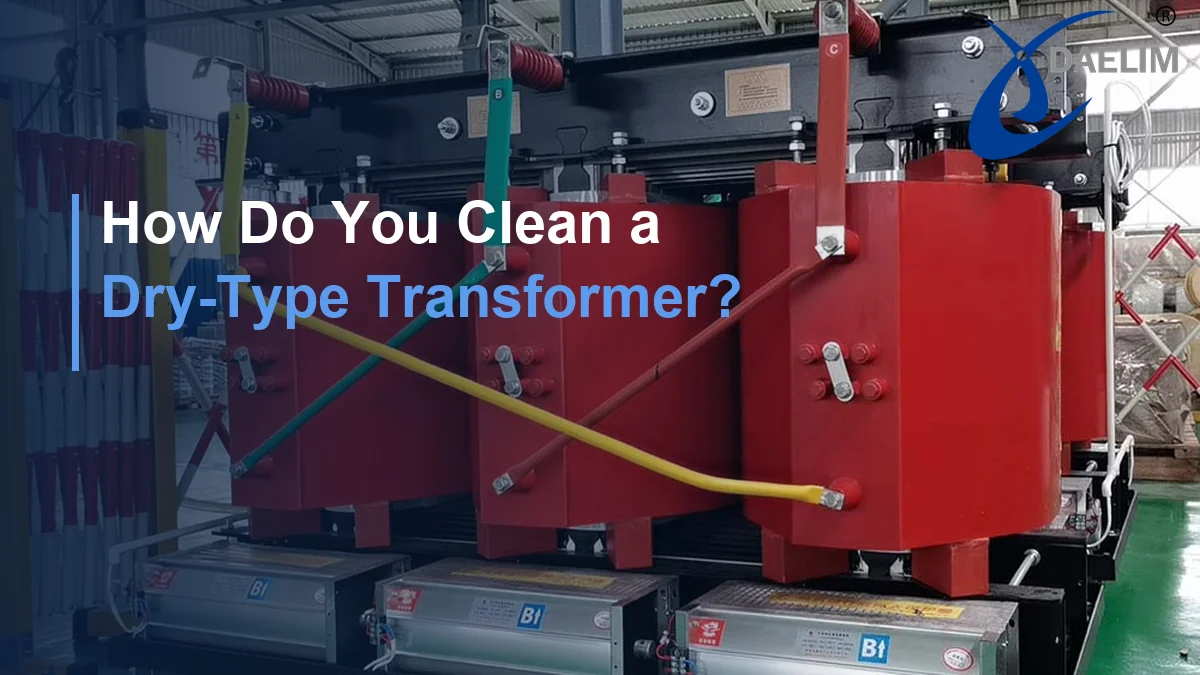
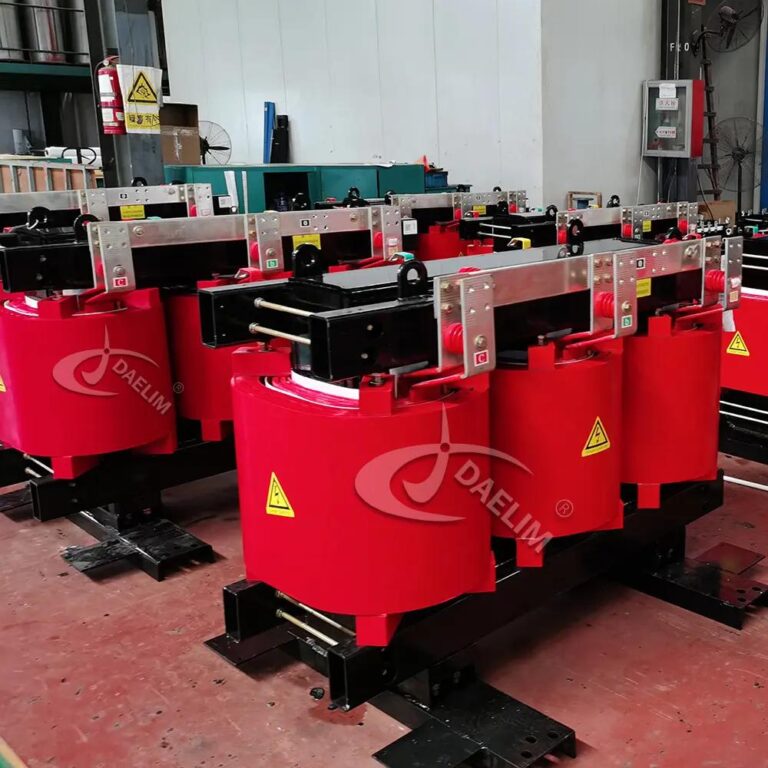
A dry-type transformer uses air or gas as an insulation and cooling medium, rather than a liquid, for its windings and core. Dry-type transformers are part of industries since they have a reliable design and environmentally friendly operation. Transformer cleaning is an important parameter for a longer working life and proper performance. Since dry transformers have been facing dust and contaminant accumulation on insulations and windings that affect cooling and cause different faults.
In this post, we will cover the detailed process for cleaning a dry-type transformer for longer operations. So let’s get started.
Why Cleaning a Dry-Type Transformer is Important
Cooling Efficiency in Dry-Type Transformer Cleaning
- Natural or forced air cooling is employed in dry-type transformers. Heat dissipation of the transformer is affected due to dust on the block air ducts or windings. So, the overall efficiency of the transformer is affected due to the high temperature of overheating.
Insulation Tracking and Arcing Risk
- A conductive path was created over insulation due to a combination of dust with moisture particles. It causes arcing or electrical tracking that affects insulation and also causes different faults.
Reliability and Maintenance Cost Advantages of Dry-Type Transformer Cleaning
- If a transformer does not have accurate maintenance, it faces different faults. So performing accurate cleaning of dry-type transformers reduces damage, makes them highly reliable, and reduces repair expenses.
Preventive Maintenance Through Dry-Type Transformer Cleaning
- Cleaning is also an important factor for preventive maintenance. Regular cleaning helps to find faults at early stages, and transformer operation remains constant with time.
Safety Precautions for Dry-Type Transformer Cleaning
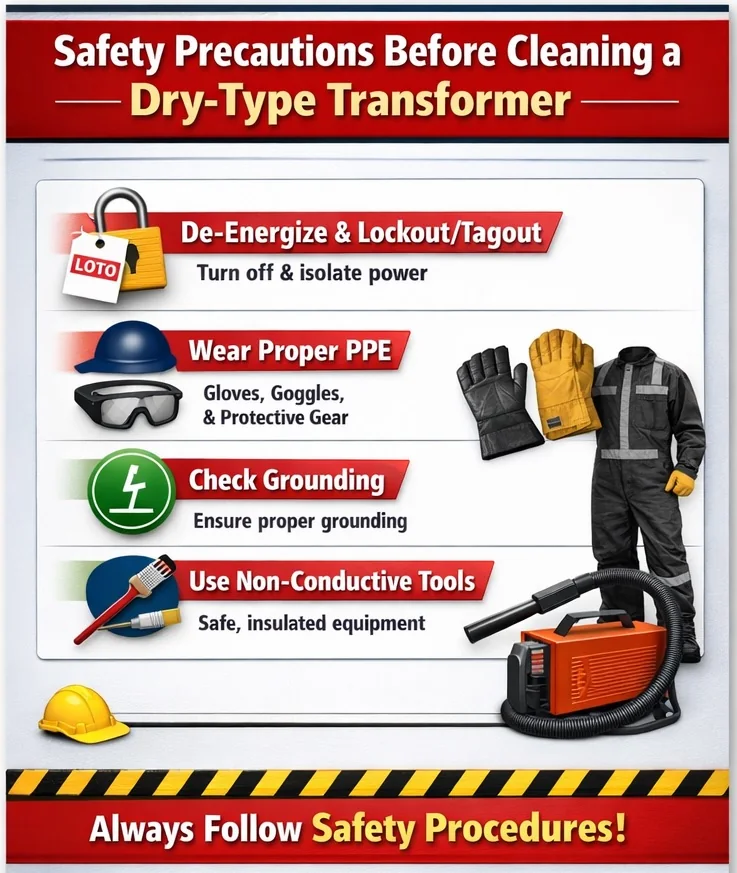
De-Energize and Isolate Before Dry-Type Transformer Cleaning
- Before starting transformer cleaning, ensure it is de-energized. For these purposes, on the input and output sides, power supplies also disconnect the primary and secondary circuits. With that, use testing devices to ensure no voltage exists on the transformer.
Lockout/Tagout (LOTO) in Dry-Type Transformer Cleaning
- For managing any sudden re-energization, use lockout/tagout techniques. In which process use locks on disconnect switches and put a warning label that shows the transformer is under maintenance. So when complete maintenance is finished, then remove these connected labels and devices.
Use (PPE) for Dry-Type Transformer Cleaning
PPE: Personal Protective Equipment is important for minimizing the effects of electrical and physical damage and hazards. Commonly used PPEs are
- Insulated gloves
- Safety goggles
- Flame-resistant clothing
- Safety shoes
These protection devices save from any accidental connections or dust.
Grounding During Dry-Type Transformer Cleaning
- Before starting the cleaning of internal parts, ensure the transformer is connected with proper grounding. Grounding is helpful for residual dissipation and minimizes electric shock.
Additional Safety Measures for Dry-Type Transformer Cleaning
- Ensure the transformer temperature is low or in a cool condition before applying the cooling process.
- For the cleaning process, use nonconductive instruments. With that, the working area should be dry and well-ventilated.
- During maintenance and cleaning, ensure there is only skilled and authorized staff in that location
Inspection Before Dry-Type Transformer Cleaning
A detailed inspection is needed before starting the cleaning process. That is helpful for accurately assessing transformer fault location identification and defining how much cleaning is needed.
Visual Inspection Areas in Dry-Type Transformer
Bus Bars, Tap Leads, & Connections
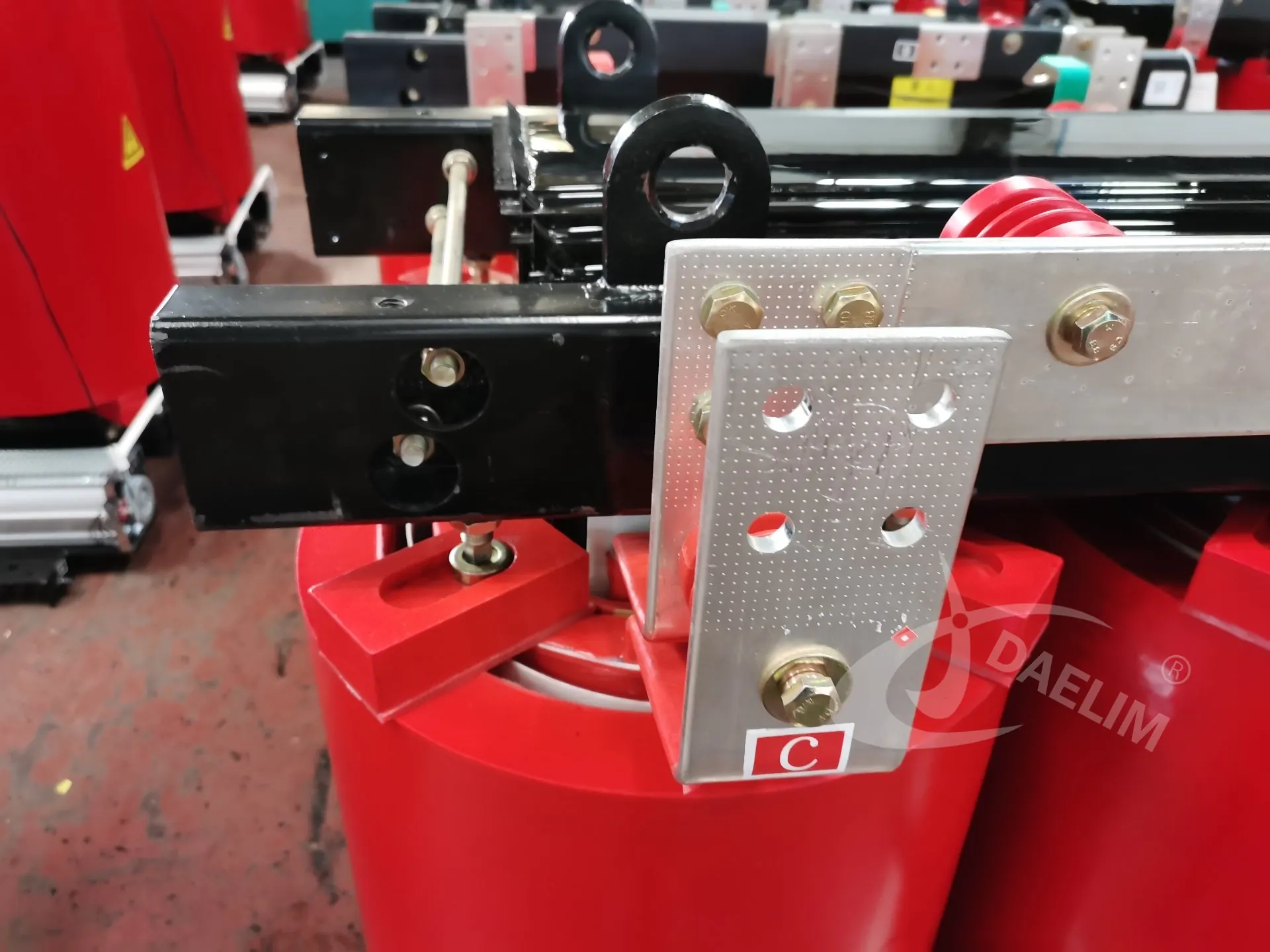
- On these components, check if they are corroded, have loose connections, or are discolored. So it causes high resistance, overheating, or arcing.
Winding configurations
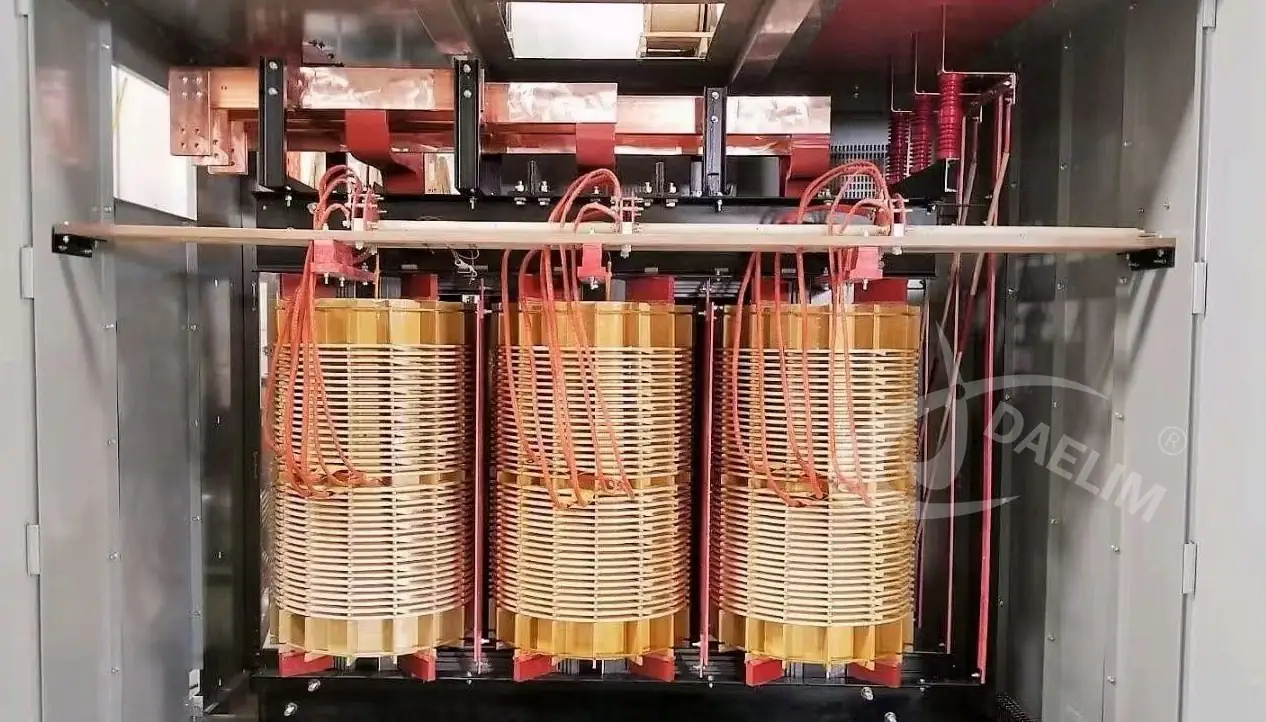
- Windings are an important part of transformers that need detailed inspection. So on windings, check insulation wear, deformation, or cracks that are signs of winding damage. So if contamination is found on the upper and lower sections, solve it as much as possible.
- Proper airflow causes cooling, so check that there are no blockages for the ventilation path if a clear path occurs. Check that no dust or debris affects air movement. Normally fan-cooled units need cleaning from dust.
Warning Signs
Dust and Debris
- If you find dusty wiring insulation or enclosed surfaces, clean them instantly. since high dust causes overheating, as it is a thermal barrier.
Blocked Ventilation Paths
- If there are block vents and ducts, it stops airflow, minimizing cooling efficiency and resulting in overheating and an enhanced operating temperature.
Carbon Tracking or Burn Marks
On the insulation, dark lines, and carbon deposits also burn, marking a serious warning indication. that causes failure chances if not removed. result of insulation breakdown and electrical tracking.
In these conditions, proper testing and corrective action are needed for the cleaning process.
Dry-Type Transformer Step-by-Step Cleaning Process
Transformer windings cleaning
- Started with an industrial vacuum cleaner for removing dust particles to stop them from spreading further. When vacuuming is finished, apply low-pressure compressed air to remove dust particles that exist between windings and closed surfaces.
- To prevent recontamination of the cleaning area, start cleaning from the upper section towards the lower section
Cleaning Insulation and Connections
- Softly clean insulation surfaces and electrical parts with a dry cleaning cloth. If dust exists in difficult-to-access areas. Clean carefully without extra force and do not use liquid for cleaning.
Air Duct and Ventilation Path Cleaning
- Clean air ducts and cooling channels properly. Clean corners and narrow areas to avoid dust and check that all airflow paths are clear.
Vent filter cleaning
- Disconnect the filter safely and clean it with soap and water. Before reconnection of the filter, check that all moisture is cleaned.
Tools Required for Dry-Type Transformer Cleaning
Industrial Vacuum Cleaner
- It is a basic instrument used for dust removal and not spreading dust into air. It is preferred for windings, enclosed spaces, and transformer-enclosing cleaning.
Dry Compressed Air Source
- This device is used after vacuuming to remove stuck particles. For this process, use about 25 psi pressure and use dry and moisture-free air.
Lint-Free Cloth
- It wipes surfaces without fiber or residue on the surface and is normally used for cleaning terminals and insulations.
Soft Brushes
- Soft brushes are best for cleaning sensitive parts, but use them softly to prevent insulation damage.
Dry-Type Transformer Cleaning Frequency and Maintenance Schedule
Annual Dry-Type Transformer Cleaning
- Cleaning in indoor conditions: needed dry-type transformer cleaning once a year.
Frequent Cleaning
- Outdoor environments or industries’ cleaning is performed after 3 to 6 months since their contamination occurs.
Integrating transformer cleaning with maintenance plans
- It is important to add cleaning as part of the maintenance strategy. Perform it when the already planned shutdown occurs, and keep a record of these cleaning schedules for performance tracking.
Mistakes in Dry-Type Transformer Cleaning
Cleaning a while energized transformer
- It is dangerous to perform cleaning during the transformer’s energized status since it causes electric shock or arc flash.
Using Water or Chemicals in Cleaning
- Liquids have a bad effect on insulation and add moisture that causes failure or high faults
High-Pressure Air
- High pressure also affects components; also, with high-pressure air, dust particles deeply move to sensitive parts.
Ignoring Damage Signs
- Cleaning, repairing, and testing damaged parts are also important. If burning marks are not checked on insulation, it causes serious faults.
Blocking Ventilation
- If improper reassembly affects the result of airflow, it leads to low efficiency and overheating
Post-Cleaning Testing and Recommissioning After Dry-Type Transformer Cleaning
Visual Re-Inspection
- Check that all components are accurately cleaned and assembled and no external materials exist.
Tightness Checking
- Inspect that all terminals and connections are securely made
Insulation Resistance Test
- Perform a megger test to check insulation quality and check that no moisture or contamination exists.
- It is also helpful for monitoring that the resistance is in the required range
Winding Resistance
- Check windings’ continuity, which helps find loose connections or internal faults
Grounding
- Accurate grounding is important for safety and for fault protection systems.
Functional Checks
- In this inspection, check if different auxiliary systems like alarms, temperature sensors, and cooling fans are working properly.
Energization After Cleaning
- When cleaning is completed, re-energize the system and check that there are no noises, temperature variations, or vibrations.
Initial Load Monitoring
- Check that the unit is working properly through the connection of the load to ensure it is stable and normal.
Conclusion
Dry-type transformers are more sensitive than others since they do not use oil as a cooling medium. So if their cleaning or inspection is not accurate, it causes serious faults or causes a blown transformer.
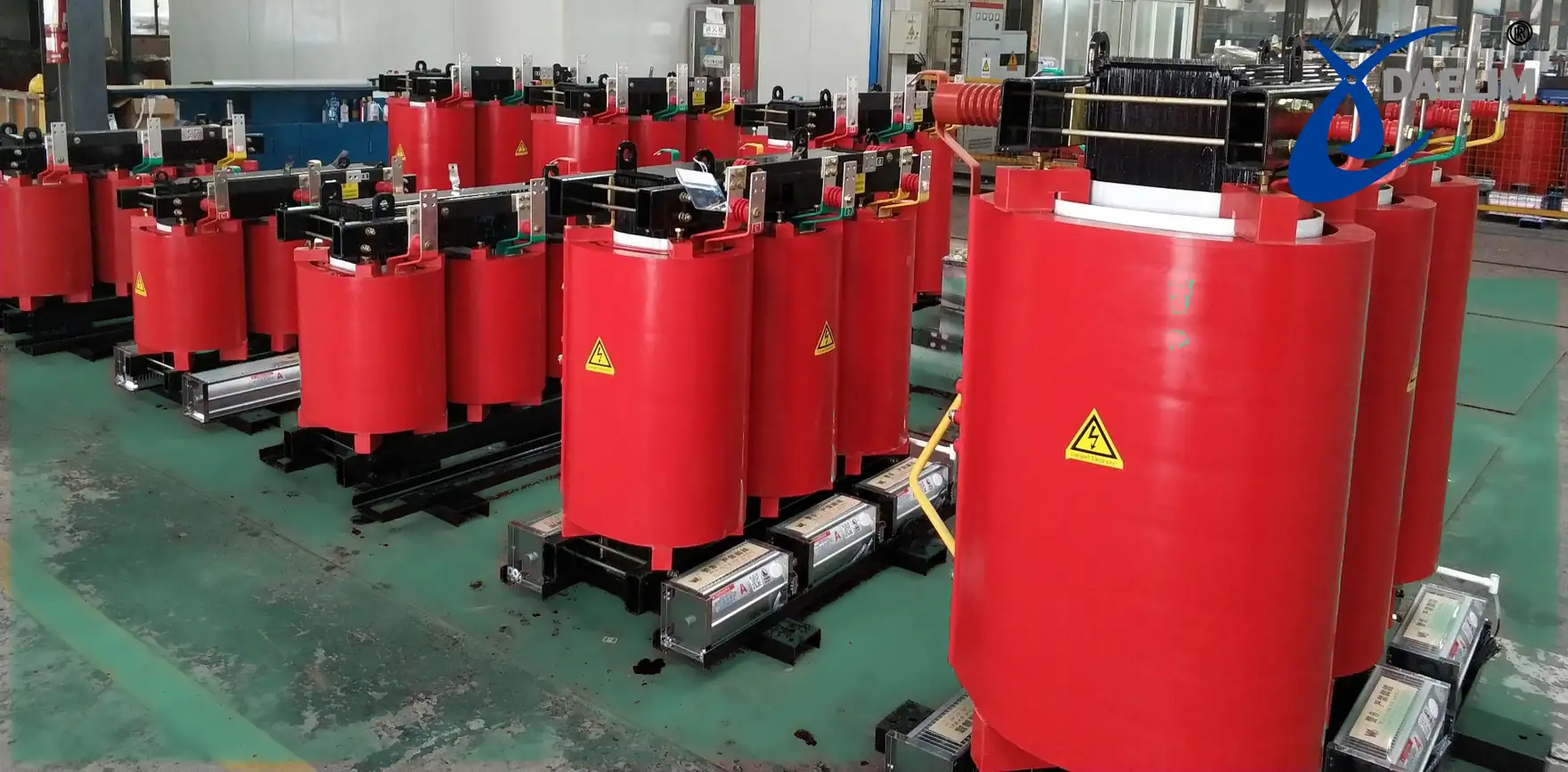
So apply regular inspection for cleaning that reduces downtime and maintenance expenses by making a reliable system. Daelim Transformer comes with strong manufacturing expertise and also follows different internal standards with that they also offer technical support including installation, testing and professional support for ongoing maintenance. That is helpful for accurate transformer operation and reliable working life.
FAQ
1. Can you clean a dry-type transformer while it is energized?
It is not the best technique to clean a dry-type transformer in an energized state. So it’s best to perform de-energization and, for safety measures, follow LOTO that prevents electrical hazards.
2. What is the best method for cleaning transformer windings?
Industrial vacuum is the best process used for removing dust since it performs cleaning without affecting insulation or adding dust in windings.
3. How often should a dry-type transformer be cleaned?
Cleaning is performed according to environmental conditions, like indoor locations, where cleaning is performed once a year, but dusty or high contamination areas require cleaning after 3 to 6 months.






 English
 Polish
 German