
Transformer insulation plays a critical role in ensuring the safety, reliability, and longevity of power transformers. It encompasses various types, methods, and materials designed to prevent current leakage, breakdowns, and ensure operational efficiency under diverse environmental conditions.
Types of Transformer Insulation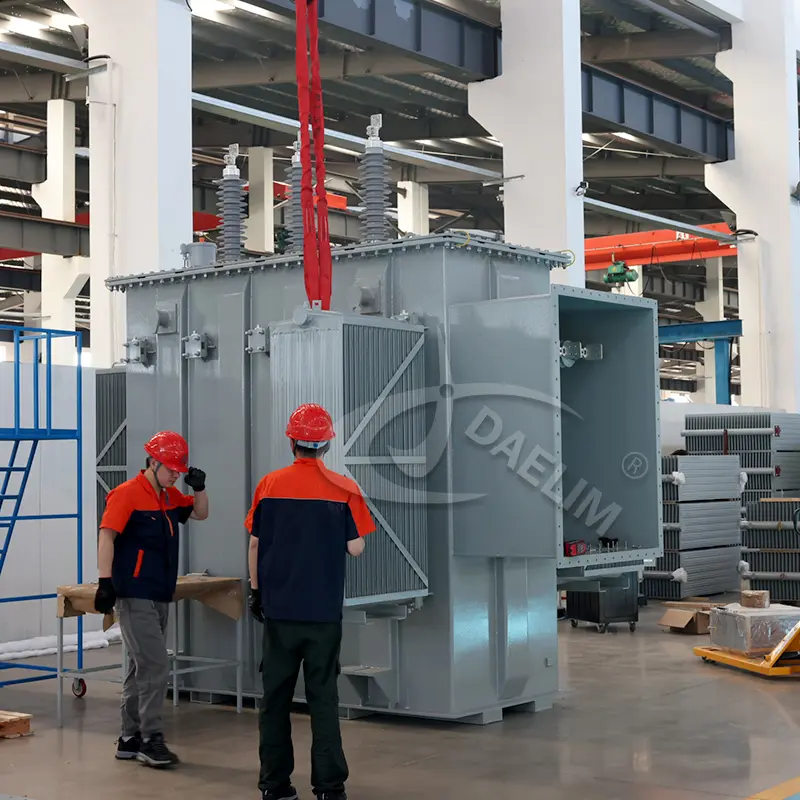
Full Insulation & Graded Insulation
- Full Insulation: Uniform insulation level across the entire winding, suitable for smaller transformers and low-capacity applications.
- Graded Insulation: Also known as semi-insulation, where the insulation near the center point of windings is lower than at the input side. Common in high-current grounding systems for voltages of 110kV and above, it reduces transformer size and costs but may compromise safety compared to full insulation.
Insulation Structure
Internal Insulation
- Main Insulation: Between windings and ground, between phases, and within windings of the same phase but different voltage levels. Critical for operational reliability and cost-effectiveness.
- Longitudinal Insulation: Ensures insulation integrity along the length of windings and components inside the transformer.
External Insulation
- Includes insulating sleeves, air gaps, and other external components that protect the transformer from environmental factors such as moisture, dirt, and atmospheric conditions.
Methods and Materials
Insulation Methods
- Oil-Immersed Insulation: Predominantly used in oil-immersed transformers for high-voltage applications, offering excellent cooling, moisture resistance, and arc extinguishing properties.
- Dry Insulation: Used in dry transformers, resistant to moisture and fire but less suitable for high-voltage environments.
- Gas Insulation: Offers low dielectric constant and effective arc extinguishing, though costly and challenging to maintain gas levels.
Insulating Materials
- Solid Materials: Include insulating papers like Nomex, Denison, and corrugated papers, offering thermal stability and moisture resistance.
- Liquid Materials: Such as insulating oils, requiring regular testing and maintenance to ensure operational integrity.
Heat Resistance Levels
- Classified into categories like Class A, E, B, F, and H, each with specific temperature limits to maintain insulation integrity under varying operational temperatures.
Common Insulation Failure Issues
Insulation Aging
- Gradual loss of mechanical and electrical insulation strength over time due to factors like moisture ingress, chemical corrosion, and prolonged overload operations. Mitigated through regular testing, cleaning, drying, and oil maintenance.
Insulation Dampness
- Causes short circuits and system damage, often due to poor sealing, transportation, installation, or maintenance practices. Prevention involves regular inspection, timely replacement of damp materials, and careful operational procedures.
Conclusion
Transformer insulation is a cornerstone of electrical safety and reliability, crucial for maintaining operational efficiency and preventing catastrophic failures. By understanding the types, structures, methods, and materials involved in transformer insulation, operators can effectively manage and maintain transformers to ensure long-term performance and safety in power distribution networks. Regular inspection, testing, and proactive maintenance are essential to mitigate risks associated with insulation aging and dampness, thereby ensuring uninterrupted and safe electricity supply.

 English
 Polish
 German