
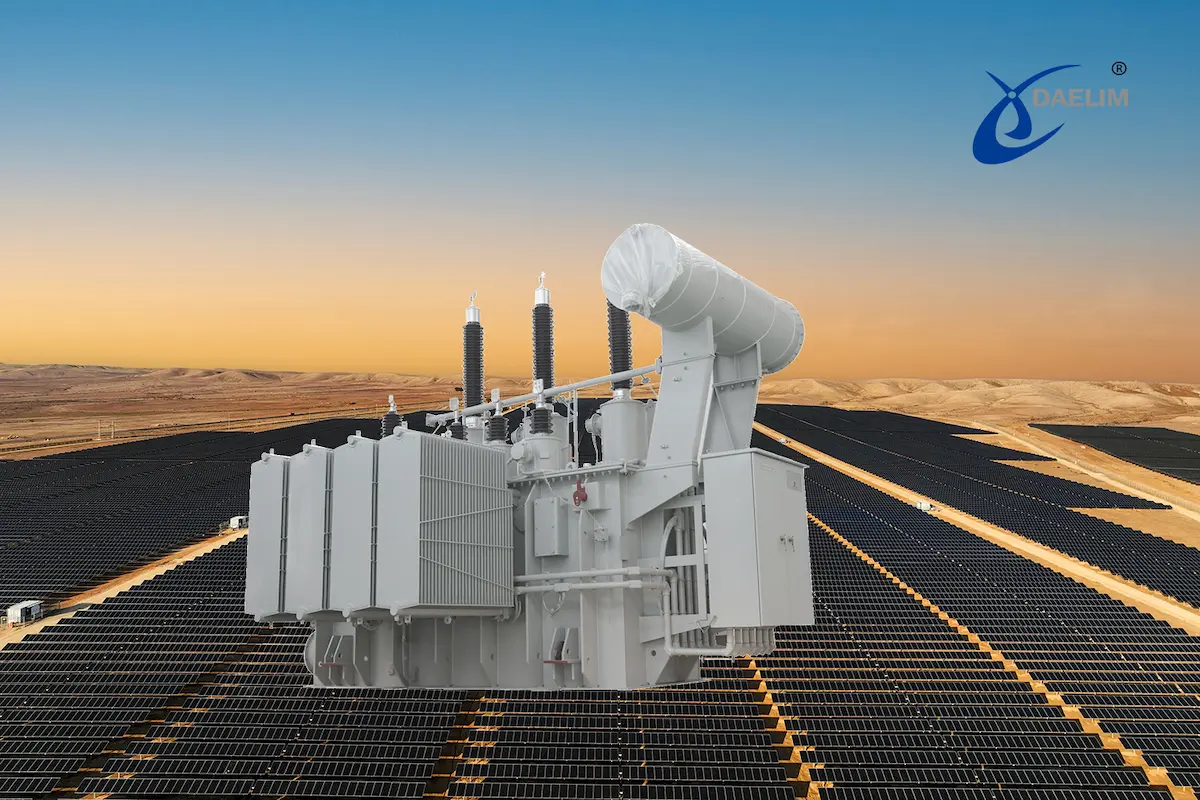
The transformer in a large scale solar power system is considered a main component because it maintains the voltage level for both load devices and power grids. In large-scale solar plants, transformers increase the voltage level for transmission purposes and reduce it for safe operation of devices. This method maintains energy levels for longer distance transmission.
Transformers also transmit energy steadily from large scale solar power plants to the grid. They also provide safe power to loads without voltage variations. In this post, we will cover details, features, and the importance of transformers in large-scale solar power systems. Let’s get started.
Overview of Large-Scale Solar Power Systems
Large-scale solar power plants, also called utility-scale solar or solar farms, generate power for the utility grid. Afterward, the power is delivered from the utility grid to the end users. Power generated at a larger-scale solar power system is stepped up for transmission to the utility grid through longer-distance lines.
The transmitted energy from solar power plants is sold to larger power users and companies. A power plant is called a utility or larger scale if it is generating 1 megawatt (MW) or higher power, according to the U.S. Energy Information Administration.
In the USA, there are more than 10,000 solar photovoltaic power systems that are large-scale solar systems.
Large-scale solar power, by diversifying the energy mix, helps provide a stable and reliable energy supply. Solar farms also minimize countries’ energy dependency on imported fossil fuels and other sources.
Structure of Utility-Scale Solar Plants
Utility scale solar projects are structured with different components for power generation and delivery to the load end for use.
Solar Panels
- High-efficiency PV panels are connected in arrays to generate large power outputs, serving as the primary energy source for the system and providing DC power to inverters
Inverters
- Inverters are also an important part of utility-scale solar systems since these inverters convert DC power generated from solar panels into AC power that supports the grid and connected loads.
- Utility-scale solar inverters are designed to handle high output power.
Transformers
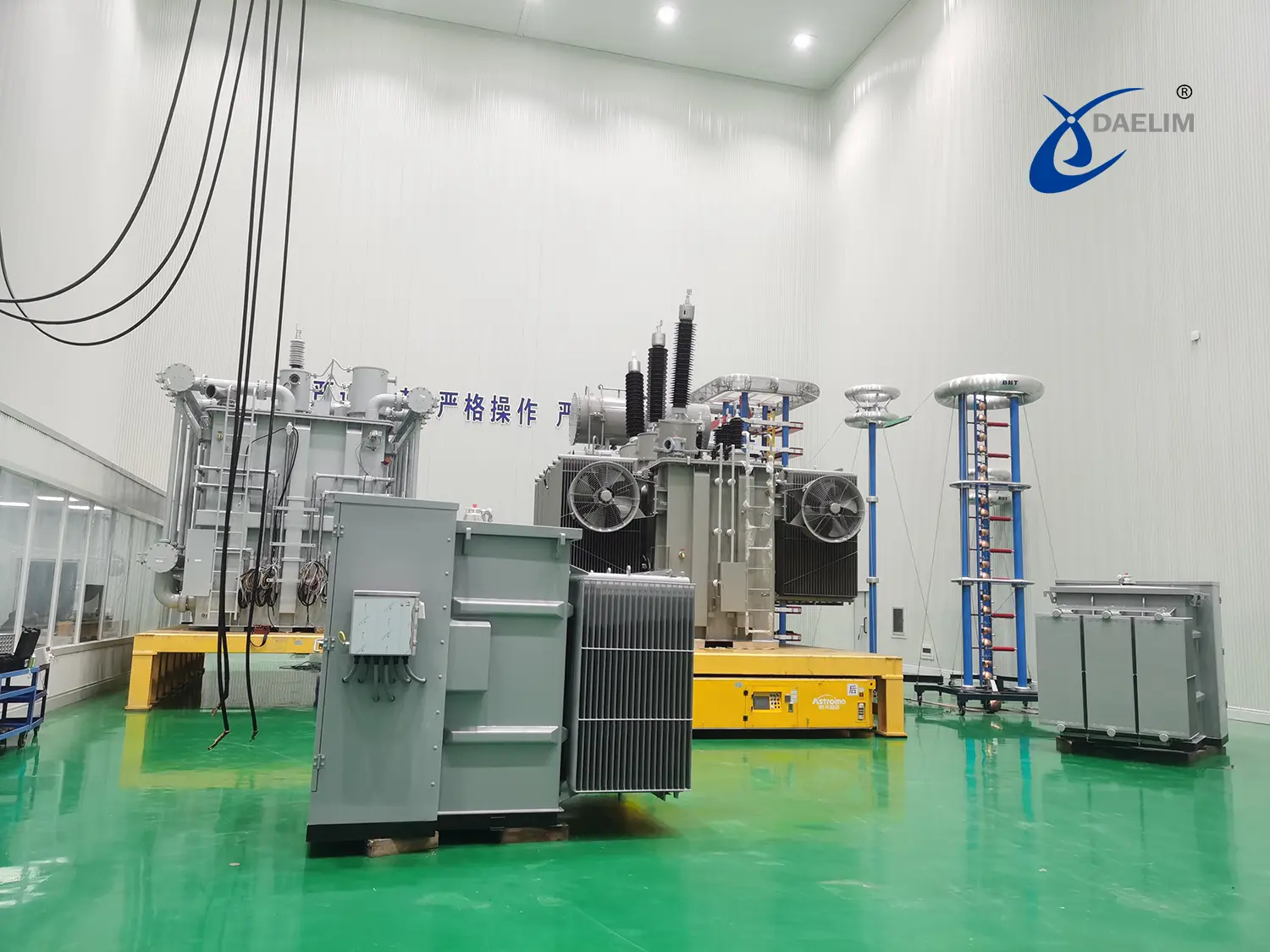
- For large scale solar power systems, step-up transformers are used that increase the voltage level of the inverter output voltage to transmit at longer distances.
- That step-up transformer maintains the voltage level according to the grid required with less transmission loss.
You may enjoy: Solar Transformer, Get The Best Price
Grid Interconnection Systems
Grid interconnection helps to integrate solar power with the grid system. This integration is performed with substations, transmission lines, protection relays, circuit breakers, metering tools, and control systems that connect the solar power plant to the utility grid.
tility-scale solar plants are designed to ensure their voltage and frequency match the grid requirements.
Role of Transformers in Solar Power Plants
Voltage level changes
The output voltage of solar inverters is typically low, which may not meet the grid demands directly. These low voltages, which are in the few hundreds of volts to kilovolts range, are not enough for longer transmission since they have high current that causes losses.
So a step-up transformer increases the inverter voltage to a high voltage level that can easily be transmitted to a substation. This higher voltage reduces the current, which minimizes I²R (resistive) losses, allows for smaller conductor sizes, and reduces overall costs.
Get free: Solar Photovoltaic System Solution
Grid Stable operation
The voltage generated from the inverter has fluctuations and instability, so the transformer maintains the voltage level. For voltage control and grid compatibility, he transformer also adds reactive power to the system.
The transformer also transfers power from panels to the grid in a controlled and smooth way, avoiding the abrupt effect of high voltage on the system.
Protection of the system
Safe power generation and complete installation are important for high-power solar systems. Transformers work as a partition between solar plants and utility grids.
Transformers act as a barrier, preventing faults from transferring from one end to the other. It also manages grid faults to prevent their effect on the inverter and connected control devices. It is also safe for maintenance and continuous operations.
In addition to voltage regulation, transformers are equipped with various protection devices like isolators, breakers, and grounding systems that easily find different faults like overcurrent, insulation, and short-circuit faults and solve them before they affect any other part of the system.
Thermal Management and Environmental Factors
Before using transformers in large-scale solar power plants, important factors are environmental factors and thermal management, since solar power plants exist in remote and open areas where different environmental conditions occur.
Therefore, the transformer must be capable of handling high temperatures, dust, and solar radiation, as its long-term efficiency and reliable operation depend heavily on effective thermal management.
So if heat dissipation does not occur properly, it causes aging and affects load-handling features, reducing transformer working life.
Some locations where transformers are installed, like rural or desert locations where the temperature reaches 50 degrees, face high load conditions. In these conditions, the transformer uses a strong cooling and flow system to minimize the effects of heat on the transformer and different or important parts like windings and the core.
Through minimizing overheating, insulation degradation is avoided. It also helps to maintain stable operations in full-load operation.
Properly designed transformers can easily manage the cyclic loading patterns associated with solar energy production.
If a proper cooling system is used for the transformer, it helps to provide stable operation of the transformer when peak power generation increases.
It also manages thermal expansion and contraction without any extra pressure and prevents insulation failure.
Design Factors for Solar Applications
Transformer designs specifically for solar applications can easily handle varying loads, and other environmental conditions through employing cooling systems.
Ambient Temperature Variations
- Since solar power or utility scale solar farms are installed in an open area, and a high temperature of about 50 degrees affects the transformer working for this purpose, a heat management system exists. With that transformer part properly insulated and managing heat, and transformer winding designs also minimize temperature effects when high generation occurs.
Cooling Systems
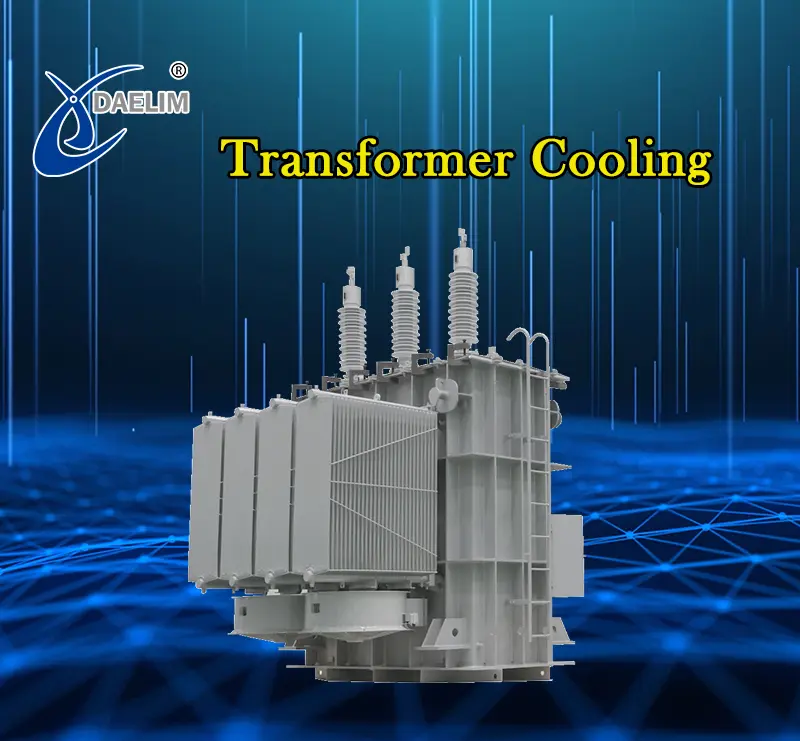
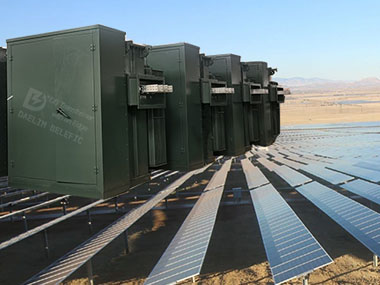
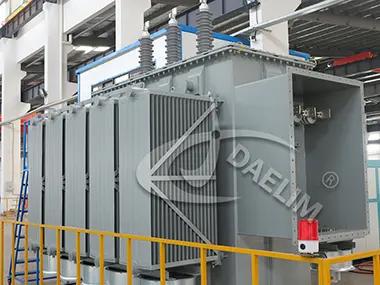
The solar system transformer uses different cooling methods for reducing temperature effects, like ONAF and ONAN.
- ONAN is a simple cooling technique where natural oil flow and airflow occur to perform cooling of the system that is part of a smaller system, and ONAF comes with fans for flowing air on the radiator for cooling purposes and provides good overloading conditions.
Insulation
- The large scale solar plants transformer uses winding materials that easily handle temperature conditions, and insulation exists for heat management. So it reduces fire hazards, and the unit continuously operates
Benefits for Large-Scale Solar Power Operators
Transformers are important for performing economical functioning of large-scale solar power plants. By performing basic voltage conversion, a properly designed transformer makes the system highly efficient, stable, and enhances long-term economic performance during the plant’s complete life. The main advantages are as follows.
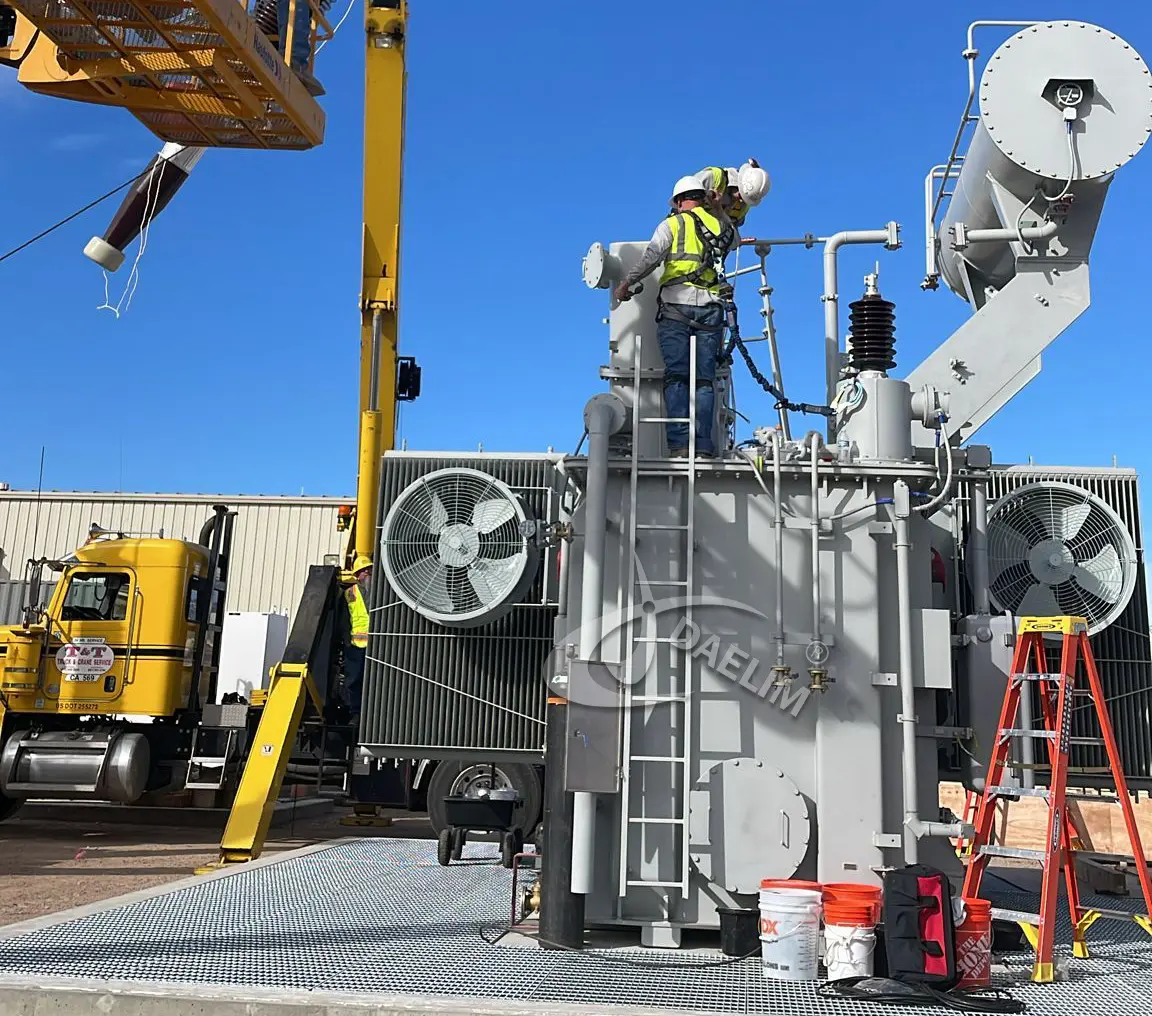
Higher Energy Yield
- An effectively operating transformer delivers the high energy produced by photovoltaic arrays to the grid. The transformer also manages power losses through proper voltage regulation, thermal management, and reduced electrical losses. High efficiency provides higher annual energy output and increases revenue for solar power operators.
Stable operation
- Large-scale solar plants need to operate stably and continuously. Quality transformer design, with features such as proper insulation, accurate core structure, and effective cooling, ensures safe operation under different load conditions. Through these features, there are fewer abrupt outages, grid disturbances, and device damages, and power is produced and delivered to the load smoothly
Cost-Effective Lifecycle Performance
- The initial installation cost of transformers in remote solar farm areas becomes high due to site preparation and transportation, but these expenses are managed over time through extended service life and low maintenance demand.
- Transformers with durable structures and low failure rates reduce operational and replacement costs. This helps solar plants operate for decades and regularly fulfill power demand, making transformers a cost-effective investment during the project’s lifetime.
Application
A transformer is an important component in large-scale solar deployment.
- Large scale solar farms deliver their generated power to the grid through a step-up transformer to fulfill the voltage demand of the system
- Transformers are also important for supporting solar power systems with batteries and other storage techniques for providing continuous power flow.
Utility-Scale Solar Project: Case study
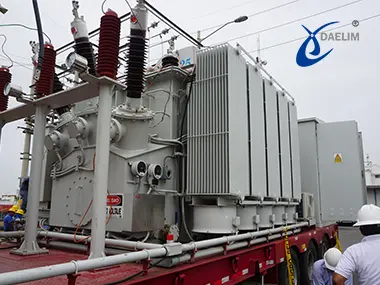
Daelim Belefic performs multiple roles for this project as a supplier, like designing, manufacturing, testing, on-site assembly inspection, and commissioning.
Their technical and skilled staff completely take care of the project from start to end for safe commissioning and stable equipment operation.
Technical Factors
- The design of the transformer was optimized for low-loss features for compatibility with load curves. Its high peak efficiency index design provides exceptional energy conversion efficiency for different working conditions for effective grid connection of power generated by photovoltaic arrays.
Project Execution
- Daelim Belefic manufactured and delivered 5 high-voltage power transformers with ratings of 35 MVA, 55 MVA, and 88 MVA to large-scale photovoltaic projects located in Delaware and Vermont, USA. These transformers are provided with voltage levels of 46 kV, 69 kV, 115 kV, and 138 kV.
Standards & Service Life
- For this project, all transformers were designed and manufactured following IEEE, ANSI, and NEMA international standards and were engineered for a design service life of 30 years.
Design Features
- The transformers are manufactured using pure copper windings and a round coil configuration, which enhances short-circuit resistance and ensures stable operation. Each unit comes with advanced components, such as the SEL-2414 monitoring system, that performs real-time monitoring of oil pressure, temperature, and winding temperature and are configured with the SCADA system for alarm functions.
Quality Assurance
- To provide high-standard performance and provide 60-month quality assurance for safety and reliability for larger-scale solar assets. That shows our professionals’ ability for large-scale new energy power equipment.
Conclusion
A transformer is an important part of a solar power system, making effective transmission of power to the grid and end loads, as is its role in conventional power systems. In solar plants, transformers step up the inverter output voltage for longer distance transmission with minimal losses. They also provide electrical isolation between the solar installation and the grid, making the system safe and reliable.
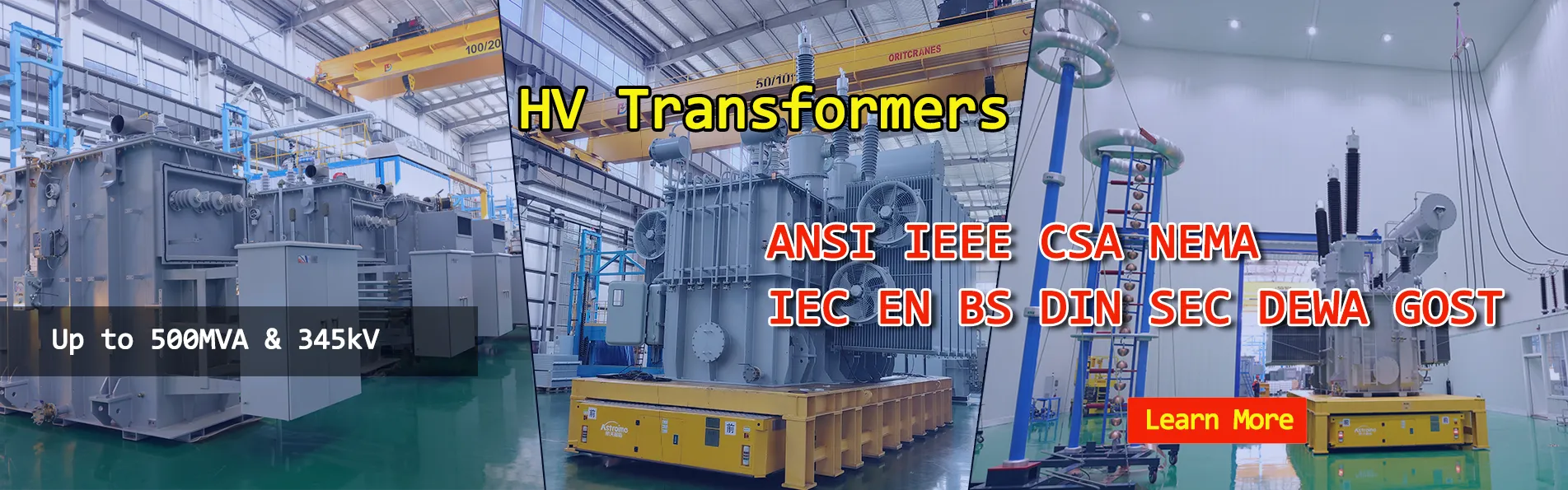
For utility-scale solar projects, the connection of an accurately designed transformer is important for providing stable operation and long-term performance. Daelim Transformers are Transformers compatible with solar power systems since they provide reliable, application-specific transformer solutions that are helpful for efficient power generation. Through collaborating with project developers and EPC contractors, Daelim ensures transformers fulfill technical and regulatory demands.
At Daelim Transformer, we deliver high-performance power solutions up to 345kV and 500MVA. Beyond engineering excellence, our team is well-versed in the complexities of OBBB and FEOC compliance. Having guided dozens of renewable energy providers through the Safe Harbor process, we ensure your projects stay on track and fully qualify for critical tax incentives and government subsidies. If your large-scale solar power projects need any support, please contact Daelim Transformer.
 English
 Polish
 German