
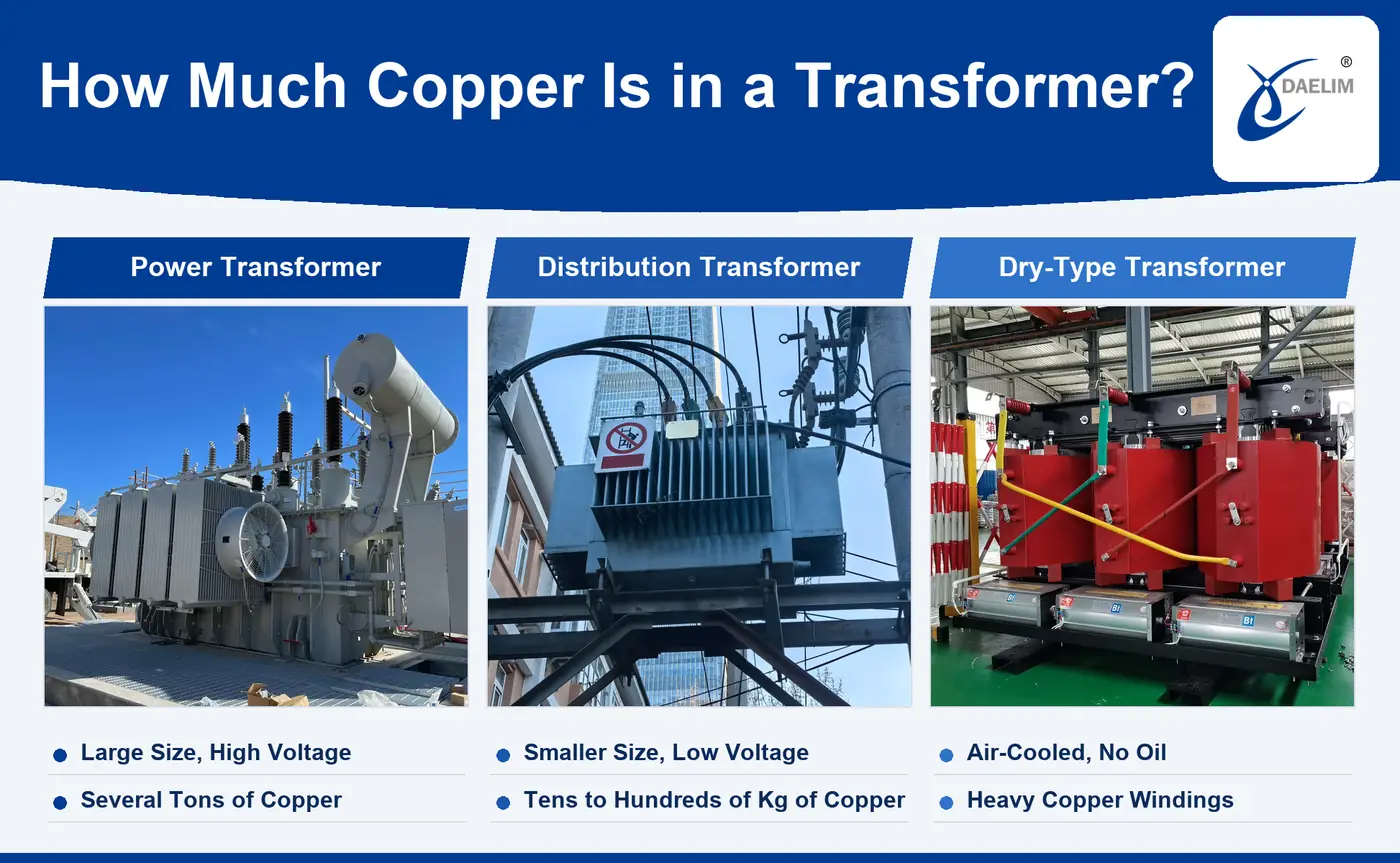
One of the most important parts of an electrical power system is a transformer that transfers power between two circuits through the following mutual induction phenomena. It changes the voltage level high or low according to circuit demand, with transmit power, and distributes it to connected loads like residential areas or industries. Transformer structure uses copper metal in windings’ construction since it has high conductivity, good thermal performance, and also high mechanical strength. So accurate use of copper quantity in transformers is helpful for final cost estimations, high efficiency, and also recycling evaluation.
Transformers Types and Their Copper Content
Power Transformers Copper Weight
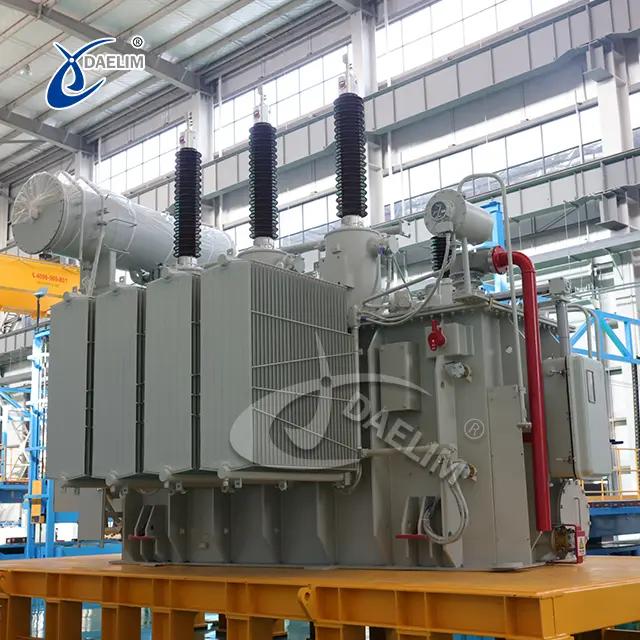
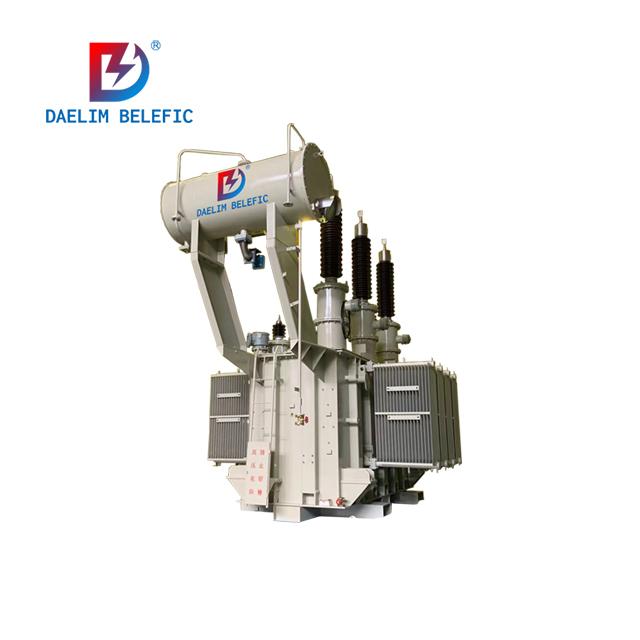
- Power transformers are used at substations and power generation systems since their design makes them applicable for high-capacity applications. These transformers operate for high current and voltage conditions, so their design is preferred for such applications.
- For managing high load demand, transformers use a larger quantity with thick copper winding. To minimize resistive heating (I2R losses) in high-capacity transformers, it uses larger cross-sectional area of copper conductors, up to several tons. generally larger power transformers with a rating range of 50MVA to 500MVA use 5 to 30 metric tons of copper, and larger transformers with a rating of more than 500MVA use more than 40 tons of copper.
- Copper is about 10 to to20 percent of the total transformer weight for these high-power transformers.
- In certain designs, additional copper mass is incorporated to enhance efficiency and minimize load losses during operation.
- Copper weight varies significantly based on the voltage rating and impedance requirements of the transformer.
Distribution Transformers’ Copper material
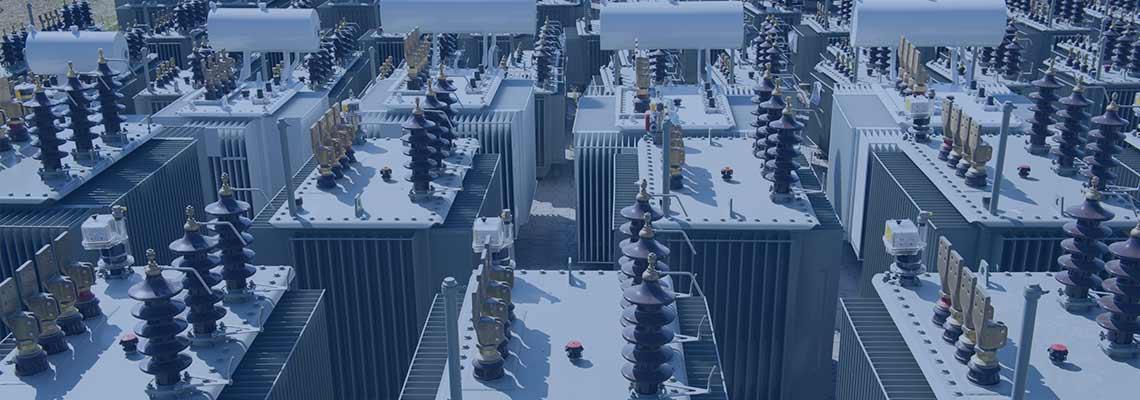
- The distribution transformer is used to make a connection between the power system and the load end. These transformers are connected close to commercial buildings, residential areas, and small industrial loads.
- These transformers’ operating voltage is lower compared to that of power transformers, and their load continuously varies over 24 hours. Consequently, they require a moderate volume of copper. Depending on the kVA rating, distribution transformers typically incorporate between tens and hundreds of kilograms of copper. Such transformers with a rating of 25 to 100 kVA (small units) use copper with a weight of 10 to 50 kg; medium units with a rating of 100 kVA to 1 MVA come with 50 to 300 kg; and larger rating units of distribution transformers with a rating range of 1 to 5 MVA use 300 to 1000 kg of copper.
- It shows about 8 to 15 percent of the total weight of the transformer for standard designs.
- Their design is such that it maintains efficiency during variation of load instead of managing extreme loads.
Dry-Type Transformers Copper Content
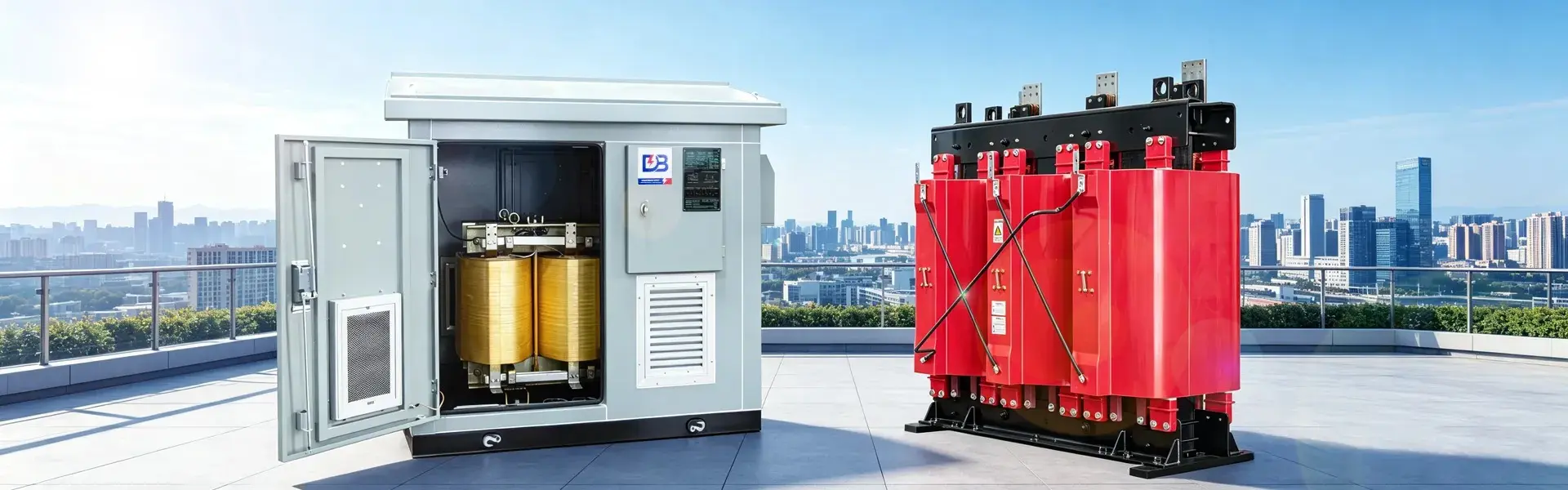
- Dry-type transformers have different features from oil-filled structures since they use air for a cooling medium rather than liquid. Either is different, but copper is still an important material for the manufacturing of these transformers.
- This transformer’s windings come with resin coating or insulating material for a durable design
- Since air is used as a cooling medium, which is not as effective as oil, dry-type transformers use more copper for managing the heat generation. Dry-type transformers use 50 to 200 kg of copper in small units with a rating of 100 to 500 kVA; 200 kg to 2 tons are used for medium transformers with a rating of 500 kVA to 5 MVA; and larger systems of 5 MVA use 2 to 5 or more tons of copper.
- Compact units use high-quality content for stable working and dissipate heat effectively
Transformer Copper Estimation by Size and Specification
There are different factors for measuring transformer copper quantity, such as design requirements, operational conditions, and technical requirements. So getting an idea of these parameters is helpful for knowing copper content calculations.
Factors Affecting Transformer Copper Content
Transformer Size & Rating (kVA/MVA)
- Transformer rating is an important point for finding copper material for the transformer. High-rating transformers manage high current, so longer windings with thick conductors are needed.
- High-power-capacity, high-content copper is used for safe operation..It is estimated that copper content is 0.6 to 1.2 kg per kVA for transformer ratings up to 100 kVA and 0.4 to 0.8 kg per kVA in transformer ratings 100 kVA to 10 MVA and 0.2 to 0.5 kg per kVA in larger rating transformers more than 10 MVA.
Voltage Levels
- Voltage is also important for winding design, such as a larger number of turns used for HV windings with thin wire and low-voltage windings that use thick conductors with a smaller number of turns.
- Both come with different configurations, so they affect net copper demand. A larger number of turns added in the wire length and a thick conductor increase the total weight. So the final copper selection needs to balance between these options. Such 11 kV/0.4 kV distribution transformer LV windings use about 60 to 70 percent net copper since high current flow and thick copper are used, but HV windings use about 30% to 40%.
- Insulation and oil clearance increase winding length for high-voltage transformers, which results in an increase in total copper weight of about 10% to 25%, also for the same current density.
Efficiency
- Efficiency is based on transformer features to reduce power losses, and these power losses are called “copper losses,” which are the result of the windings’ resistance.
- A copper conductor with a larger cross-sectional area is used to minimize these losses. That increases material cost but reduces resistance and enhances performance. So, high copper content increases efficiency. Practical design comes with a high copper cross-section with ten percent, reducing copper losses by about 15 to 20 percent, which increases transformer efficiency by about 0.3% to 0.8% according to load requirements. DOE 2016 or Tier 2 or high-efficiency standards use 20 to 30 percent more copper than standard designs.
Cooling Method
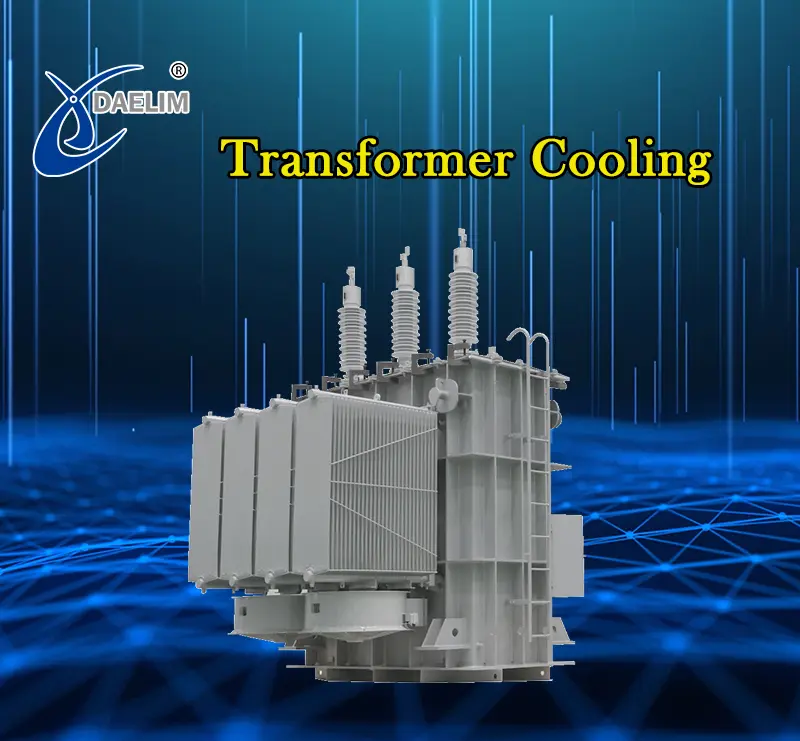
- The cooling system also affects winding designs and the copper content needed. Oil-filled transformers have good heat dissipation features and offer compact windings with low copper content. But dry-type transformers use air, which is less effective than oil, so more copper is used in the winding to dissipate heat. Dry-type transformers use 10 to 25 percent more copper than equivalent oil-filled transformers with the same rating due to lower cooling efficiency.
Manufacturer Design Standards
- Some transformers that have the same rating come with different copper from different manufacturers. For enhancing efficiency, larger copper content is used for design where longevity and high performance are needed.
- Some use less copper content but follow operational functions with a focus on optimized cost. These changes were made according to insulation materials and following different engineering standards.Such as two 1MVA transformers made from different companies can have 15 to 30 percent different copper weights according to design requirements, cost optimization, or efficiency and fewer power losses.
Transformer Copper Content by Size
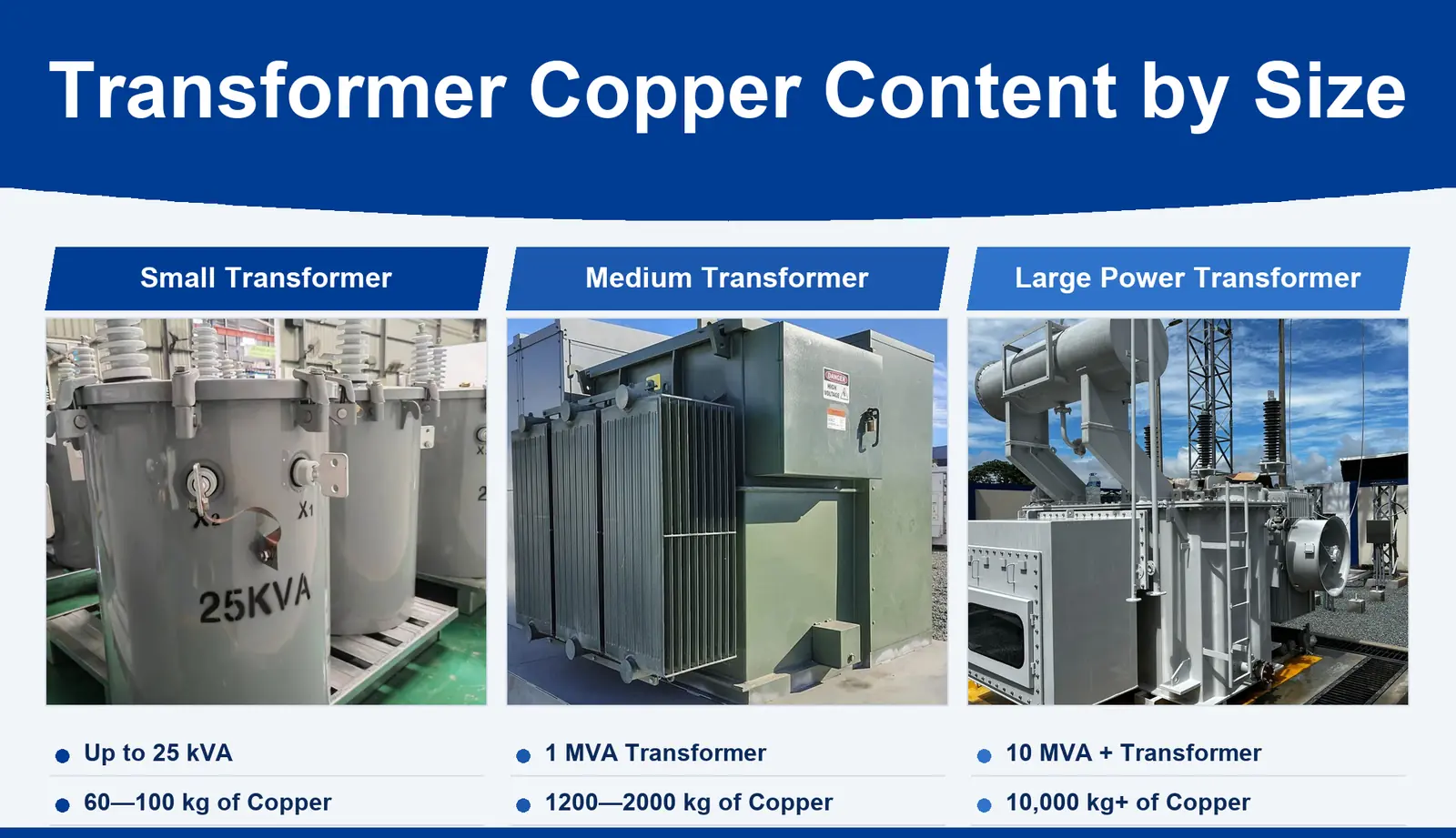
Small Transformers’ Copper Content (Up to 10 kVA)
Different electrical projects’ control systems, low-power projects, and electronic devices use small transformers. Since they have limited capacity, they use a small copper content with a weight range of a few grams to several kilograms.
Medium Transformers: Copper material (10 kVA to 1 MVA)
Residential power distribution and commercial applications use medium-sized transformers. They were used for handling moderate-level loads for a longer duration that required copper based on load demand, like tens to hundreds of kilograms, depending on the specific design.
Large Power Transformers (>1 MVA)
These units are primarily deployed in industrial heavy-duty grids or high-capacity utility projects. These transformers handle load requirements where high winding structures are needed. These units, since they manage high power, use several hundred kilograms to multiple tons, so they operate at a larger level.
| Transformer Size | Rating | Copper Content (kg per kVA) | Typical Copper Weight |
|---|---|---|---|
| Small Transformers | 1 – 10 kVA | 0.6 – 1.2 kg/kVA | 0.6 – 12 kg |
| Medium Transformers | 100 kVA – 1 MVA | 0.4 – 0.8 kg/kVA | 40 – 800 kg |
| Large Transformers | 10 MVA and above | 0.2 – 0.5 kg/kVA | 2,000 – 5,000+ kg |
Transformer Copper Content Estimation Techniques
Rule-of-Thumb techniques
- It is a fast technique and commonly used according to transformer rating. Copper weight (in kilograms). Copper content is estimated through kVA values rather than percentage rules, such as
| Transformer Size | Rating Range | Copper Content (kg per kVA) |
|---|---|---|
| Small Transformers | Up to 100 kVA | 0.6 – 1.2 kg/kVA |
| Medium Transformers | 100 kVA to 10 MVA | 0.4 – 0.8 kg/kVA |
| Large Transformers | Above 10 MVA | 0.2 – 0.5 kg/kVA |
Percentage of Total Weight Method
- It is a practical technique compared to the above method that follows the overall transformer weight.
| Transformer Type / Design | Copper Content (% of Total Weight) |
|---|---|
| Standard Oil-Filled Transformers | 8% – 15% |
| High-Efficiency Transformers | 15% – 25% |
| Dry-Type Transformers | 15% – 25% |
Conclusion
Transformer copper quantity is set according to technical values such as 0.2 — 1.2 kg/kVA according to size, 8% to 15% of total weight is used for standard design, and about 25 percent is used to get high efficiency or dry-type models. Insulation spacing, voltage class, and efficiency standards like DOE 2016 or Tier 2 need more copper content, about 10 to 30 percent, and they are important design factors compared to secondary considerations.
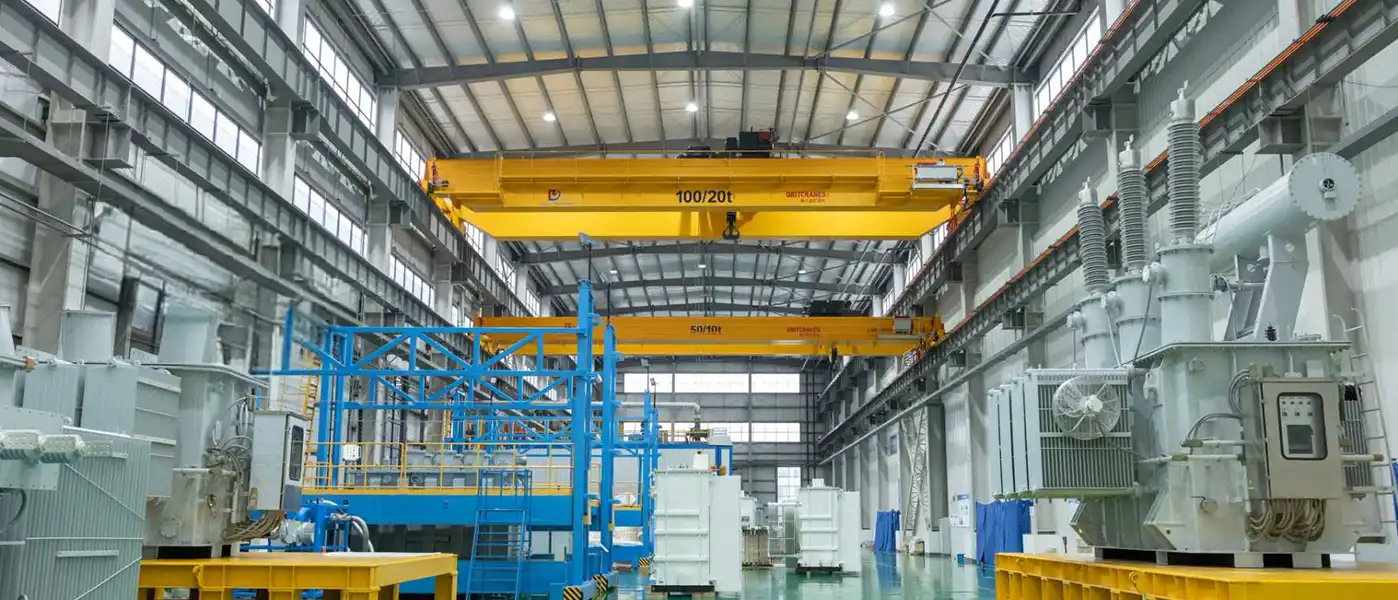
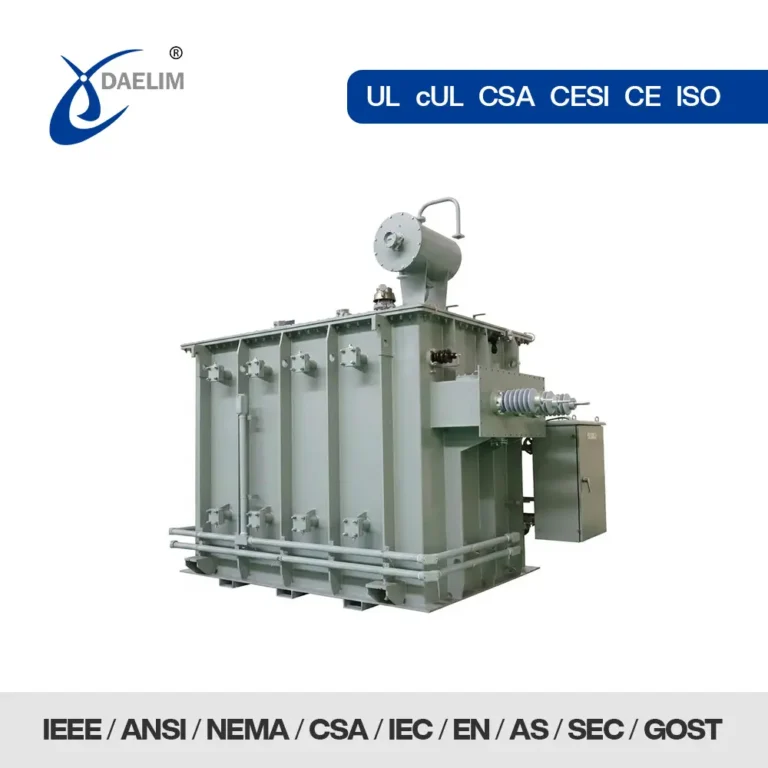
Daelim transformers provide copper usage optimization with a high permeability silicon steel core through accurate conductor size, forming a uniform behavior between cost and efficiency. Their designs are according to IEEE, IEC, and CSA standards that have a direct effect on copper content, thermal performance, and loss reduction, making them complete solution providers, not only manufacturers.
FAQ
How many kg of copper are in a transformer?
KVA rating helps to find the copper quantity. Standards design requires copper to be about 8 to 15 percent of net transformer weight and 15 to 25 percent for dry-type transformers. The 25 kVA transformer needed 10 to 50 kg of copper; a medium transformer, about 1 MVA, needed 400 to 800 kg; and large transformers, more than 10 MVA, used 10,000 kg or higher of copper based on design and efficiency.
How much copper is in a 500 kVA transformer?
A 500 kVA transformer has 250 to 400 kg of copper in the oil-immersed type and 400 to 600 kg in dry-type transformers based on higher cooling and thermal designs. These values are according to a practical range of 0.5 to 0.8 kg per kVA.





 English
 Polish
 German