
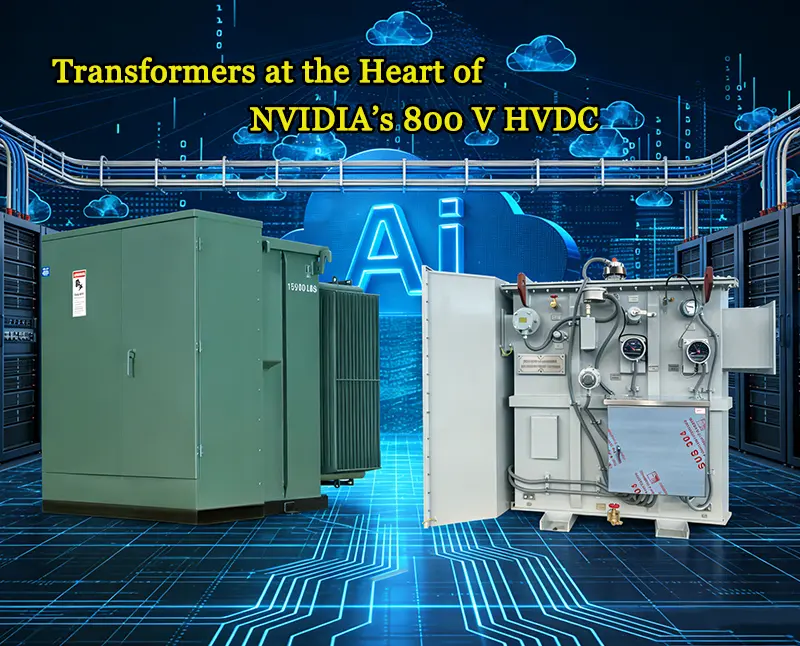
As the world adopts AI for its day-to-day tasks, the AI workload scales dramatically. The data centers powering AI are confronted with skyrocketing power demand that moves from the current hundreds of kW to a few MW in very short order.
A shift is needed in how these AI data centers are powered and how much they consume to solve even the simplest of tasks. The NVIDIA’s new 800 V DC (HVDC) architecture is the industry most visible signal of this shift.
While most of the discussion is about wide bandgap semiconductors, high density busbars and GaN/SiC converters the electrical transformer remains a major part of the system that power these AI data centers. The transformer is a key part of the electrical power distribution system, especially in the first two stages of the grid-to-rack chain.
In this article we will discuss how a conventional transformer remains indispensable for data center operations, how Daelim Transformer is offering state-of-the-art services related to electrical transformers custom designed for powering data centers and how solid state transformers will replace these conventional transformers for data center operations.
Grid to Data Centre
As per the NVIDIA’s described architecture, the system interfaces with the transformer at two main stages. Initially at the facility center where incoming AC power is converted into direct current and then subsequently within the rack power modules for voltage step down work.
Facility Level AC to DC Conversion
At facility AC to DC conversion the primary goal is to convert the incoming medium voltage alternating current from the national grid supply or local supply system into the stable 800 volts direct current. In this process the role of the transformer is to provide the necessary voltage step down and crucial galvanic isolation between the utility grid and the data center internal 800 VDC power distribution system.
In Rack DC to DC Conversion
Once inside the side rack, the 800 VDC is still too high for the individual components and needs to be further reduced to a lower voltage that can be safely used by the GPUs and other server components. To complete this task, highly compact high efficiency DC to DC converters are integrated within the racks to perform this voltage step done process. The converters use small high frequency integrated or planar transformers.
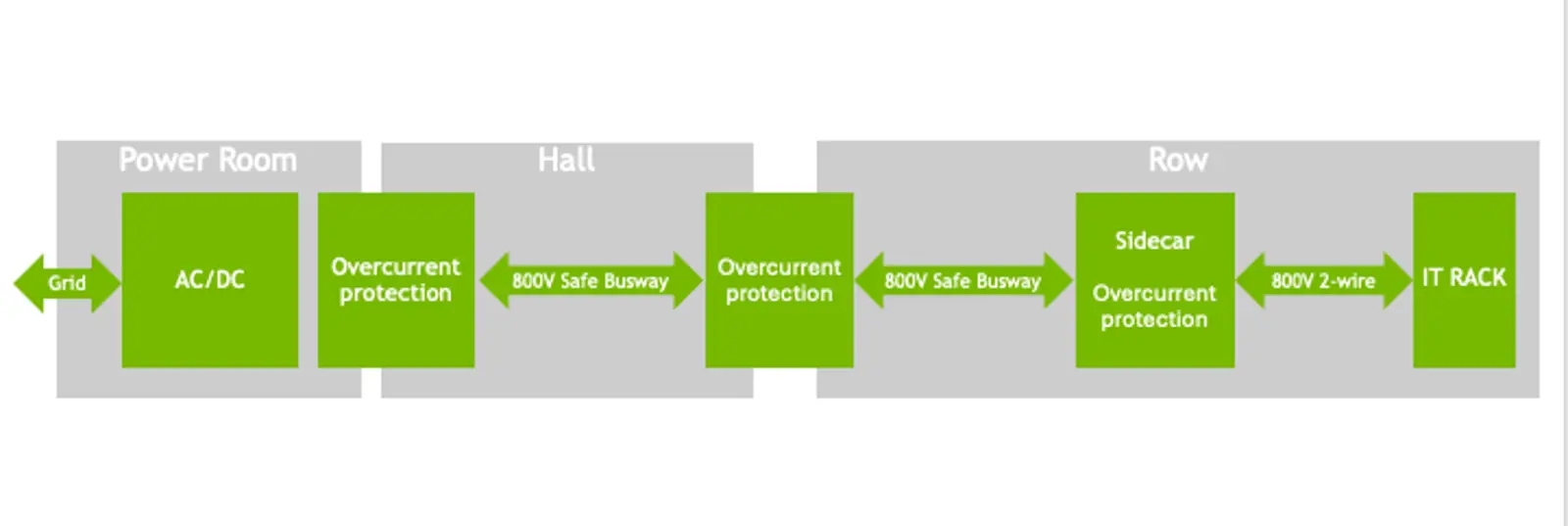
NVIDIA 800 VDC architecture minimizes energy conversions (Image source: NVIDIA)
These two transformers involved in delivering power to the data center ensure that the building connection to the grid remains safe and compatible with data center requirements. The conventional yet custom designed transformer for Data centers does the heavy lifting of isolating voltage adaptation and fault surge protection, a function that no other electrical device can do especially at the scale of tens to hundreds of megawatts.
One good example of this is the sidecar power rack mentioned by Texas instruments that wrote that for a 1 MW rack the copper weight at given 48 V would be almost untenable (450 lbs of copper). Hence the NVIDIA shift to 800 HVDC is compelling.
Another blog by NVIDIA mentioned that the NVIDIA’s new 800 V DC architecture will reduce the conversion losses, reduce space requirements and copper use associated with electronics.
This reduced conversion losses does not mean that the importance of traditional transformers will reduce. Opposite to that the use of two large scale low frequency transformers remains the same in the front end to interface the traditional grid and assure safe feeding of the high voltage DC bus.
Where Daelim Transformer Adds Current Value
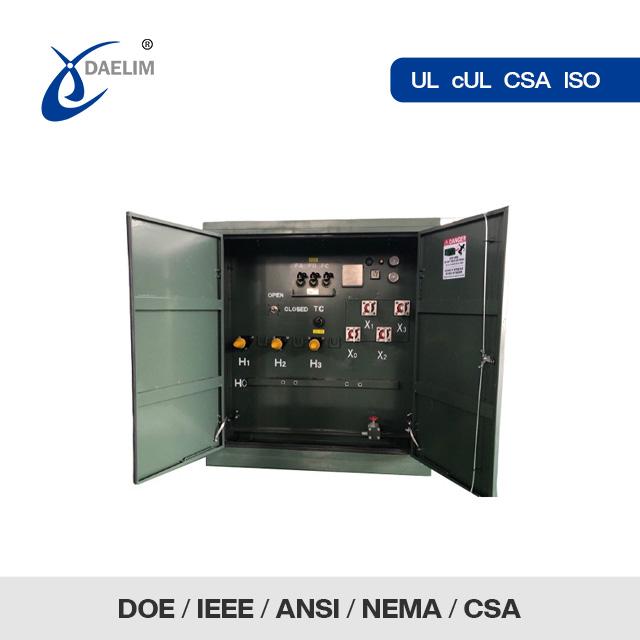
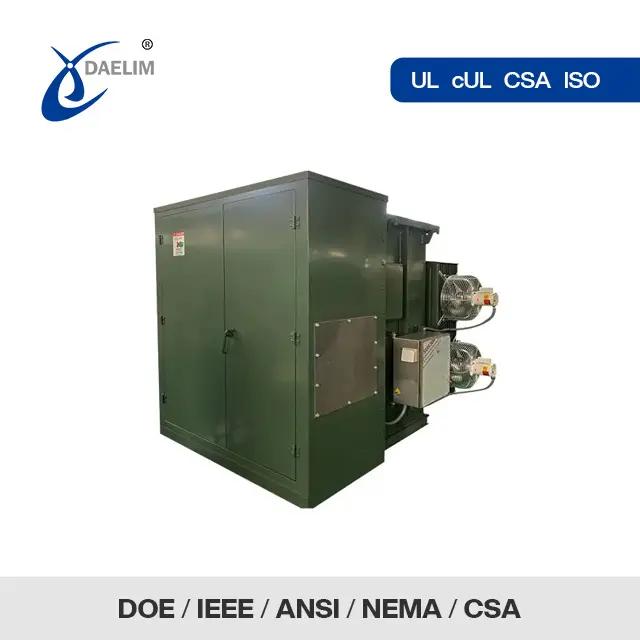
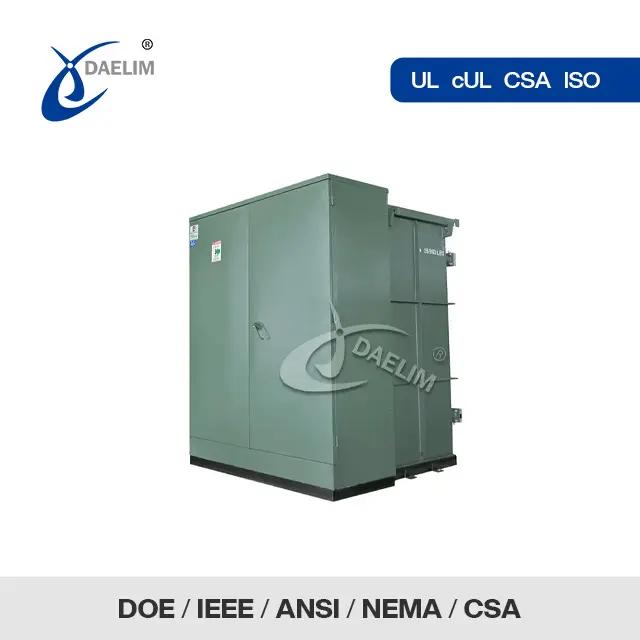
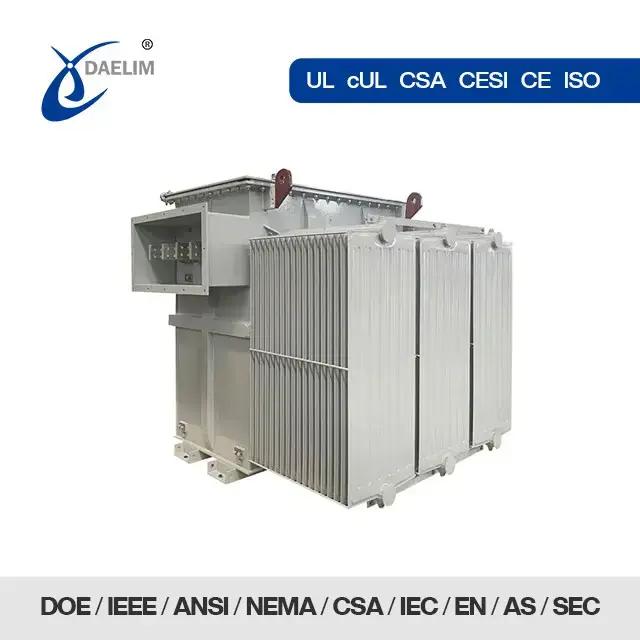
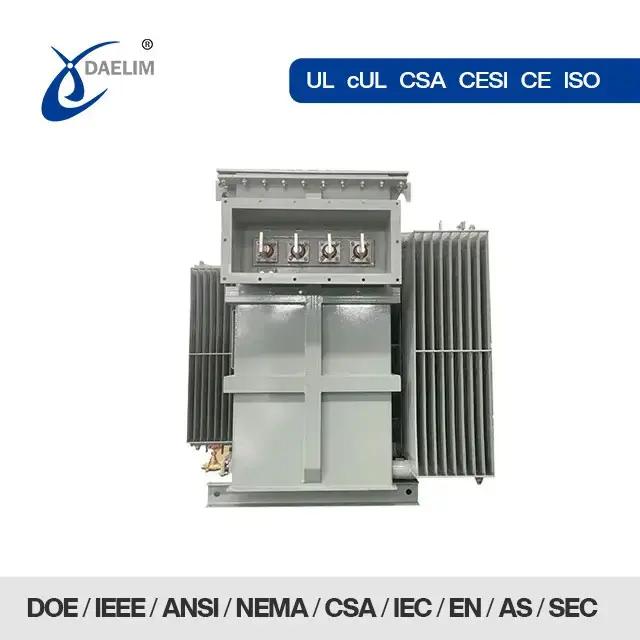
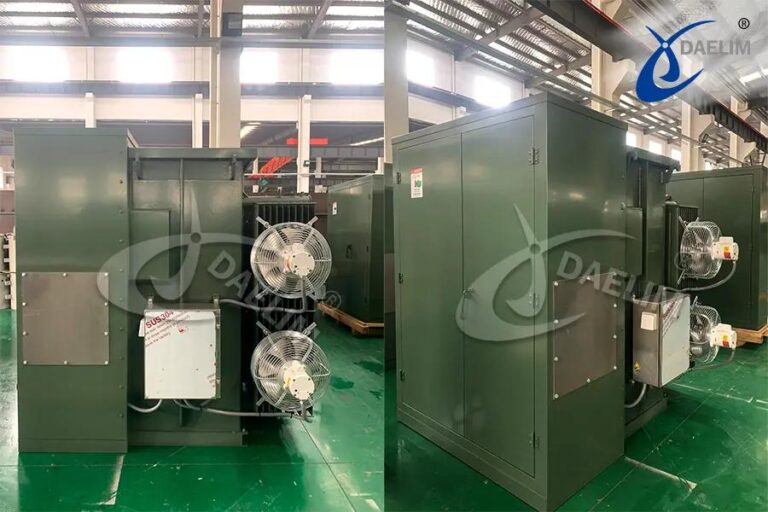
Daelim Transformer has a well-established distribution transformer design and manufacturing facility in the USA. They serve utility, power production and industrial sectors including large data centers that power current AI trends. Considering the NVIDIA’s 800 HVDC rollout, Daelim Transformer will perform an important value adding role in design and development of custom electrical transformers.
Medium voltage step down transformers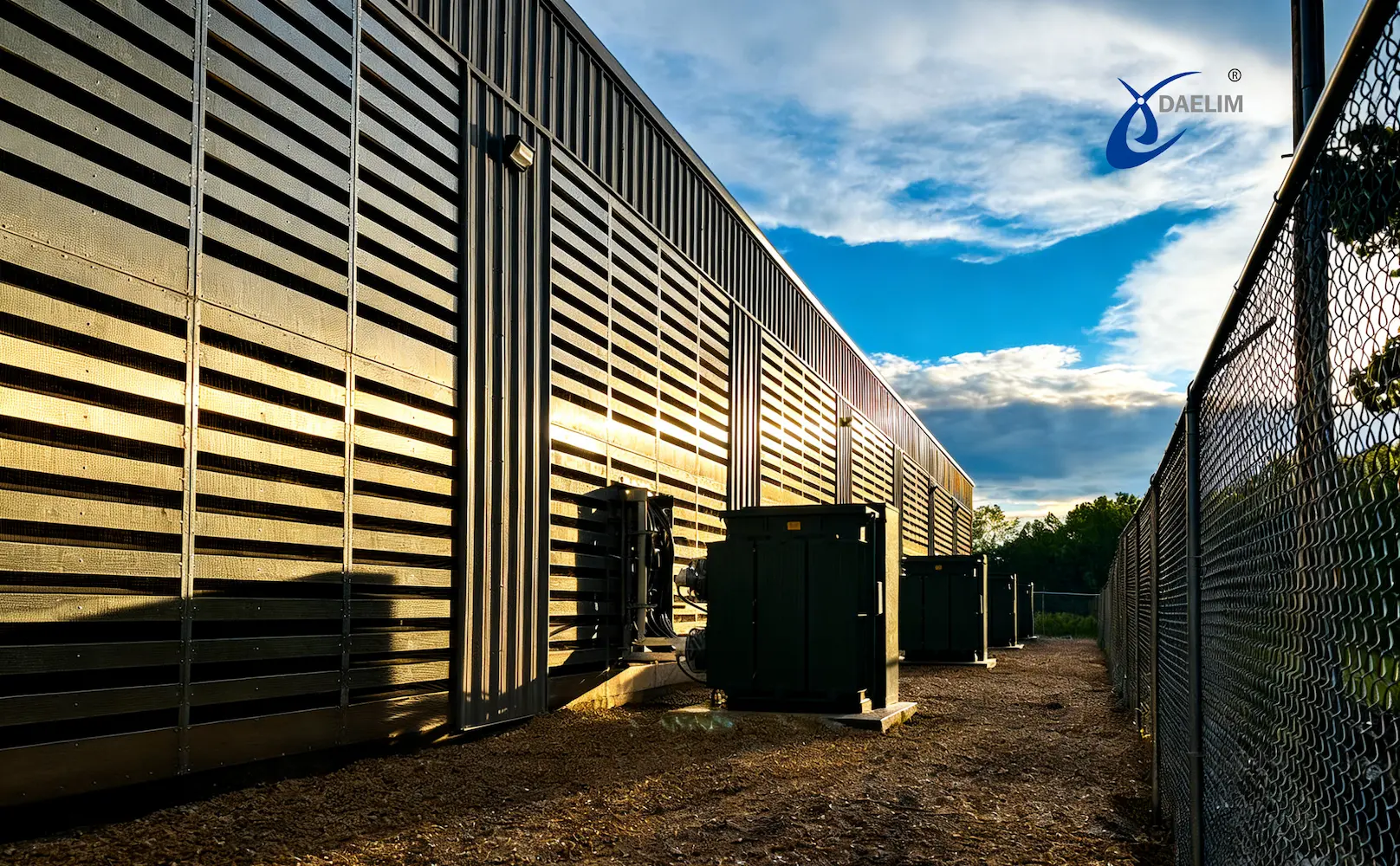
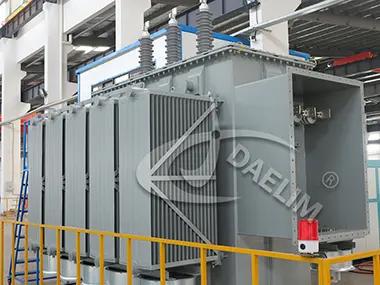
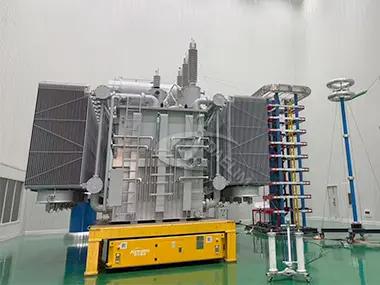
A medium voltage step down transformer designed and developed by Daelim Transformer will be used for data center substation. This transformer will convert grid 11 to 13 kV into lower AC voltage that will be tailored for rectifier/UPS rooms. These custom built transformers will provide the foundation for the grid to data center chain and they will enable the later conversion to HVDC.
Harmonic mitigation and custom winding design
In the case of a large and high density data center, the Daelim Transformers can custom design and build a transformer with special core and winding configuration that can handle rectifier harmonics. This makes Daelim current work and expertise highly valuable for delivering transformers that are relevant to the front end converter stage feeding the HVDC bus.
Reliability and Serviceability
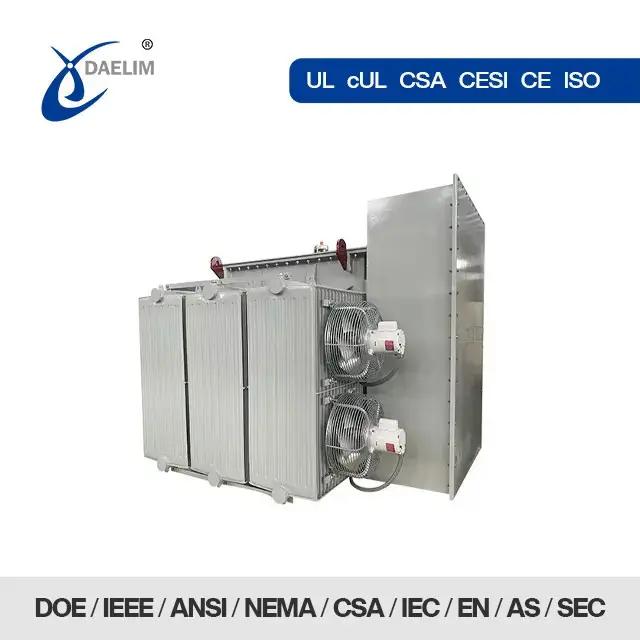
Current data centers and especially those that power large AI models require uptime. Daelim Transformers offer designs that ensure MTBF, robust cooling systems (ONAF or KNAF) and a modular design facility servicing with minimal disturbance.
Thus, while the conversation around 800 HVDC is heavily focused on converters, busbar and rack level power distribution systems, the standard electrical transformer infrastructure remains firmly in place and this is where Daelim Transformers are expert and play their critical role in the best manner possible.
Transition Toward Solid-State Transformers (SSTs)
NVIDIA’s architecture makes it quite clear that the solid state transformers will be the key component in powering data centers of the future. Their white paper has shown that the 13.8 kV is converted to 800 V DC directly using SST and industrial grade rectifier.
Thus eliminating the need of several AC/DC and DC/DC conversion steps. The drive is to simplify the conversion chain, improve efficiency by 5 % in end-to-end loss and reduce maintenance cost by up to 70 %.
SSTs combine high frequency power conversion electronics with magnetic isolation at higher frequency and offer following advantages.
- Bidirectional operation which help with no site storage of magnetics and improves control over the system and process
- Higher switching frequency which reduces the size of the magnetics and also improves the control over the system and process
- These transformers are more compact, intelligent power blocks which are better for data centre mezzanine or rack embedded power systems.
It is important to note here that the SSTs have not yet displaced or replaced large low frequency transformers in the first stage. The SSTs will replace the intermediate transformer or rectifier modules as design maturity, cost and scalability evolve.
In other words, the first two traditional transformers stages that are grid to AC and AC to rectifier will still persist for near term especially in larger data centre power blocks. Meanwhile SSt will increasingly be used at the rack level.
Conclusion
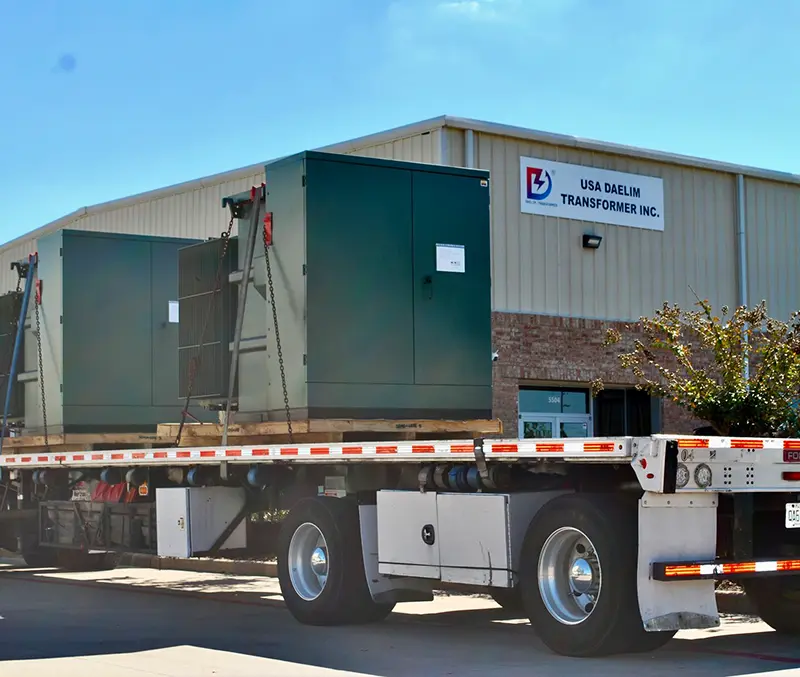
Daelim Transformer remains a trusted name in the electrical transformer manufacturing industry and will remain a reliable source of quality service in these critical stages. With dozens of highly skilled and experienced power engineers that have been working in the transformer manufacturing field for decades, Daelim can help your data centre seamlessly embed and deploy NVIDIA 800 HVDC architecture.
You can contact us today to start discussing custom transformer solutions and other engineering support needed for full system integration of NVIDIA systems and its power demand.
 English
 Polish
 German