
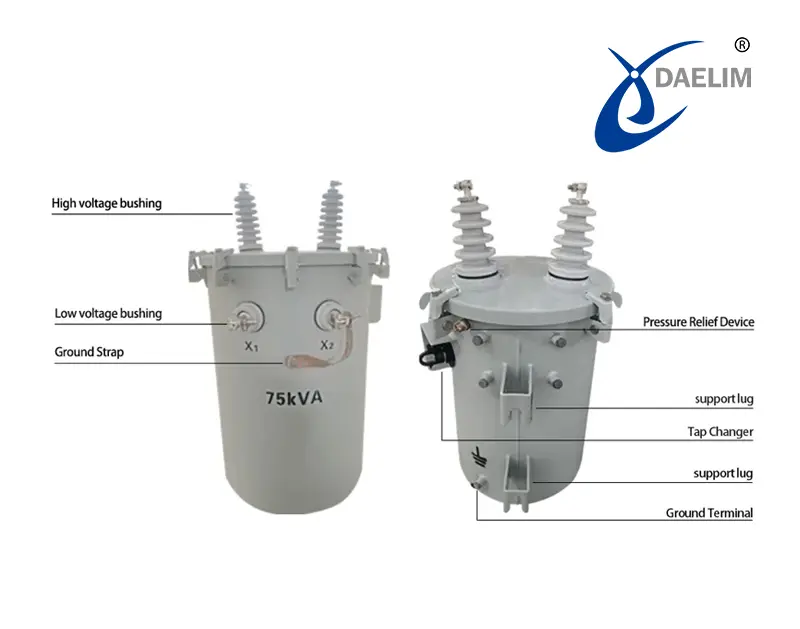
Electrical transformers are the only electrical device in our entire electricity distribution system that controls and regulates the supply of electrical voltage and current. Among different types of electric Transformers you see, the single phase electrical Transformers are the most common and easily observable type of electric Transformers.
Electrical Transformer you see installed on poles and all around the residential areas are most probably the single phase electrical Transformers. So a transformer that is so widely used all around you, it is important for you to understand the construction and working of these single phase Transformers.
So we have written this article for you to know all the basic parts of a single phase transformer. We will also explain to you about the construction of different parts and how all these parts work to deliver you electricity.
What is a Single Phase Transformer?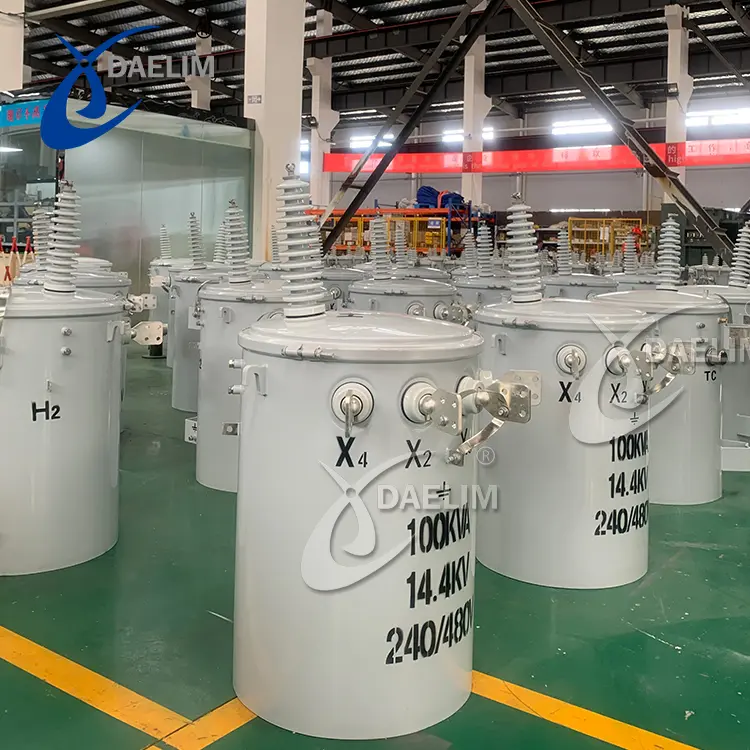
Single phase transformer operates on a single voltage cycle and has only one live wire and one neutral wire. This is unlike three phase Transformers where multiple voltage cycles happen simultaneously and there are three live and one neutral wire.
Transformer output depends on the application for which it is installed. For example in America all standard home appliances operate on 110 volts and this is what most of their single phase domestically installed Transformers delivered as the output.
Different Parts of a Single Phase Transformer
There are 5 main and key parts of a single phase transformer that work together to deliver you single phase alternating current.
Transformer winding
The single phase transformer you see has two windings. Its one winding is called primary and the other winding is called secondary. If you observe closely, you will see that the all single phase transformers receive input at their primary winding. All of these transformers will deliver you output for your homes through their secondary winding.
How much your transformer increases or decreases the electrical voltage for your application depends on your transformer turn ratio.
Learn more about Transformer Winding
Transformer Core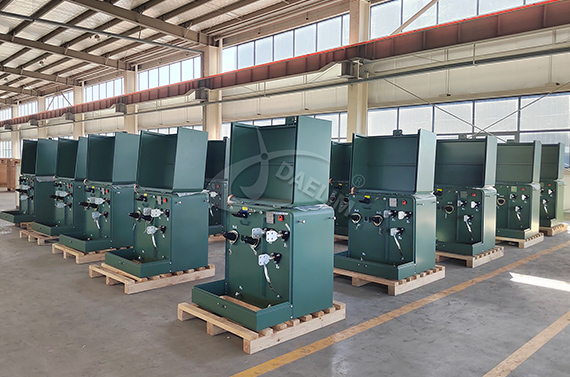
Transformer core is the centre part of any single phase transformer and it is part on which the winding is done. Your single phase transformer core will have its primary and secondary winding at its opposute ends. The core of a single phase transformer is responsible for transferring the electromagnetic flux from the primary winding to the secondary winding of the transformer.
Insulation and Isolation
In a single phase transformer the Assembly of the transformer winding and the Transformer core has to be a non-contact assembly. This means that the winding of a single phase transformer does not directly touch the Transformer Core. To develop a noncontact assembly, the contact point between the winding and core of the single phase transformer is insulated using a quality insulating material like epoxy resin or paper press board.
You may enjoy: Why Choose Silicon Steel Sheets for Transformer Cores?
Cooling Mechanism
As most single phase transformers are not big and they only work to regulate electricity that fall within the range of domestic for small industrial appliances. So their size and power ratings are not really that big but they still produce a lot of waste heat. To remove the waste heat, a cooling mechanism is required for every single phase transformer.
Reading on: What is Transformer Cooling and How is it done?
Other Important Parts
Like any other Transformer a single phase transformer also has all the other standard parts of a transformer. These standard parts include bushing, conservative tank, breather, tap changer, and all other safety tools and sensors.
Construction of a Single Phase Transformer
If you want to truly understand a single phase transformer and want to learn how it works, then understanding its complete structure and how it is constructed is very important.
Here we will try to explain to you about the design of different parts of a single phase transformer, how these parts are assembled together to develop the basic structure and then how all parts are constructed together to give a one single phase transformer.
You may enjoy: Construction of Three Phase Transformers
Core of Single Phase Transformer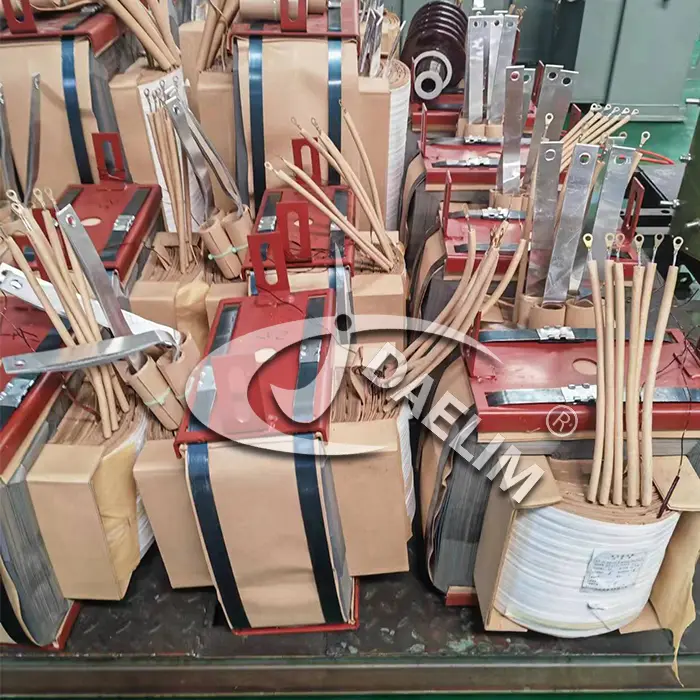
Like any transformer you can see installed on the pole, your single phase transformer core, is its most important part. It has a rectangular design with two vertical legs called Limbs and two horizontal bars called Yokes. The limbs and yokes are connected to each other to develop a rectangular frame called the transformer core.
Rectangular frame of the core is really given one of the two basic shapes for single phase Transformers. The construction of the core of your single phase transformer can be done in two ways. You can either have a core type design or a shell type design for your transformer core.
The construction of the quality core is done using high quality laminated silicon steel sheets. A very thin sheet of silicon steel is cut using a precision metal press in either E-I, U-I, or Toroidal Shapes. Number of sheets are then stacked up and a precision machine is used to press and assemble them in a core.
Transformer Winding
You can select either copper or aluminum for your transformer winding. Both of these are the two most commonly used materials for any transformer winding. It depends on the application of the single phase transformer. Transformers developed for general purpose use like those you see installed in residential areas have aluminum wire used in their winding.
The transformer developed for sensitive machinery of any industry has copper wire used in their winding. This is because copper is much better conductor but is expensive and aluminum is lighter, and cheaper but a little less conductor of electricity than copper.
During the construction of a transformer winding high quality and most advanced decision winding machines are used. These machines are automatically and not controlled by a computer system where an operator can provide input about the number of turns. the design and all other technical aspects of Transformer winding. These machines then develop the transformer winding with the exact number of turns.
As the power requirement from a single phase transformer is not huge, the winding is usually constructed in either layer configuration or in disc configuration. Layer configuration Transformer winding is constructed by making multiple layers of copper or aluminium wire with insulation placed within each layer.
In disc configuration, Several discs are constructed using the conductor material wire and then disks are connected with insulation material placed between two discs. Which country creation is usually constructed for high voltage single phase transformers.
Insulation and Isolation
Transformer insulation and isolation is required to develop non contact assembly of winding and core, to avoid short circuit in the winding and core assembly, and to protect winding and core from external environmental factors like moisture, dust and debris.
The insulation and isolation of a transformer is down during the construction depending on the size and type of single phase transformer. If you have to develop a dry type single phase transformer, then the core and winding assembly will be covered in an epoxy resin.
Resin when in its liquid form is put in a tank and core and winding assembly is dipped in the tank. This fills all the gaps and contact regions between the transformer core and winding. The core and winding assembly is then bought out and heated for curing of resin. When cured, resin solidifies to insulate and as well as isolate the core and winding assembly.
If you have to develop a oil-immersed type single phase transformer, then the contact region of core and warning assembly will be insulated using an insulating press paper board or a special type of insulating tape or cloth. The same insulating material will also be used to insulate the outermost layer of the winding.
Then the entire assembly of the core and transformer winding will be placed inside a tank and field with Transformer oil to complete. It will completely insulate and isolate the core and winding assembly from the outer atmosphere.
Transformer Tank
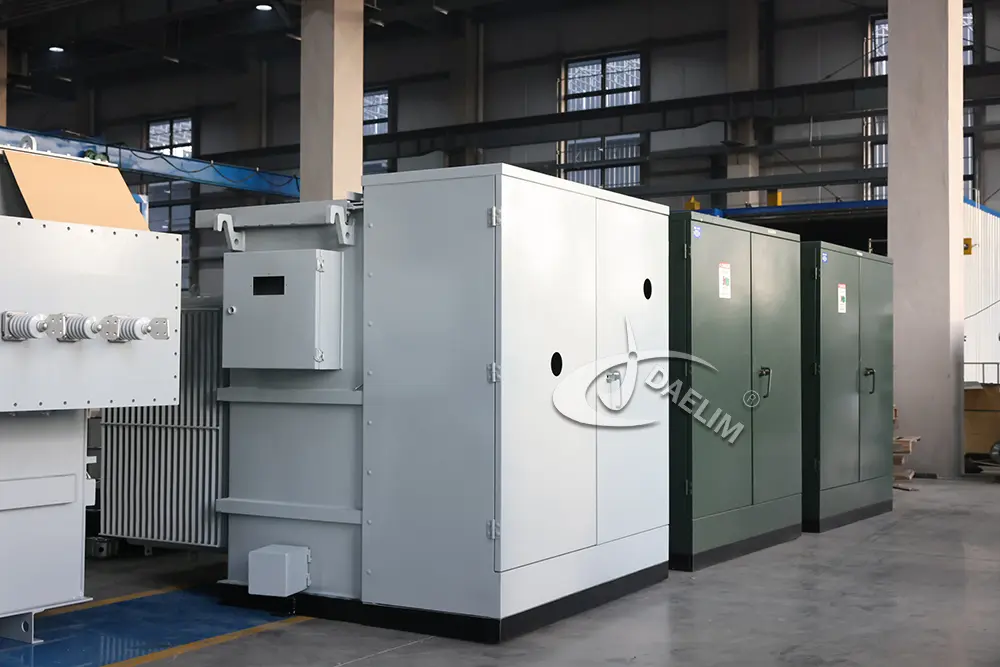 The Transformer tank is an integrated part of a single phase transformer whether it is a dry type transformer or an oil type transformer. The winding and core assembly of the transformer is placed inside the Transformer tank to protect it from external environmental factors like thunderstorms and from extreme and direct sunlight.
The Transformer tank is usually constructed using a high quality stainless steel sheet whose thickness depends on the size and Power capacity of the transformer. The stainless steel sheet when shaped according to the transformer tank design is usually given surface treatment processes to increase its corrosion resistance.
The post process of small single phase transformer tanks is usually a good quality spray paint with multiple layers of paints being done on the Transformer tank whereas in large single phase Transformers this is usually done through different deposition methods like electroplating.
Cooling Mechanism
The electrical Transformers you see installed on poles in your residential areas are dry type single phase Transformers and they usually do not need any dedicated cooling mechanism and a natural air cooling system is enough to remove their waste heat.
As Core and winding assembly of these transformers are covered in a cured resin which is placed securely in the transformer tank, the tank is designed in a way that it enables the air flow over the resin covered winding. The natural flow of air removes the waste from winding using the process called natural convection. This is only suitable for small and domestically using single phase transformers.
The Transformers that you see installed in big residential areas or in small industries are usually oil type single phase transformers. They also most of the time do not need any dedicated transformer cooling mechanism.
To facilitate the heat transfer from Oil to tank and from tank to the environment, the tank is usually designed with several tubes that act as fins going to release surface area exposed to the environment. More area means more heat can be transferred to the environment using the national Convection process
In both dry type and all type transformers, if the natural air system is not enough to remove the waste and electrical cooling fan can be installed to remove the waste heat. The electrical cooling fan will force air to pass over the either reason covered winding or over the fins of the oil field Transformer tank. This Force air movement over the heated region will remove much more heat using the principle of forced Convection heat transfer.
Working of a Single Phase Transformer
If you take any single phase transformer, it will work on the principle of Faraday’s Law. According to this law when an alternating current is applied on the primary winding of a single phase transformer, it creates a time varying magnetic field in the core of that single phase transformer that in return produces secondary voltage.
How the working of a single phase transformer is a little different from other or a three phase transformer is that there is one single set of primary and secondary transformer winding in a single phase transformer rather than three different sets of primary and secondary windings present in a three phase transformer.
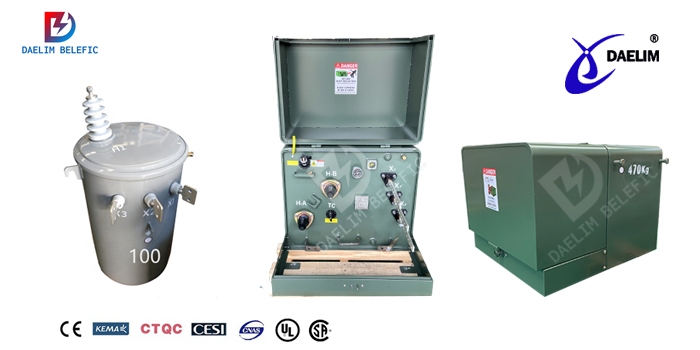
ConclusionSingle phase transformers are the most widely used type of electrical Transformers as most of our domestic and household electrical appliances are all operated on single phase alternating current. These electrical transformers are constructed using high quality materials and most of their parts are manufactured using automated and precision machines. Working principle of these single phase Transformers is exactly the same as of any other electrical transformer with the only difference lies in the output which is a single phase electricity.
Follow Us
Your Single Phase Transformers should have reliable construction and efficient working to deliver you safe and constant supply of electricity. We at Daelim Transformer offer single phase transformers that are constructed following the highest international standards of CSA, ANSI, DOE, IEEE, IEC and more. All our electrical transformers offer efficiency of 95% or above as per IEEE standards on efficient electrical devices.
IF you have any questions about transformers, Contact US and we will talk you through the process.


 English
 Polish
 German