
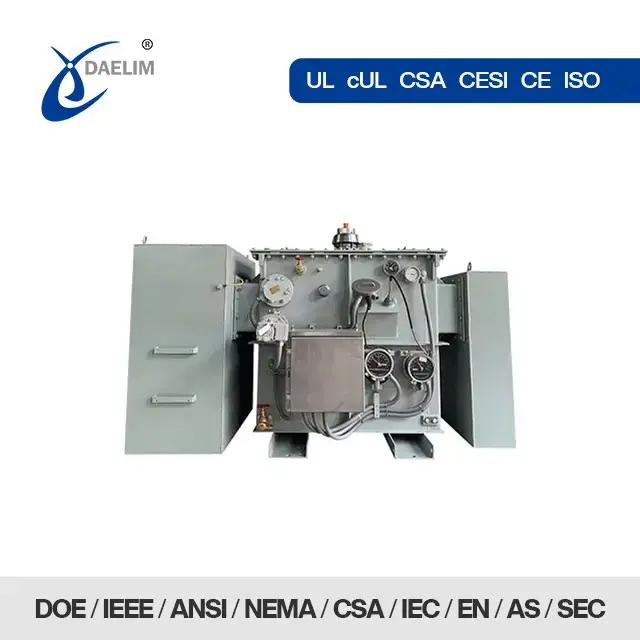
Unit substations are essential for safely converting high-voltage electricity from utility lines to usable levels for industrial, commercial, and residential applications. They typically consist of a transformer, primary and secondary distribution equipment, and switchgear. These substations are available in primary and secondary types, depending on voltage and transformer ratings.
Daelim Transformer offers specialized Unit Substation Solutions, providing transformers, switchgears, and a range of customizable options. With experience across the Americas in industries such as new energy and manufacturing, Daelim ensures safe, efficient, and cost-effective power distribution.
Contact Daelim today for tailored unit substation solutions and competitive quotes to meet your specific needs.
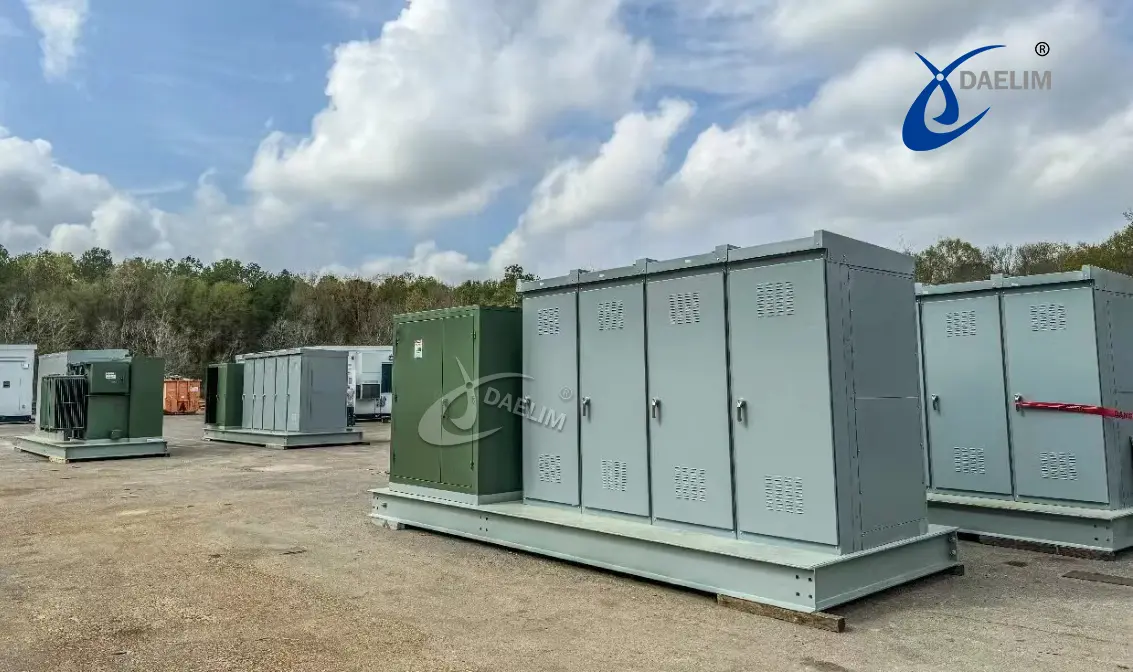
What is a Unit Substation?
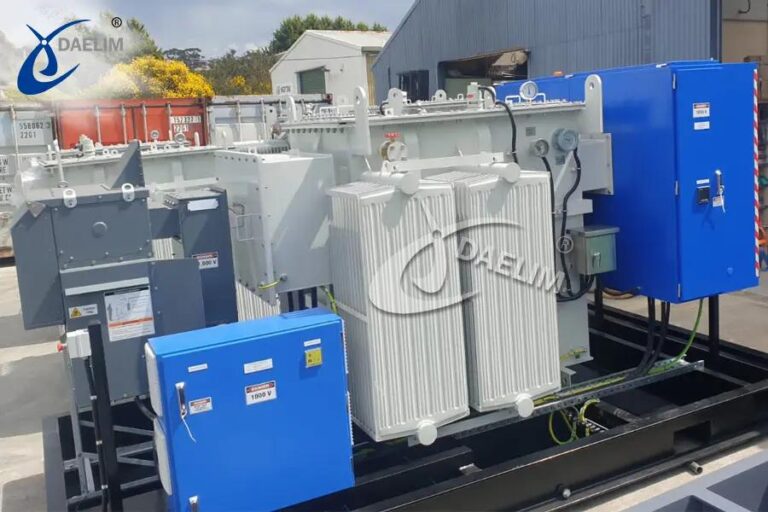
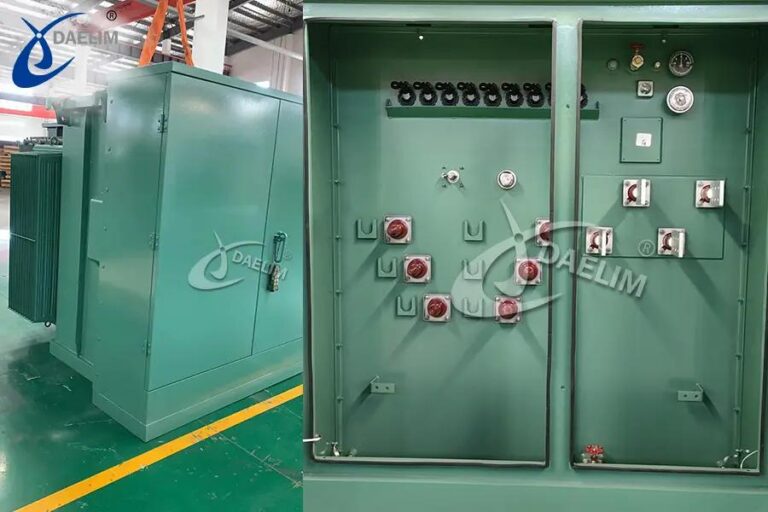
A unit substation reduces high voltage from utility lines to safer, usable voltages within buildings or factories. These stations can be found indoors or outdoors and have three main parts:
- Primary power distribution
- A three-phase transformer
- Secondary distribution equipment
There are two types of unit substations, primary and secondary, depending upon the voltage and transformer rating. The transformer forms the main part, so it is easy to decide which one best suits your setup. Having chosen the type of unit substation, the next step is to select the correct transformer.
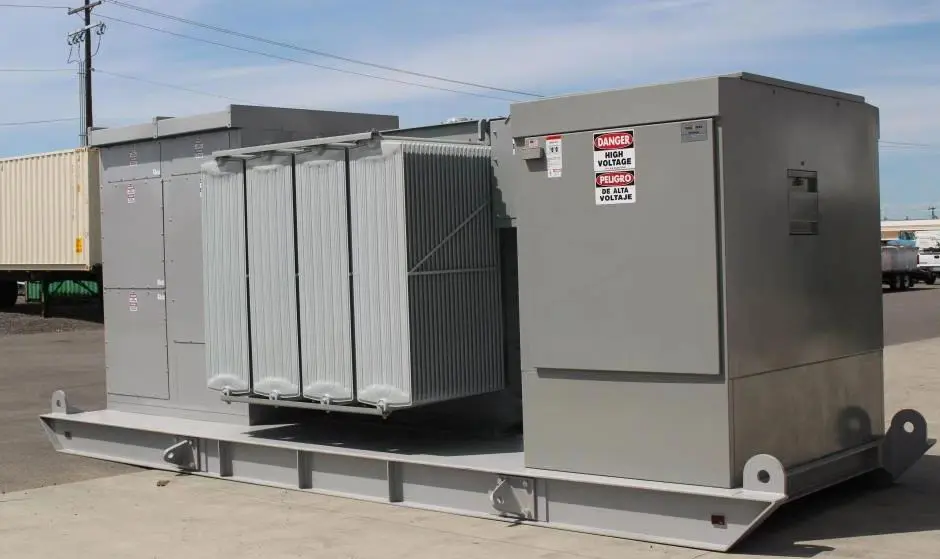
Primary Unit Substation
Primary unit substation transformers reduce utility voltages to a level that makes them usable within the plant. There is a model for nearly every configuration, and primary voltages up to 69 kV and secondary ones from 34.5 kV down are accommodated.
Like ANSI and NEMA®, these substations meet critical standards to assure control and safety at the highest level. They also offer flexible design options, allowing you to almost choose any type of secondary switchgear to fit your needs.
For primary unit substations, here are the usual electrical ratings you’ll see:
- Primary voltage : between 6.9 kV to 69 kV
- Transformer power: From 500 kVA to 20,000 kVA
- Secondary voltage: 2.4 kV up to 34.5 kV
These ratings help to maintain power levels to what the equipment you’ll be using in your facility requires. The unit substation unit may consist of a combination of electrical and control equipment, like the following:
- Air Terminal Chamber (ATC)
- Medium-voltage load interrupter switchgear (Type MVS)
- Metal-enclosed circuit breaker switchgear like:
- Metal-enclosed breaker (MEB)
- Metal-enclosed switch-over breaker (MSB)
- Metal-enclosed front accessible (MEF)
- Metal-clad circuit breaker switchgear (Type VacClad-W)
Each serves a variety of applications and provides protection for your facility’s electrical needs.
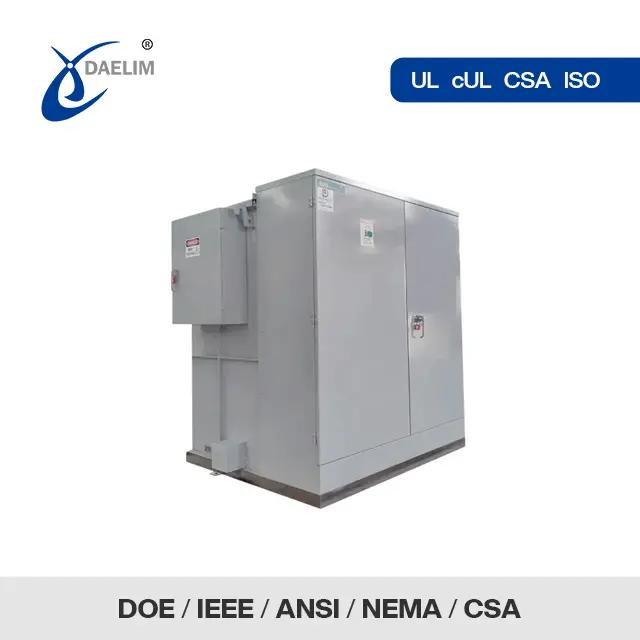
Secondary Unit Substation
Secondary unit substations reduce utility voltages to levels suitable for use in the facilities when the primary voltage is less than 38 kV, with a secondary voltage of 208 to 600 V. Their designs are made in accordance with ANSI and NEMA standards to make sure that all of the units fit absolutely and securely. They have several time-saving features, such as easy access and direct connect terminal blocks and pre-wired harnesses, that make work easier in substation control and communication wiring.
The secondary unit substations usually have the following electrical ratings:
- Concentration Substation Voltage: between 2.4 and 38 kV
- Transformer Capacity: 300 kVA to 3,750 kVA
- Distribution Switchboard: 208 V, 240 V, 480 V or 600 V
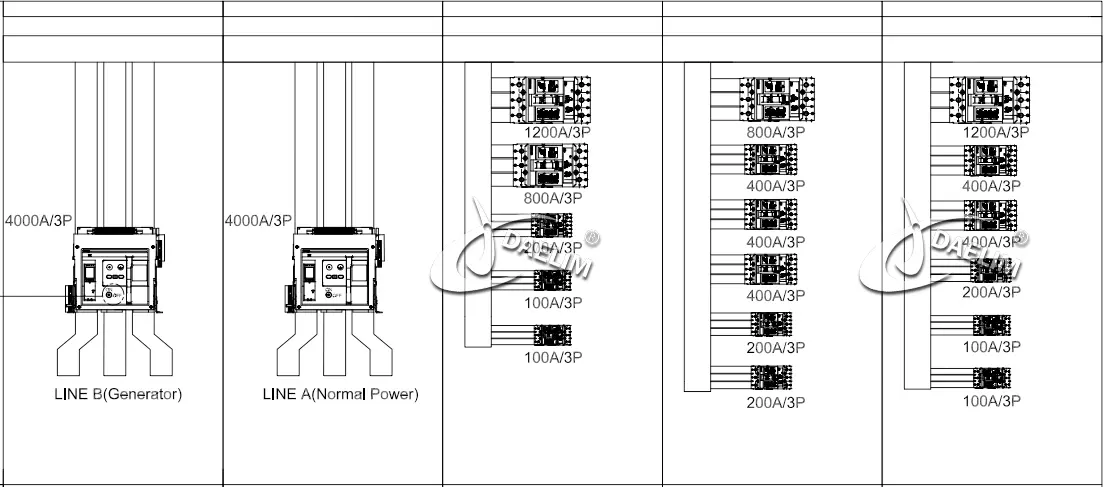
The assembly can contain many electrical and control elements. These include:
- Air terminal room for MV and/or LV
- Medium-voltage load-interrupter switchgear, or MVS type
- Metal-enclosed circuit breaker switchgear Type MEB, MEF, MSB
- Medium-voltage motor control centers
- Low-Voltage Busway Systems
- Metal-clad circuit breaker switchgear, VacClad-W type
- Vacuum Fault Interrupter (VFI) – In combination with Liquid-filled transformer-end
- UL1558 Low-voltage metal-enclosed switchgear
- UL891 Switchboard
Unit Substation Application
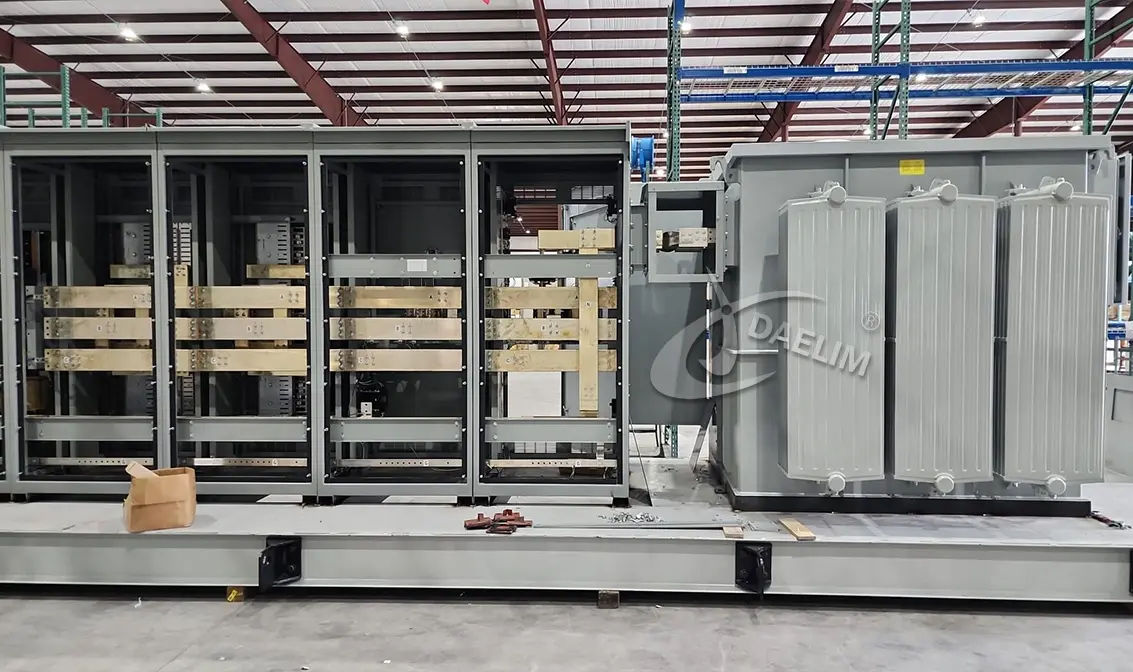
Unit substations are used on Industrial Installations, Commercial Sites, Battery Energy Storage, Renewable Energy, and the like to handle electrical power safely. They take high voltage and convert it into a type of level that can be used by equipment and lighting.
You will find them in indoor and outdoor settings where they help power flow smoothly. If you are working in a factory or own an office building, unit substations ensure electricity will just work right for your needs.
More Daelim Transformer Solutions
Unit Substation Transformer Selection
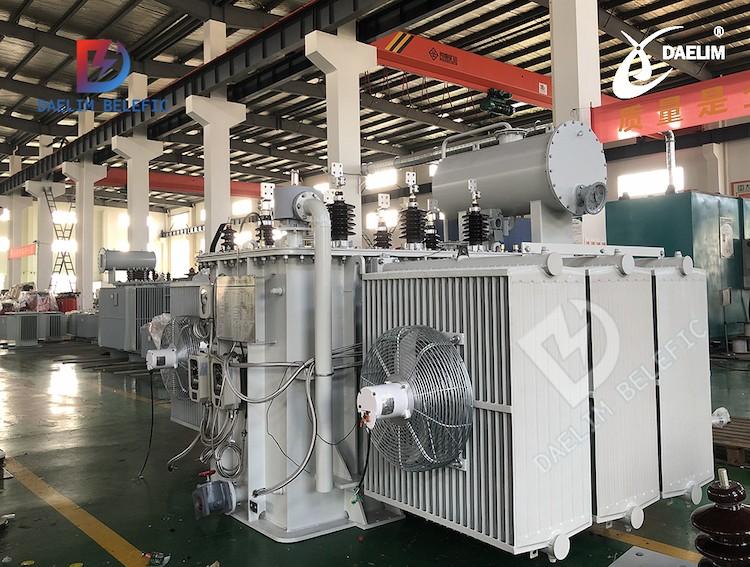
Both pad-mounted transformers and small substation transformers are used in unit substations because both types provide a space-saving and power-efficient distribution solution.
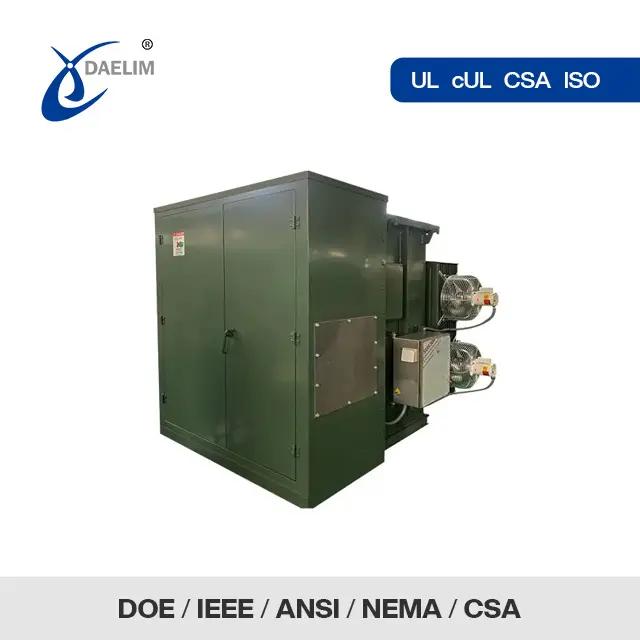
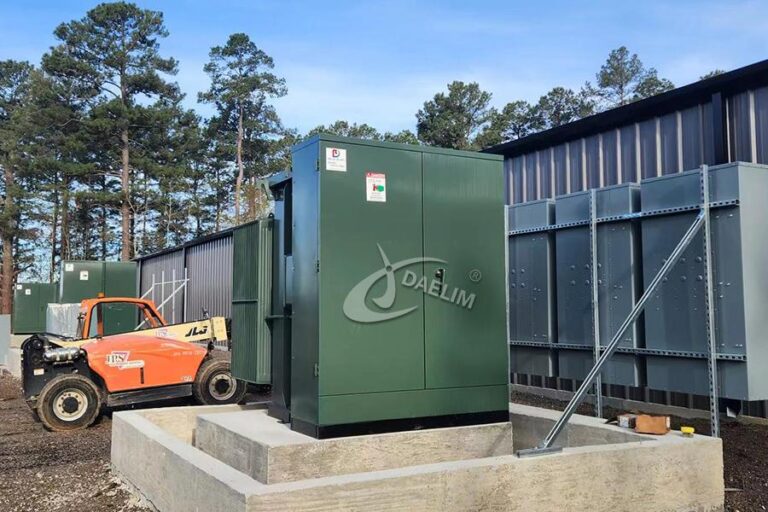
Pad Mounted Transformer
Pad-mounted transformers are preferred in unit substations because of their compactness, safety, and ease of installation.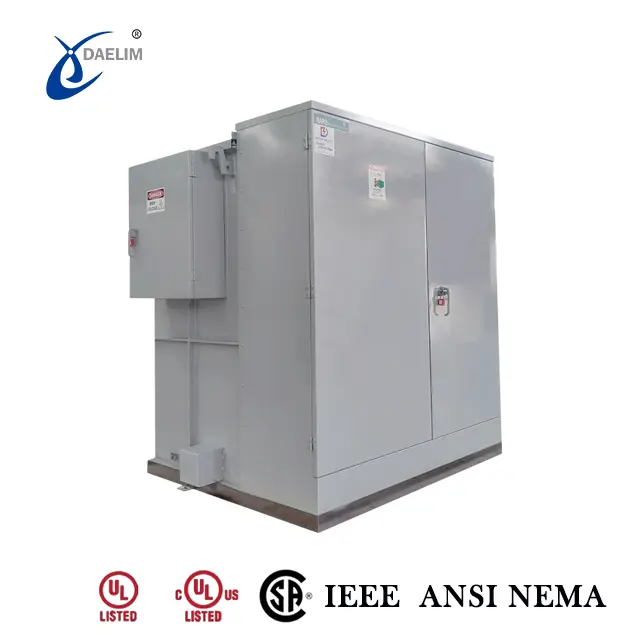
- Compact Design: Their small size means they use less land area and reduce permitting requirements.
- Improved Safety: Tamper-proof sealed connections hold more safety value to the personnel.
- Simple Installation: These transformers are easier and quicker to install than bigger substation models.
- Lower Maintenance: They require less upkeep, hence adding convenience.
- Space Flexibility: They are absolutely ideal for a compact space, allowing efficient use of space in different installations.
Advantages of Pad-Mounted Transformer in Unit Substations
- Efficient Transmission Voltage Step-down: They can easily reduce high transmission voltages to levels that are manageable in the local areas.
- Good Design: It’s designed to build heavy loads. It will work for ages with minimal maintenance.
- Stable Operation: They provide constant voltage and power that is necessary for the stable delivery of a grid.
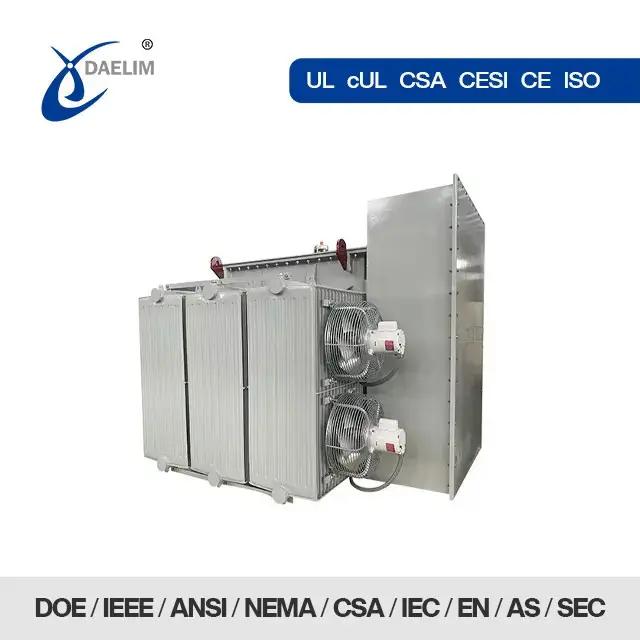
Small Substation Transformer
A small substation transformer is specifically designed for use on smaller substations or local points where the power demand is not too high compared to the higher capacity large-scale transformers. 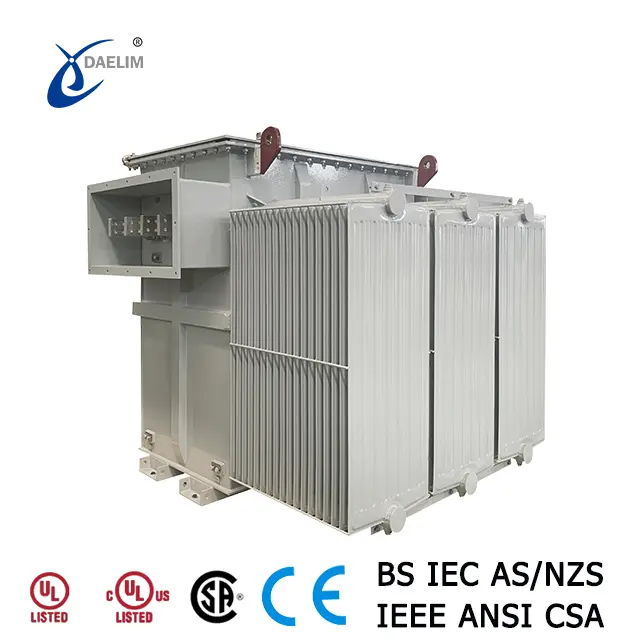
They are used in a unit substation because of their:
- Localized Power Distribution: Small substation transformers are typically used to manage localized or distributed power needs, such as in small industrial parks, neighborhoods, and rural areas. They serve as an intermediary between larger substations and individual customers, stepping down voltage to levels suitable for end-use.
- Cost and Space Efficiency: Designed to handle smaller loads, they are more cost-effective and space-efficient than large transformers. Their compact design reduces installation and maintenance costs, making them suitable for areas with limited budgets or spatial constraints.
- Improved Flexibility and Scalability: These transformers allow for a flexible, scalable approach to power distribution. Small substation transformers can be added or modified more easily to adapt to changes in local power demand.
Advantages of Small Substation Transformers
- High Efficiency for Low-to-Medium Loads: Small substation transformers are quite efficient on lower loads, and they are well-suited to localized distribution points having steady moderate power requirements.
- Smaller Installation and Maintenance Costs: Since they are of a small size and less demanding infrastructure than the giant transformers, installations and maintenance are relatively cheaper, meaning that initial investment and running expenditures are lower.
- Enhanced Reliability for Localized Grids: Small substation transformers ensure consistent, reliable power within localized areas, resulting in improved stability of the local grid, especially since they minimize risks of power fluctuations within much larger, more centralized systems of distribution.
General Unit Substation Advantages
- Unit substations offer some advantages over traditional solutions toward the lowering of the distribution voltages by utilities:
- The design places the transformer and electrical equipment close together, reducing power losses and improving safety by shortening cable lengths and reducing fault risks.
- A compact design creates more space for other equipment by reducing labor and delivery costs.
- Simpler to keep clean because of easier designs and accessories.
- Standardized configurations follow guidelines from NEMA and IEEE to respond quickly to growing power needs.
- Dependable short-circuit strengths, which qualify them for modern systems.
Conclusion
Unit substations are very effective in reducing utility supply voltages with the added advantage of saving space and lowering maintenance costs. Their design has been compact and close coupled, ensuring minimal power losses, improved voltage regulation, and increased system reliability. Easy fulfillment of increasing power demands with standard configurations preserves safety and durability.
If you are looking for a high-performance unit substation, Daelim is your reliable partner. Don’t hesitate to Contact Us at 346-342-2174 or visit our website for more details.
 English
 Polish
 German