
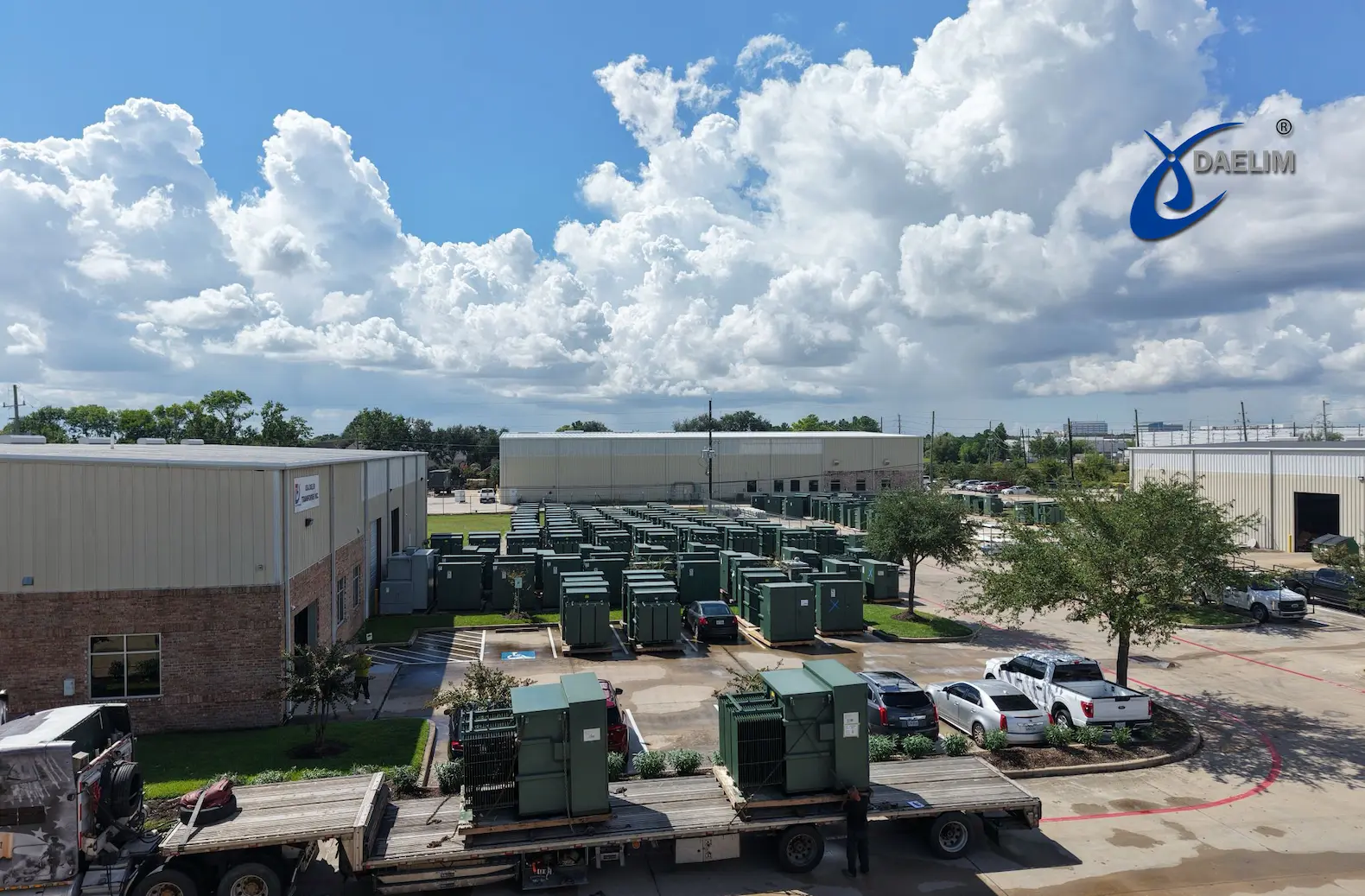
Transformers are the center point of every power system as they enable efficient transmission and safe delivery of electricity. The two most widely used types of transformers are step-up and step-down transformers. In some cases, reverse feeding or backfeeding is applied to address specific voltage needs. Altogether, these solutions facilitate a reliable and efficient power flow across power plants, data centers, renewable energy plants, and other facilities.
What is a Step-Up Transformer
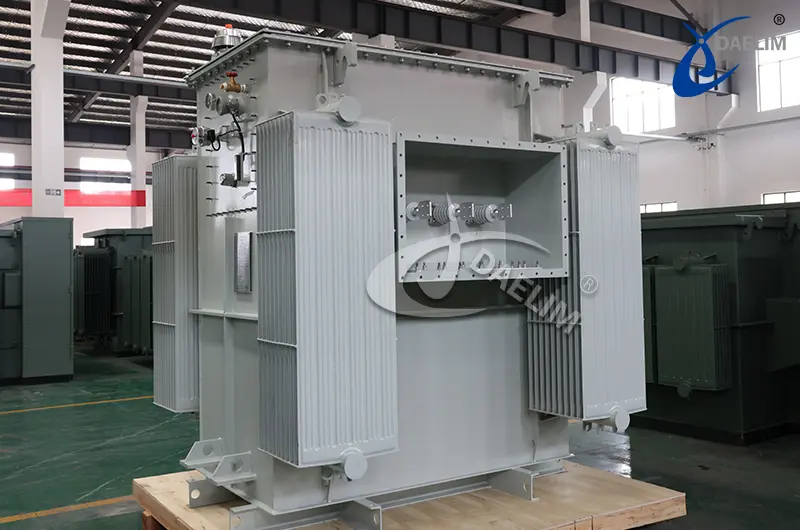
A step-up transformer is used to increase voltage from the primary to the secondary side. This is achieved when the transformer has a greater number of wire turns in the secondary coil compared to the primary coil, making electricity transmission more efficient over long distances.
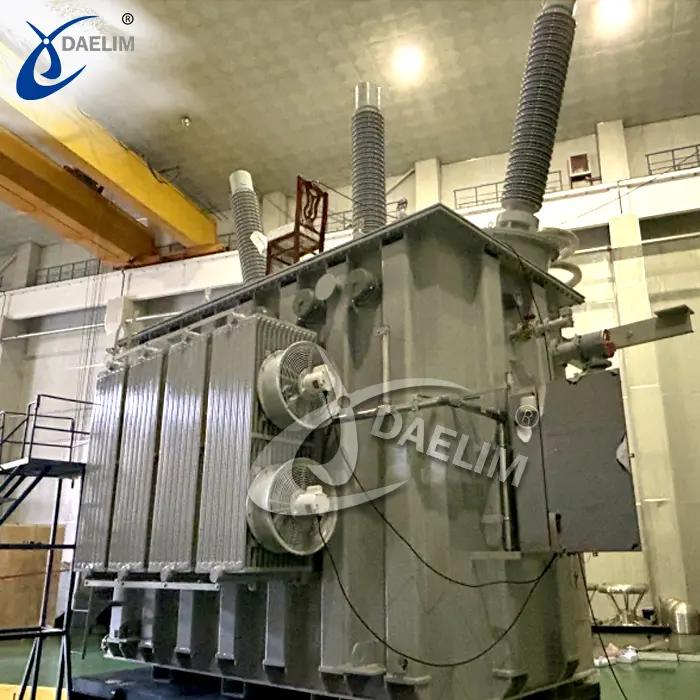
Step-up transformers are primarily used in power generation stations. At power plants, electricity is usually generated at low voltages (around 11 kV to 25 kV). To transmit this electricity across long distances without significant energy losses, the voltage is then increased with the help of step-up transformers to higher levels, such as 110 kV, 220 kV, or higher.
They have an important role in renewable energy projects, like solar and wind farms, where electricity generated at lower levels needs to be elevated to grid-compatible transmission voltages.
What is a Step-Down Transformer
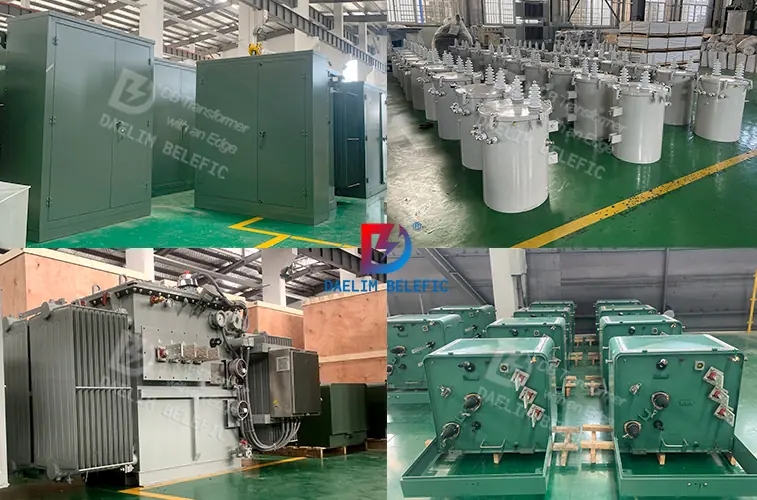
Step-down transformers do exactly the reverse of step up transformers. It takes a high voltage on the primary side and brings it down to a safer level for use on the secondary. A step-down transformer works when the secondary coil has fewer turns of wire than the primary coil, resulting in a lower output voltage and a proportionately higher current output.
Step down transformers are vital for power distribution. If the electrical power is transmitted at very high voltages (110 kV, 220 kV, or more), it is stepped down in stages before it can reach consumers safely. Voltage at the last stage will be stepped down to a normal level of 120/240 V in North America or 220/415 V in other parts of the world for actual use.
These transformers are highly relevant to industrial plants, commercial buildings, data centers, and mining operations that require a stable low-voltage supply for power and operation of their equipment and machinery.
Learn more: Step Up Transformer VS Step Down Transformer
Reverse Feeding in Transformers
Reverse feed or backfeed means operating a transformer against its design, for example, a step down transformer being used as a step up. Since transformers operate on the principle of turns ratio, they can function bidirectionally, provided that the voltage and current ratings are strictly respected.
In practice, reverse feeding is often done with distribution transformers. The commonly encountered situation of reverse feeding is to use a 480 V/208 V step down transformer to step up 208 V to 480 V in the absence of a dedicated step up transformer.
Caution is necessary, as not all transformers are meant for safe reverse feeding. Always ensure that the manufacturer’s instructions are observed.
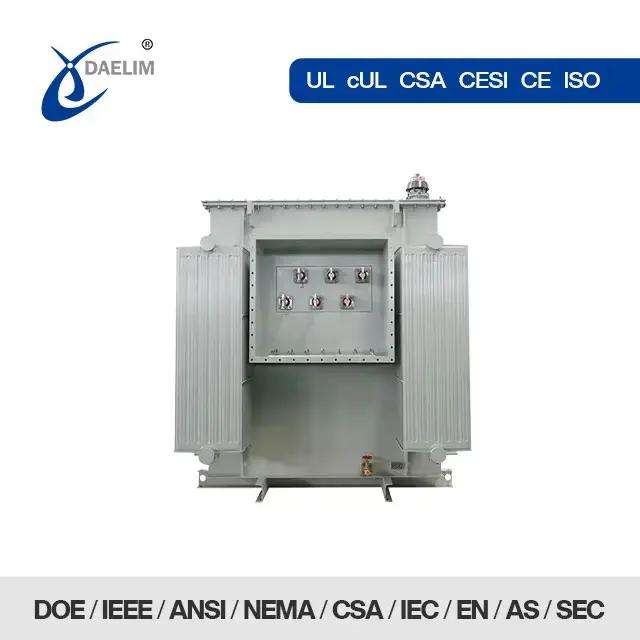
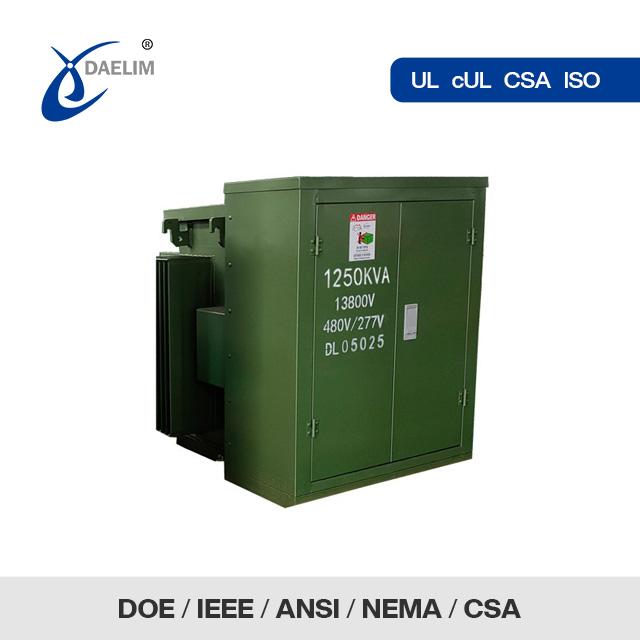
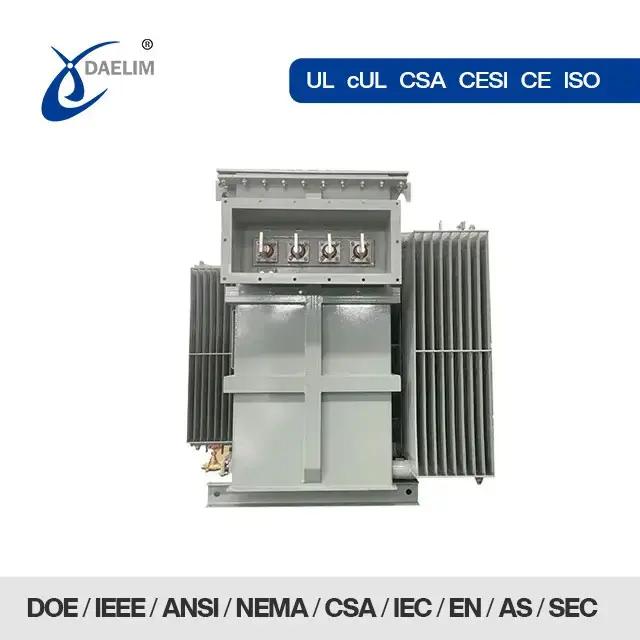
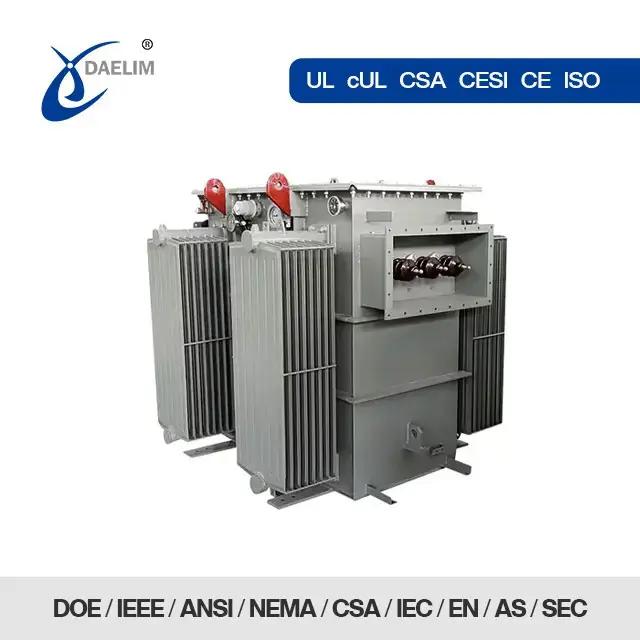
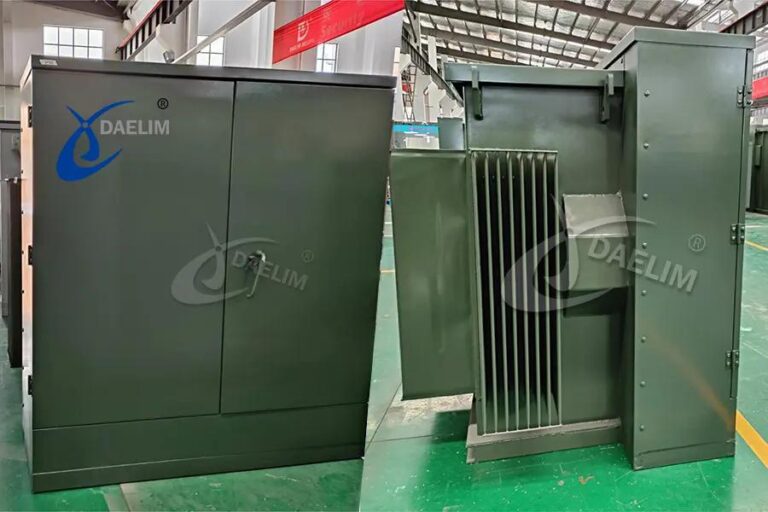
For the reverse feeding applications, many of Daelim Transformer’s pad-mounted and distribution transformers can be customized.
Key Differences: Step Up vs Step Down vs Reverse Feeding
Step up, step down, and reverse feeding transformers work under the same principle, which is electromagnetic, but they vary in their functions and applications.
Direction of Voltage Transformation
- Step-up transformer: It steps up voltage from low to high (e.g., 11 kV to 220 kV).
- Step-down transformer: It steps down voltage from high to low (e.g., 220 kV to 11 kV or 480 V to 240 V)..
- Reverse feeding / backfeeding transformers: Work in the opposite direction of design (e.g., using a 480/208 V step-down unit to step up 208 V up to 480 V).
Typical Applications
- Step up: Power generation, renewable energy projects, and long transmission.
- Step down: Distribution networks, industries, commercial buildings, residential supply.
- Reverse feeding: Industrial or commercial installations where flexible voltage adjustment is essential without purchasing new equipment.
Design & Safety Considerations
- Step up / step down: Built for reliable and efficient voltage transformation.
- Reverse feeding: Requires caution, as every step up step down transformer is designed for bidirectional use; issues such as inrush current or protection mismatching may arise.
Read more about Transformer Design
Comparative Table
| Feature | Step-Up Transformer | Step-Down Transformer | Reverse Feeding |
| Voltage Direction | Low to High | High to Low | Either (opposite of design) |
| Primary Use | Transmission & generation | Distribution & end-use | Flexible/adaptive voltage needs |
| Common Applications | Power plants, renewable energy | Utilities, factories, households | Data centers, mining, backup systems |
| Safety Considerations | Designed for an upward voltage boost | Designed for downward voltage use | Must verify manufacturer approval |
Choosing the Right Transformer for Your Needs
Choosing the right transformer comes down to matching its specification with your system’s necessities. The wrong decision can lead to inefficient operation, energy losses, or even safety hazards. Some factors are:
Load Requirements
- Check power demand (kVA/MVA) and load type for industrial, residential, data centers, or renewables.
- Make sure it is a transformer that can carry both peak and continuous loads.
Voltage Levels
- Use step up transformers for transmission over long distances.
- Use step-down transformers for local distribution or supply to the facility.
- You can reverse-feed or backfeed transformers when flexibility is required.
More resource: The Ultimate Guide to Transformer Voltages
Installation Environment
- Evaluate indoor or outdoor settings with respect to temperature, dust, or moisture.
- Pad-mounted or pole-mounted units are good for outdoor utilities and commercial sites.
You may enjoy: Step-by-Step Guideline On Installing A Transformer
Efficiency and Standards
- Go with energy-efficient models like Ecodesign Tier 2.
- Check that they meet the international standards.
More resource:
DOE Efficiency Standards for Transformers
Future Flexibility
Add some capacity for potential voltage alteration.
Transformers that offer reverse-feed capability allow flexibility without additional hardware.
Conclusion
Each type of transformer used in modern power systems has its own specific purpose: step up transformers for efficient long-distance transmission, step down transformers for supplying usable voltages to homes and industries, and reverse feeding for flexibility in adapting to new voltage requirements.
Choosing the right transformer is more than just about voltage conversion-it’s about efficiency, safety, and lifetime performance. With more than 20 years of experience, we at Daelim Transformer offer high-performance power transformers like pad-mounted, pole-mounted, and distribution units. We have thousands of transformers in stock, with capacities ranging from 50kVA to 3750kVA, all featuring reverse-feeding capabilities. Contact us today to secure your units—no waiting required.
 English
 Polish
 German