
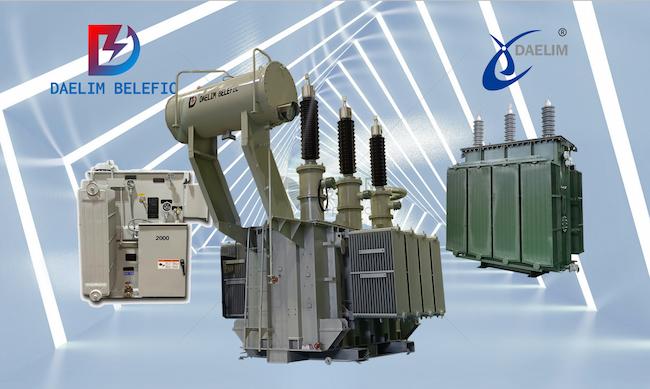
Substation transformers play a crucial role in power distribution systems, facilitating the safe and efficient transmission of electricity across varying voltage levels. Here, we delve into their design, function, types, and testing procedures, highlighting their significance in maintaining the stability and reliability of electrical grids worldwide.
What is a Substation Transformer?
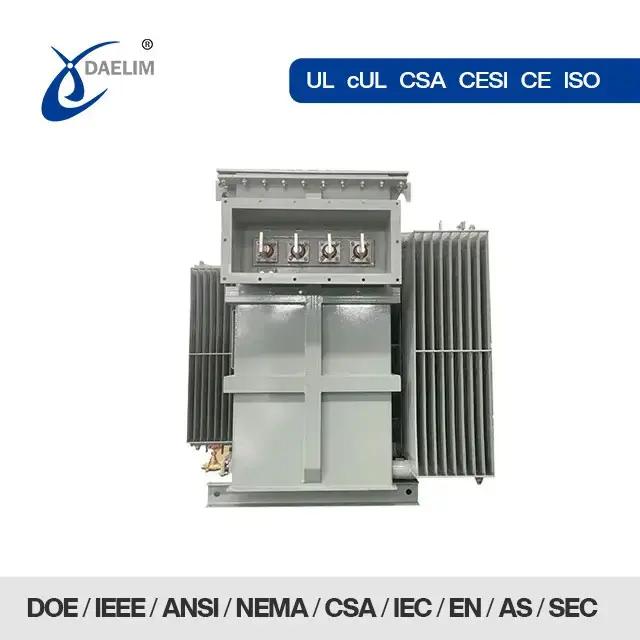
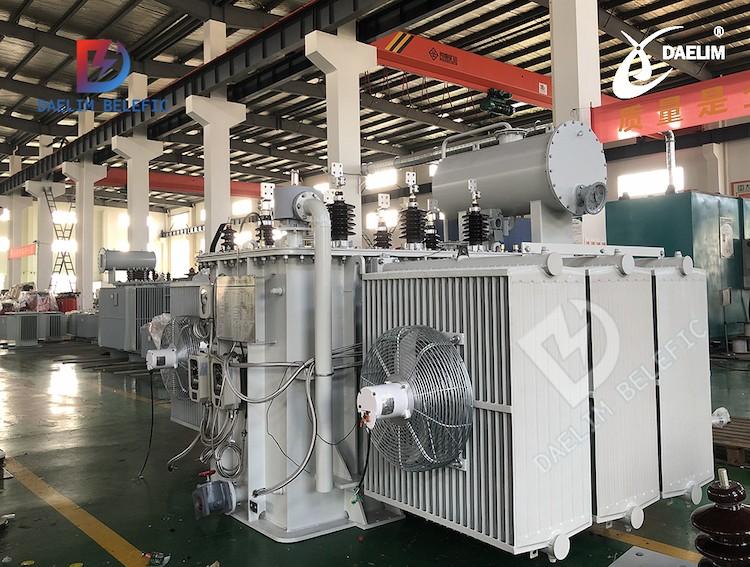
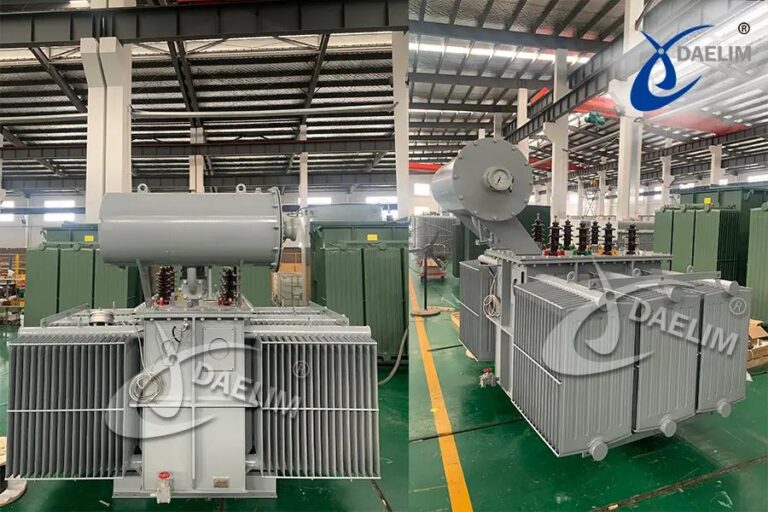
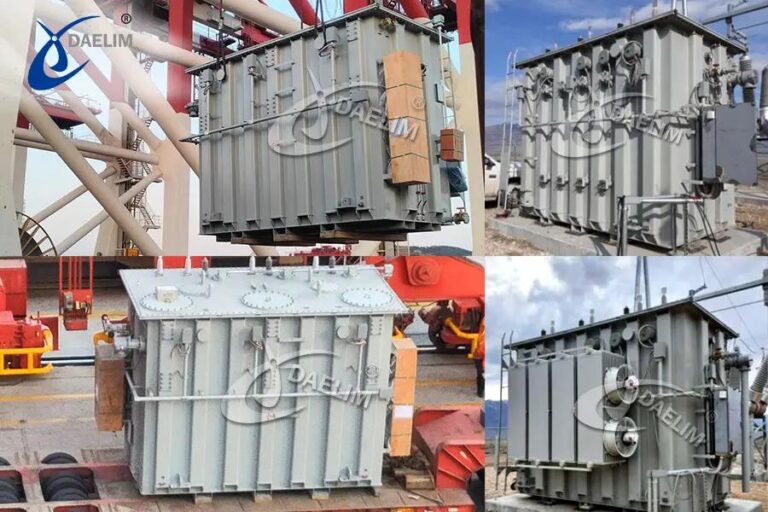
Substation transformers are specialized equipment designed for integration into large or small-scale three-phase transmission and distribution systems. They are typically installed on indoor or outdoor concrete bases, strategically positioned as per project specifications by power engineers during initial planning stages.
These transformers utilize winding coils to adjust voltage levels, ensuring electricity can be safely distributed to end-users through high-voltage or low-voltage cables connected via bushings. They are primarily oil-immersed, using mineral, vegetable, or siliceous transformer oils to enhance insulation and cooling efficiency.
Try for free: Why Substation Transformers Are So Important In Power System?
How Substation Transformers Work
The core function of a substation transformer is to transform electrical energy between different voltage levels. This transformation is achieved through the principle of electromagnetic induction: when alternating current passes through one set of winding coils (primary winding), it creates a magnetic field. This field induces a voltage in the adjacent winding coils (secondary winding), thereby altering the voltage level suitable for transmission or distribution.
By adjusting the ratio of winding turns between the primary and secondary coils, substation transformers enable the efficient management of electricity flow, ensuring the balance, safety, and economic efficiency of power grids.
Types of Substation Transformers
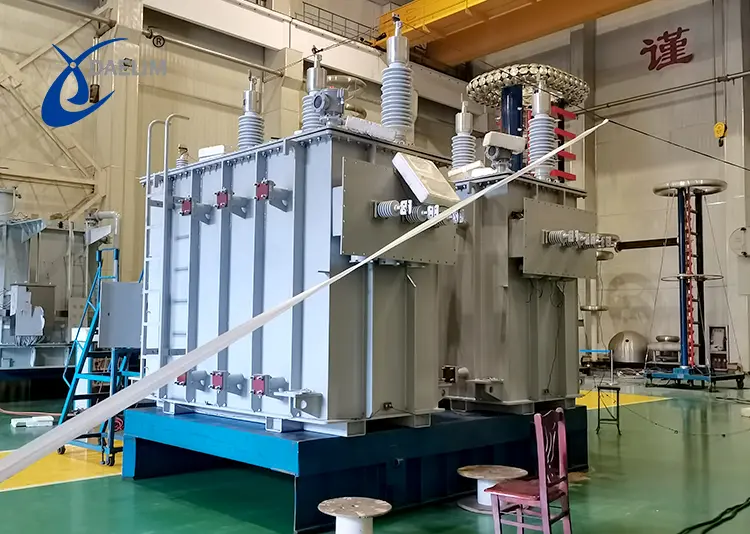
Substation transformers vary in type and application based on voltage levels and specific operational requirements:
Based on Voltage Level
- MediumVoltage Substation Transformers: Handle voltages from 2.4 kV to 46 kV, mainly used to control power distribution systems.
- High Voltage Substation Transformers: Operate within the range of 66 kV to 115 kV, rucial for long-distance power transmission.
Based on Functionality
- Step-Up Transformers: Increase voltage levels for transmission over long distances.
- Step-Down Transformers: Decrease voltage levels for distribution to end-users.
Based on Installation Location
- Grid-Type Substation Transformers: Typically used for high-capacity electricity transmission, installed in outdoor enclosures.
- Urban and Rural Substation Transformers: Found in urban areas (brick-enclosed for protection) and rural regions (mounted on outdoor poles or towers).
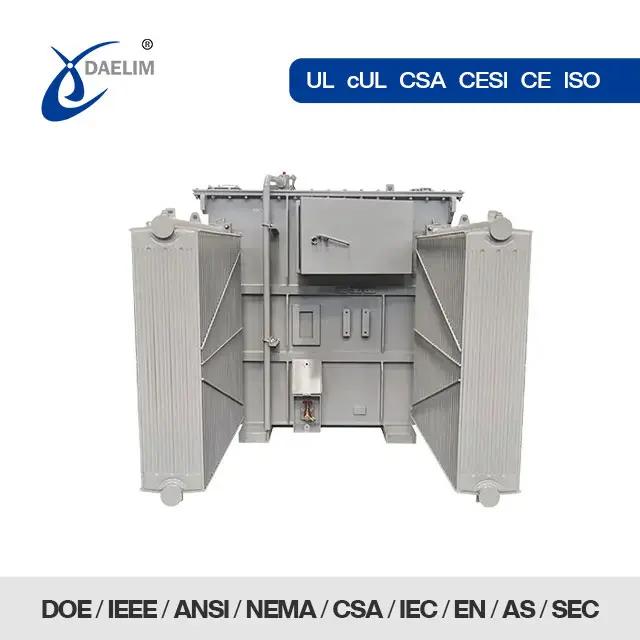
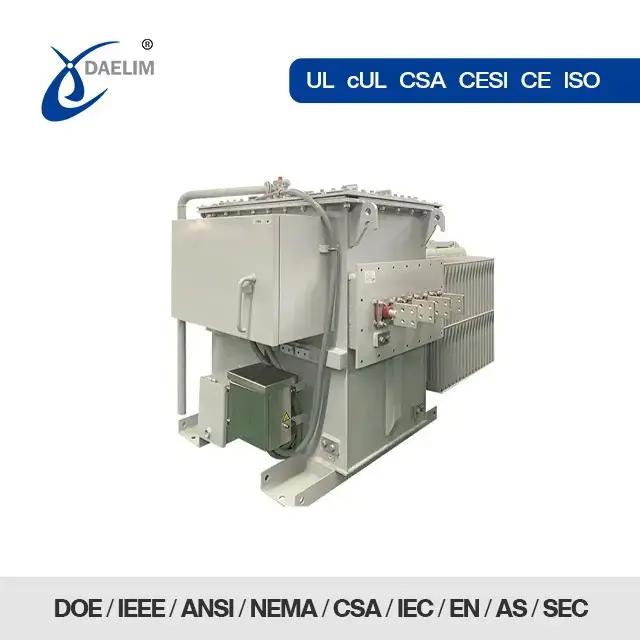
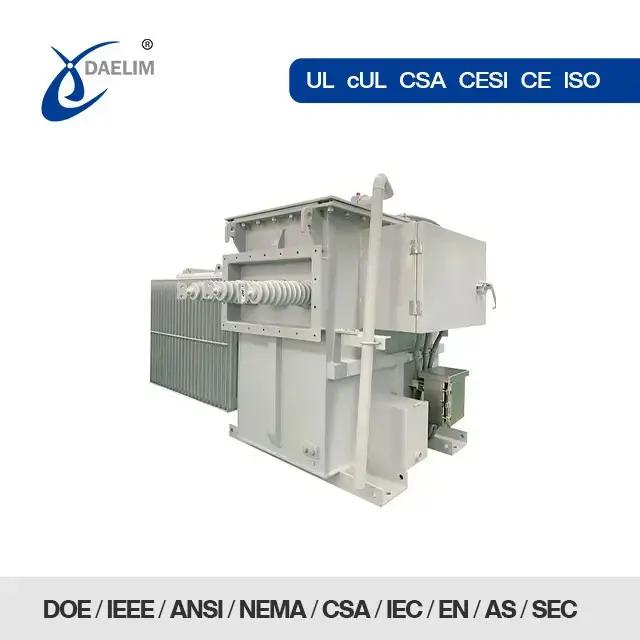
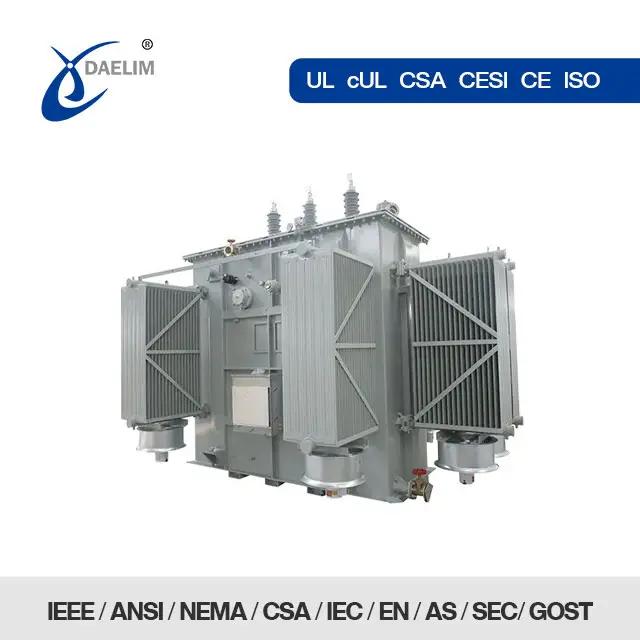
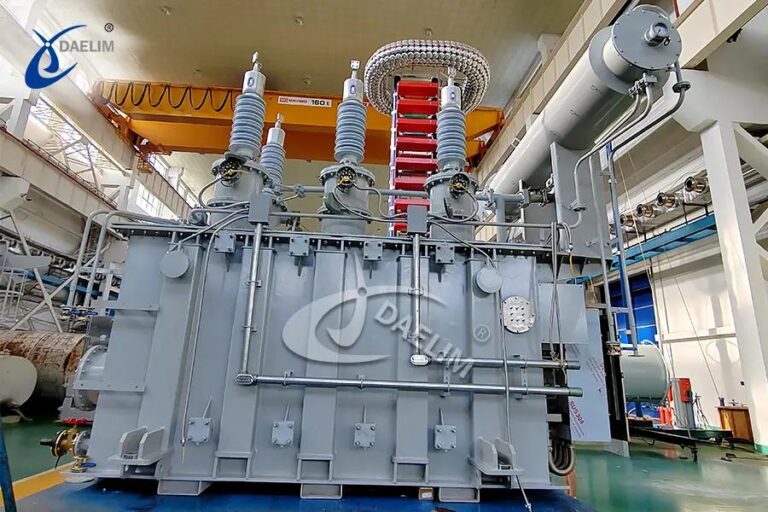
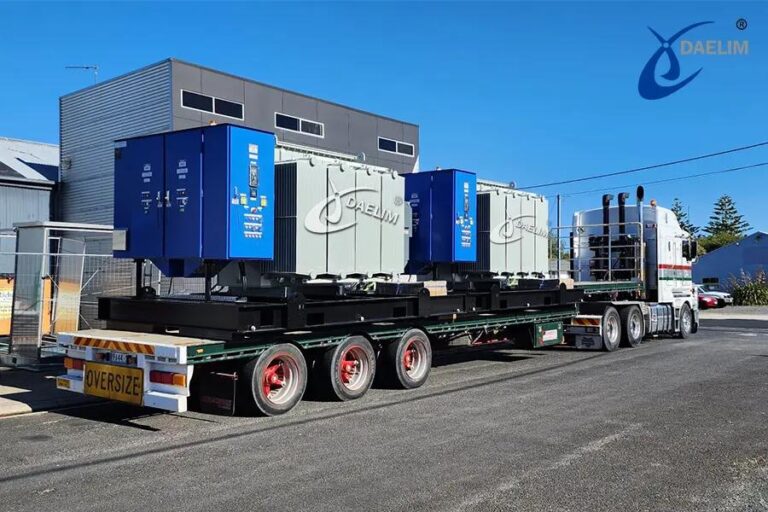
10.5MVA-13.8/2.4kV Substation Transformer
Substation Transformer Testing
Ensuring the reliability and safety of substation transformers involves rigorous testing procedures conforming to international standards such as IEC and IEEE. Key tests include:
- Dielectric Test
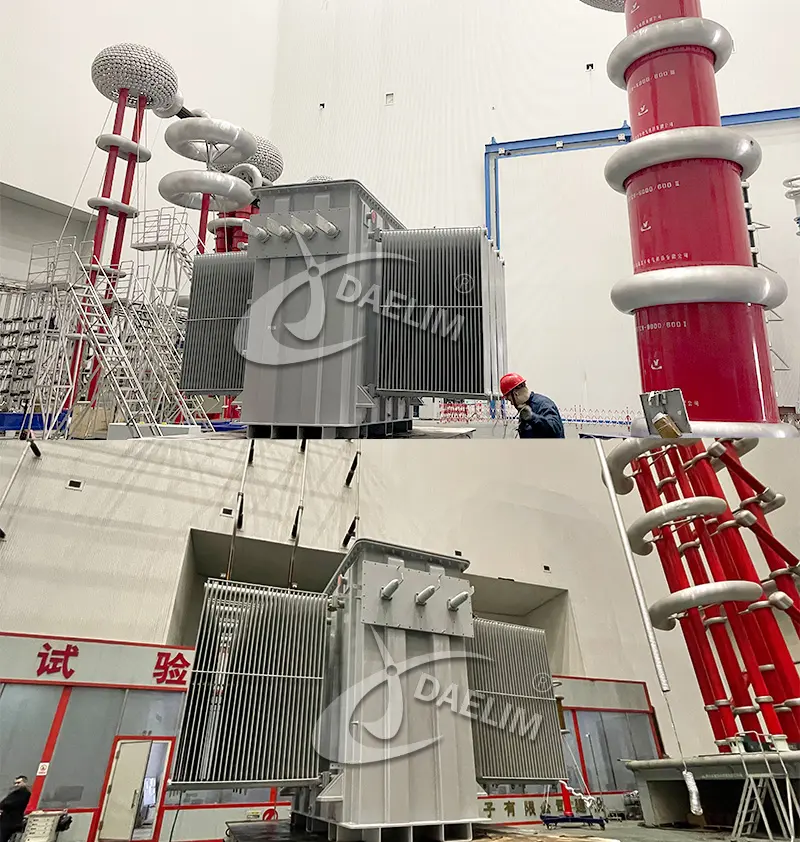
- Lightning Impulse Test
- Pulse Test
- Pressure Test
- Partial Discharge Measurement
- No-Load and Load Loss Test
- Temperature Rise Test
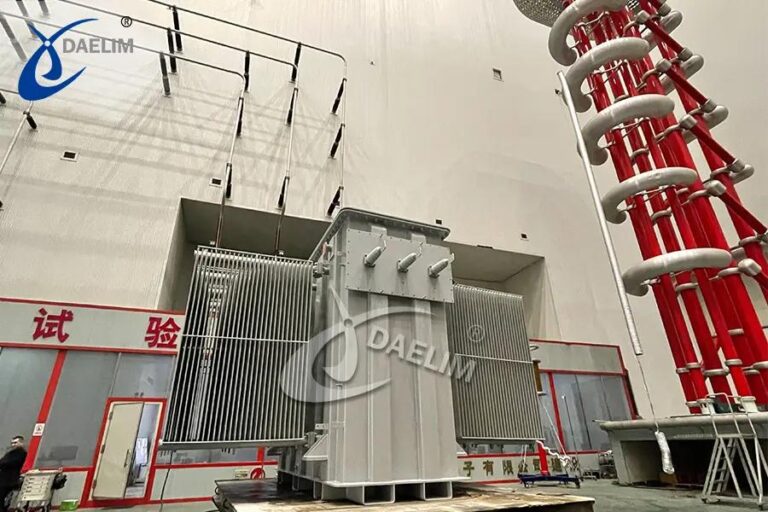
Learn more about Transformer Test
These tests assess various aspects of transformer performance, insulation, and efficiency, helping manufacturers and engineers validate design specifications and ensure compliance with operational requirements.
Conclusion
Substation transformers are indispensable components of modern power distribution networks, translating high-voltage electricity into levels suitable for industrial, commercial, and residential use. Their design and deployment adhere to stringent international standards, guaranteeing reliability, safety, and efficiency across diverse applications and environments.
For inquiries or questions regarding substation transformers, please feel free to contact Daelim Transformers. They specialize in designing and producing substation transformers with nearly 20 years of export experience, ensuring reliable technology and product quality.
 English
 Polish
 German