
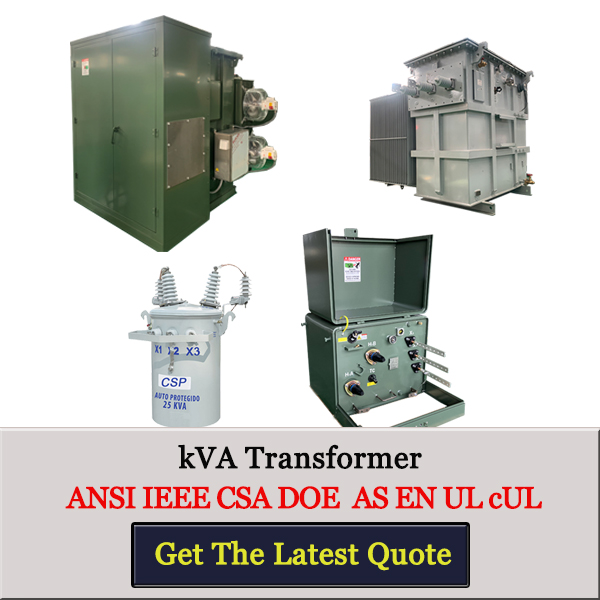
kVA is usually a unit of transformer capacity. It is also necessary parameter information when we are doing transformer projects or quoting customers. So we will be discuss the question “what is kVA in transformer”
Daelim Transformer is a professional transformer supplier, which can provide high voltage 2-345 kV transformers with a capacity of 10kVA-5000MVA. Not only have SGS, CESI, IEEE, and other reports but also CSA and UL/cUL certificates.
Daelim Transformer has a good performance in North America, South America, Australia, and other markets. Therefore, if you need a transformer, you can always contact the Daelim team for a quotation or the most suitable transformer solution for you.
What does kVA mean on a transformer?
The electrical transformer capacity unit kVA shows the electrical power being handled by the electrical transformer because the electrical power is the product of electrical voltage applied and current being passed across the circuit. Here the “k” represents the “Kilo”, “V” represents the voltage in Volts and “A” represents the current in amperes “A”.
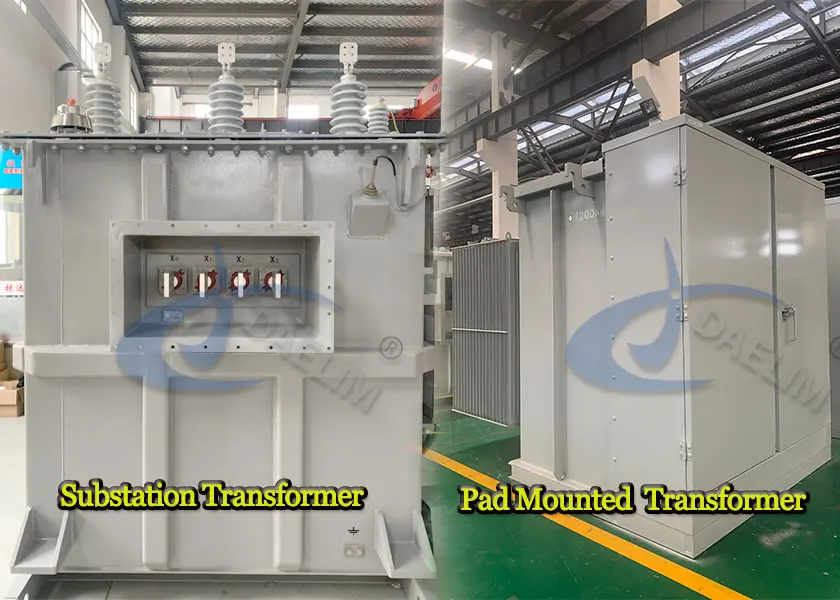
Why do we have transformer capacity in kVA instead of transformer capacity in kW?
VA or kVA is the apparent power used in AC lines, also known as capacity, is the product of voltage and current effective value, unit… But it will affect the transformer load design, so VA or kVA to calculate more accurately. And W or kW is our usual customary name, written formally.
Learn more: The Ultimate Guide to 1500kVA Transformer
How to calculate transformer load capacity?
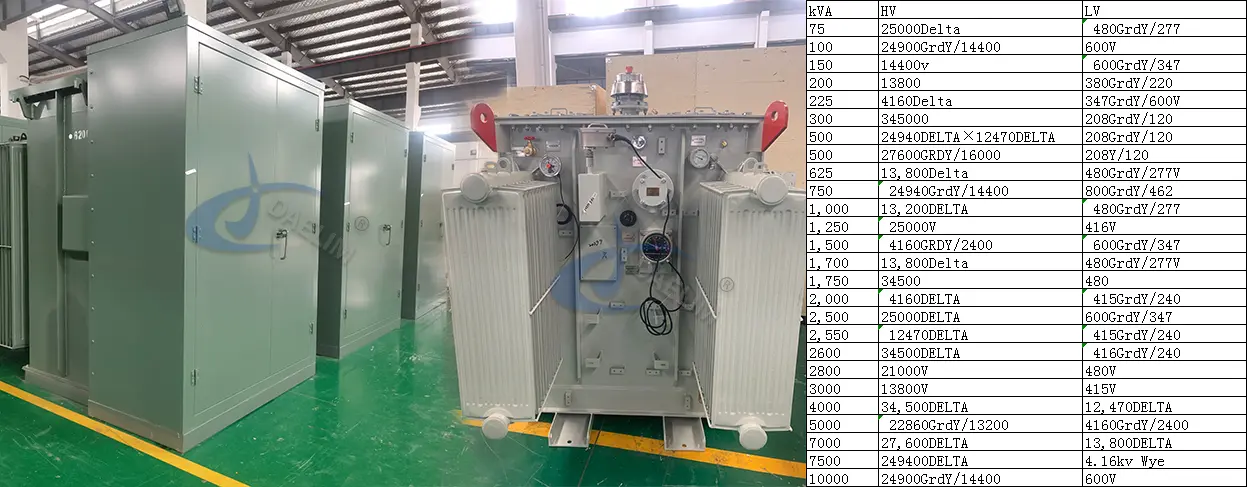
The answer to the question of how to calculate transformer load capacity and who to calculate transformer kVA rating is the same because the formulas for both are the same.
Calculation formula of transformer capacity
The basic formula for transformer load capacity for three phase transformers
S = 1.732 x V x I
Here
V represents line to line voltage
I represent current
S represents the available/required transformer load capacity in VA or kVA if divided by 1000.
The basic formula for transformer load capacity for single phase transformers
S = V x I
Here
V represents line to line voltage
I represent current
S represents the available/required transformer load capacity in VA or kVA if divided by 1000.
How to size a transformer kVA?
So to properly size a transformer capacity kVA we need to consider
- load active power
- transformer power factor
This can be represented as
S = P / cos
Here
S represent available/required transformer capacity kVA
P represent load active power kW
cos represent the transformer power factor
200 kVA transformer load capacity in kW
Step 1 calculate load capacity
Lets say single phase transformer receives 2000 Volts with 100 Amp current, then its available load capacity will be
S = V x I
S = 2000 x 100
S = 200,000 VA
or
S = 200 kVA
Step 2 Get the power factor
The transformer itself does not define the power factor. It is actually the load applied to the transformer that defines the power factor. In the transformer industry anything below 0.8 usually signifies an inefficient system requiring correction.
Step 3 calculate active load that transformer can support
If S = 200 kVA and cos is 0.8 then
S = P / cos
200 = P / 0.8
P = 200 x 0.8
P = 160 kW
100 kVA transformer load capacity
Lets take an example to understand 100 kVA transformer load capacity in kW. If load active power is 80 kW and transformer power factor is 0.8, then you need a 100 kVA transformer. So your 100kVA transformer actual load capacity will be 80 kW.
Similarly for 25 kVA transformer load capacity in kw with 0.8 power factor will be 20 kW of load active and for 160 kVA transformer load capacity with 0.8 power factor will be 128 kW of load active
How to calculate 2500 kVA transformer losses?
2500 kVA transformer losses
Because transformer no-load loss NL and load loss LL both include rated active loss and reactive power active loss on the meter.
Step 1 Measure no load losses
No load losses also called the core losses consist of two types of losses. One is called Hysteresis losses and the other is called Eddy current losses.
No load losses = Hysteresis losses + Eddy current losses
Step 2 Measure load losses
Load losses also known as the copper losses are losses done by resistance offered by copper material of the winding.
Load losses = I x I x R
Here
I represent Load Current
R represent copper or winding material losses
For a 2500 kAV transformer, there are some differences in transformer loss between different models. For example, s11-2500 transformer, the no-load loss is 2.5 kW, and the load loss is 23.2 kW.
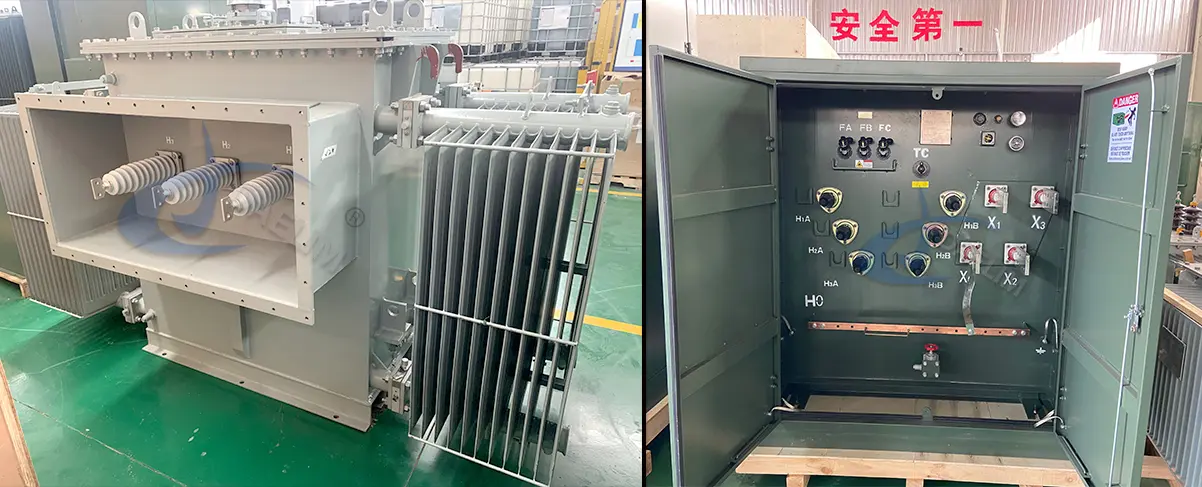
More detail about the 2500 kVA Transformer
25 kVA transformer load capacity in kW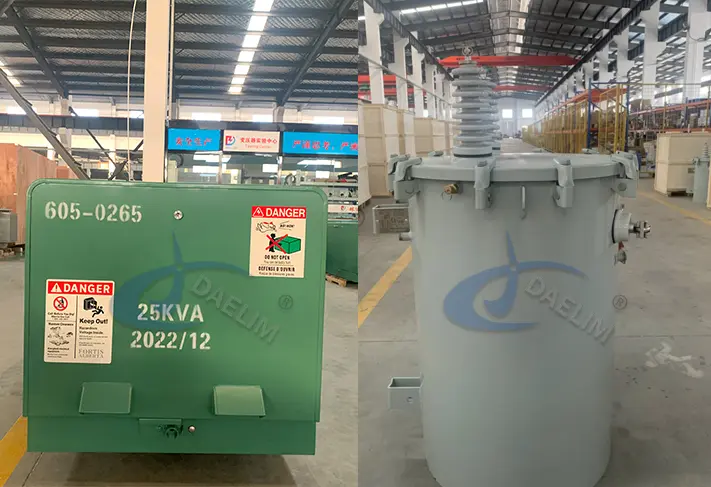
Most all-electric homes in the U.S. have 200A service, though they rarely need that much at any given time. A four-bedroom 2,300-square-foot house, for example, uses about 50 kWh per day or 1,500 kWh per month. I would say it’s typical.
kVA is capacity, kilovolt-ampere, generally used for transformer equipment such as 25kVA transformer, power factor calculated according to 80%100, the maximum output power is 20 kW.
Read more about the 25 kVA Transformer
100 kVA transformer load capacity in kW
1, transformer output power is the apparent power, and active power (KW) relationship is: apparent power = active power x power factor.
2, with the average power factor of 0.8 calculation,a 100 kVA transformer can provide (100 KVA × 0.8) 80 KW active power for the load.
How many kVA transformer do I need?
Suppose the required load phase current is 50 amperes, let’s call it L. After these two values have been discovered or calculated, the data can be used to calculate the power demand (in kilowatts) of the load. For this purpose, the desired input voltage (V) must be multiplied by the desired current load (expressed in amperes (L)), then 1000: V*1/1000 in the above example, 150 times 50 to get 7,500, and 1000 divided by 1000 to get 7.5 kilowatts.
35kV transformer general capacity, how much kVA is it?
1, if it is a power transformer, for example, the high voltage is 35kV, and the low voltage is 3.15-11kV. So, whether load voltage regulation or no excitation voltage regulation, according to the national standard, the maximum capacity is 20000kVA.
2. If the high voltage is 35kV and the low voltage is 400V, the maximum capacity is 2500kVA according to the above standards.
Try for free: Do you want to learn more about 34.5 kv transformer?
How many kilovolt amperes are the capacity specifications of the power transformer?
The rated capacity grade of transformer in Our country is increased by multiple of R10≈1.26, such as the capacity of 100, 125, 160, 200…… KVA, etc., only capacity grades other than 30 kVA and 63,000 kVA differ from the priority number system.
Before 1967 the rated capacity grade of transformers was R8 capacity series increased by R8=8≈1.33.
R10 means 10 to the 10th power.
Learn more about Transformer Specifications
How many kVA are factory distribution transformers?
From 630-2500 kVA
The power consumption of the factory is 50 kilowatts. How many kilovolt-ampere transformers are needed?
Let’s say we only have 50 households a day, 32 at most, and what if it’s at night, in the summer? So a 50kVA transformer is not enough. 100 households with normal electricity and enough transformers will need at least 200kVA.
1000 kVA transformer no-load losses
The accurate value can be checked in the factory test report of the product, and the product sample can be checked in the design stage. Here’s an example:
S11-m-1000/10 oil-immersed transformer, no-load active power loss 1.15KW, multiplied by 24 hours is a day of active power loss 276KWh;
No-load reactive power loss is approximate: no-load current 0.6%* rated capacity 1000., and is 6kvar, multiplied by 24 hours is 144kvarh of reactive power loss in a day.
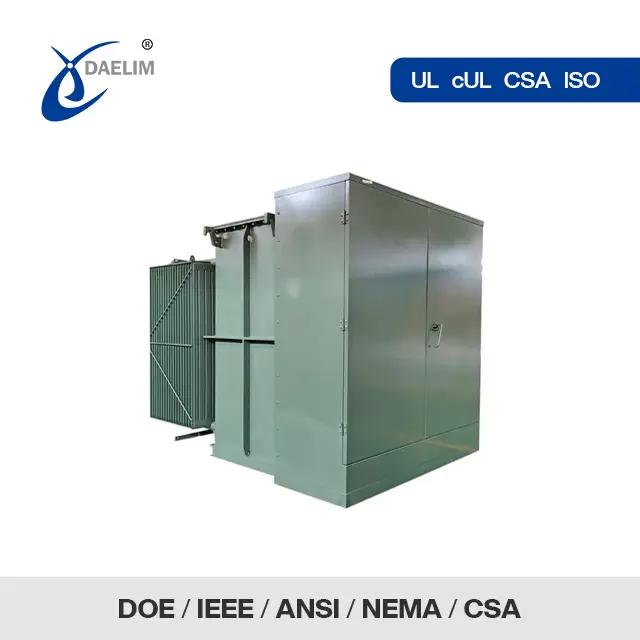
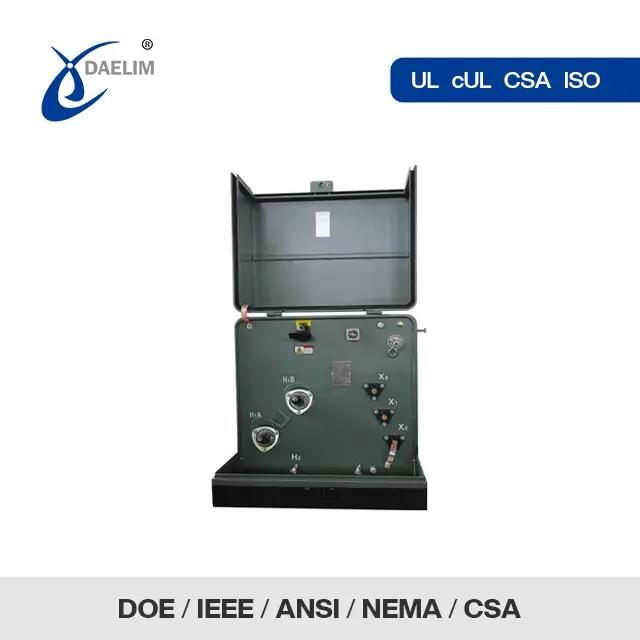
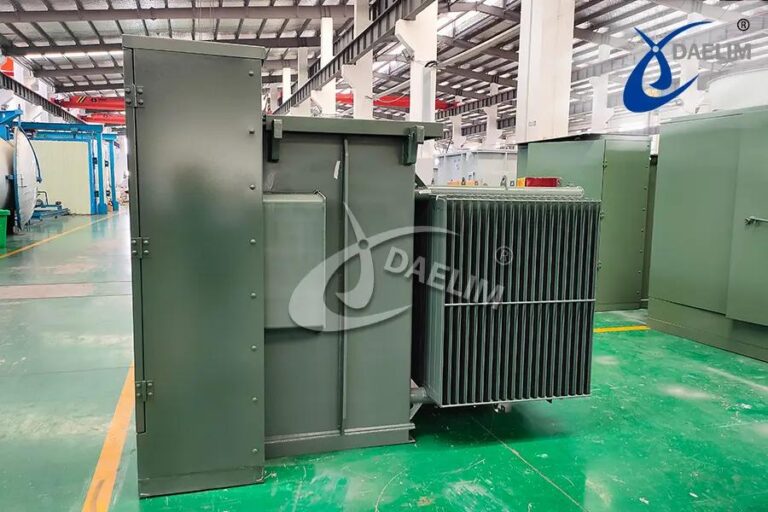
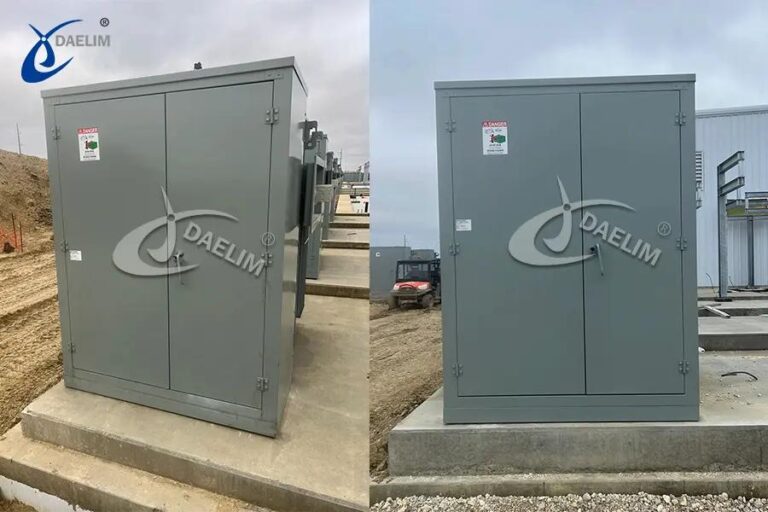
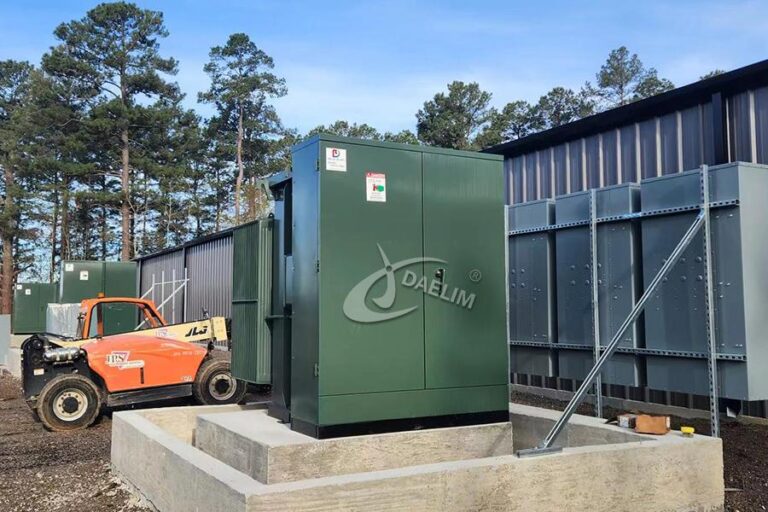
You may enjoy: Pad Mounted Transformer
1000 kVA transformer impedance
For a 1000kVA transformer, the impedance is usually around 6% and will not exceed 8%.
Conclusion
Transformer capacity or can say the transformer power (apparent power) is present in kVA (Kilo Volt Ampere). It is an internationally accepted unit of measure to present the transformer power or capacity as is necessary to comply with international standards SGS, CESI, IEEE, and other certificates.
 English
 Polish
 German