
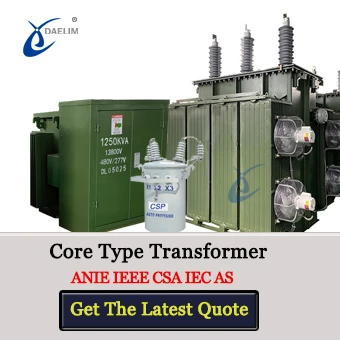
Transformers come in various designs, each tailored for specific applications. Core type transformers are one of the prominent designs, known for their efficiency and mechanical stability. This guide delves into core type transformers, focusing on their construction, benefits, and comparison with other types.
What is a Core Type Transformer?
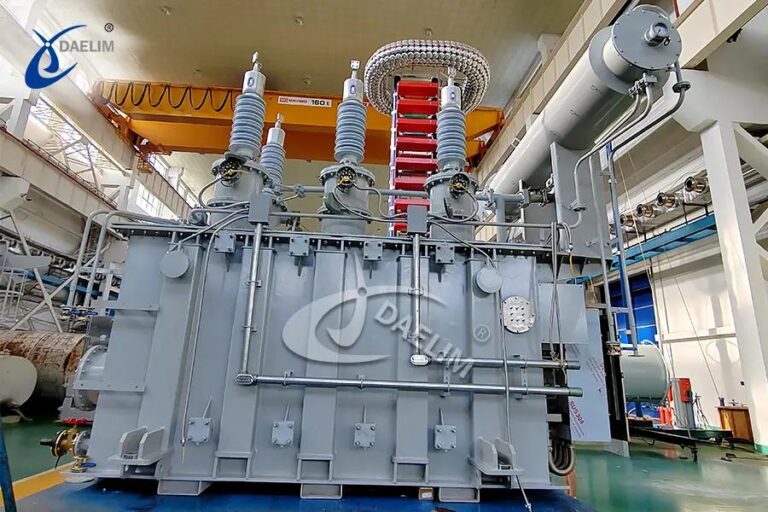
A core type transformer features a core that is surrounded by the windings. This design simplifies assembly and insulation while enhancing the transformer’s efficiency. Core type transformers are favored for their mechanical stability and ease of maintenance.
Core Type vs. Shell Type Transformers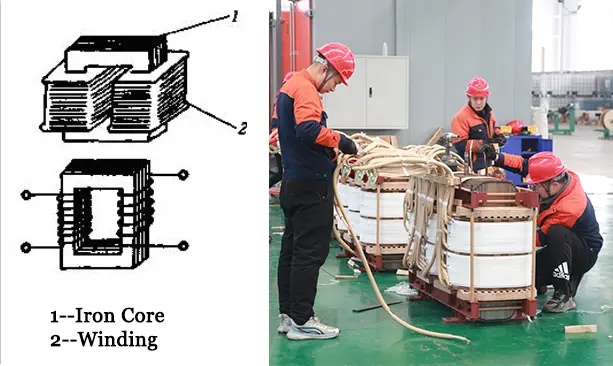
Transformers generally fall into two core construction categories: core type and shell type.
- Core Type Transformer: The core surrounds the windings. It is advantageous for its mechanical stability and suitability for high-frequency currents. Core type transformers use iron cores made from laminated silicon steel to reduce energy losses and improve performance.
- Shell Type Transformer: Here, the winding is surrounded by the core. This design is more compact and suitable for low voltage applications. It is easier to assemble but typically less efficient for high-frequency currents compared to core type transformers.
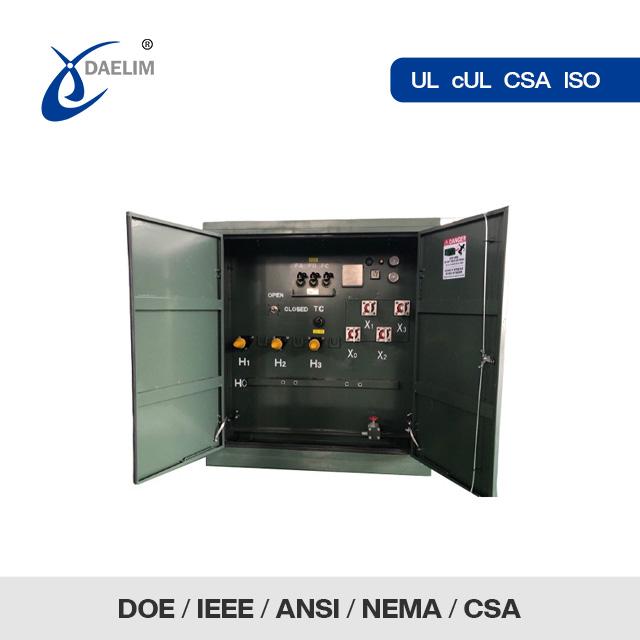
 You may enjoy: 2500 kVA Pad Mounted Transformer
Core Materials
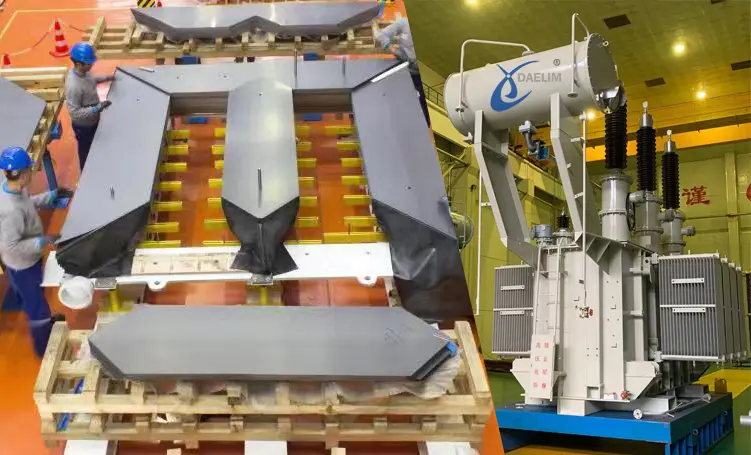
Transformers predominantly use silicon steel sheets for core construction. These sheets, often 0.35-0.45mm thick, are laminated to reduce energy losses. Silicon steel’s high permeability allows for efficient magnetic flux conduction, enhancing transformer performance and longevity.
Construction and Types
- Single-Phase Core Type Transformers:
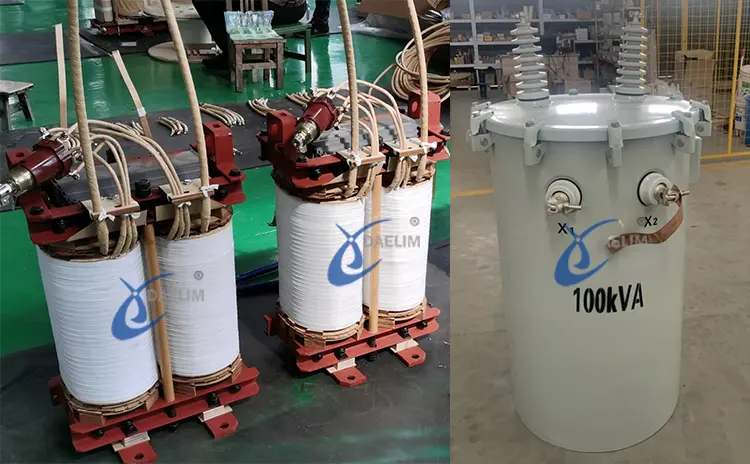
- Double-Leg Structure: Features two vertical iron core columns with windings around each. This structure is compact, suitable for small and medium-sized transformers.
- Single-Leg Side-Yoke Structure: Includes a central core column with side yokes. It is used for larger single-phase transformers and offers reduced height.
- Three-Phase Core Type Transformers:
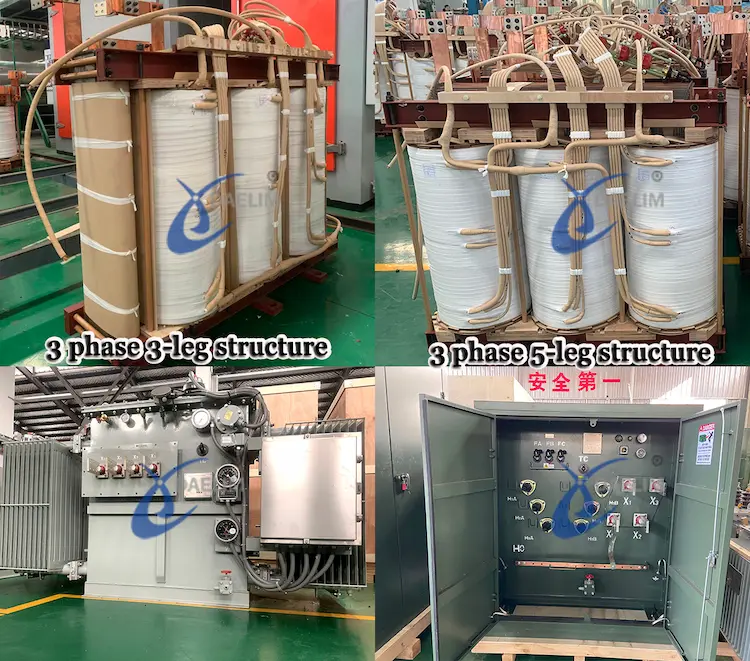 Three-Leg Structure: Common in medium and large transformers. It has three core legs with symmetrical windings, providing balanced magnetic flux.
- Five-Leg Structure: Includes an additional central core and side yokes. It is used for large transformers requiring reduced core height for transportation.
Reading on: Let’s know more about the construction of a three-phase transformer
Applications
Core type transformers are versatile, used in:
- Power transmission and distribution
- Industry and commerce
- Renewable energy and battery storage
- Data centers and oil and gas exploration
Reading more: Different Transformer Types and Their Applications
Winding Types
- Single-Winding Transformers: Also known as autotransformers, these have primary and secondary windings in series.
- Two-Winding Transformers: Common for distribution transformers, with separate primary and secondary windings.
- Three-Winding Transformers: Used in high-power applications to connect three different voltages.
Advantages
- Mechanical Strength: Core type transformers offer better mechanical stability and can withstand external forces.
- Reduced Losses: Laminated cores help minimize iron losses and flux leakage.
- Efficiency: Effective for high-frequency currents due to reduced eddy current losses.
- Improved Cooling: Greater surface area aids in heat dissipation, enhancing performance and lifespan.
Read more about losses: The Ultimate Guide To Losses In Transformer
Disadvantages
- Cost: Core type transformers are more expensive to manufacture and maintain.
- Maintenance: Regular upkeep is required, especially in extreme environments.
- Noise: They can be noisier due to cooling fans and other components.
Core Type vs. Shell Type: Which is Better?
Choosing between core type and shell type transformers depends on specific needs. Core type transformers excel in high-frequency applications and offer robust mechanical stability, whereas shell type transformers are more compact and easier to install.
Try for free: The ultimate guide to ONAN transformers
Conclusion
Understanding the distinctions and applications of core type transformers is crucial for selecting the right solution for your needs. Daelim Transformer offers expertise in core type designs, ensuring high efficiency and performance. Contact us to discuss how our transformers can meet your specific requirements.
For more information on transformer types and their applications, consult with our experts at Daelim Transformer.
Click here to check Daelim International Transformer Projects.
 English
 Polish
 German